Historic Winter Storm Paralyzes Southern United States
A severe snowstorm of historic proportions has battered southern US states, creating treacherous travel conditions and bringing subzero temperatures to regions unaccustomed to such extreme winter weather. The storm has intensified dramatically, with authorities warning of potentially life-threatening conditions across multiple states.
Transportation Network Brought to Standstill
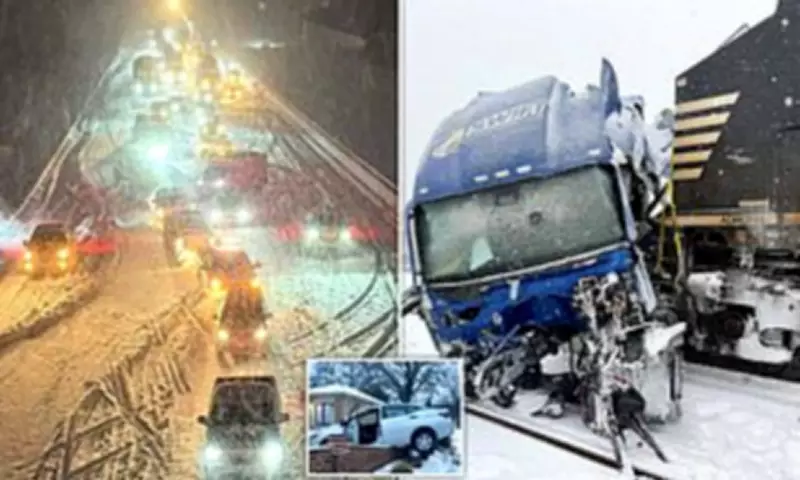
Approximately 100 vehicles became stranded along a northbound section of Interstate 85 north of Charlotte, North Carolina, where snowfall on Saturday exceeded any single-day accumulation the city has witnessed in two decades. The situation deteriorated rapidly when a late afternoon collision involving a car and a tractor-trailer reduced traffic to just one lane near Kannapolis, creating massive traffic jams as heavy snow began accumulating on the highway.
North Carolina State Highway Patrol reported an astonishing 750 car crashes throughout Saturday alone. The snowfall occurred with such intensity that numerous tractor-trailers and passenger vehicles became immobilized on I-85, trapping drivers for extended periods. "Once they're blocking the interstate, everybody stops," explained North Carolina State Highway Patrol 1st Sgt. Christopher Knox to CBS 17. "We're just limited in what we can do because of the interstate not being physically passable."

Knox clarified that the incident didn't represent a 100-car collision but rather traffic that became completely stopped as emergency crews worked to remove vehicles blocking the roadway. The transportation crisis extended to air travel, with Charlotte Douglas International Airport cancelling over 1,000 flights and Atlanta's international airport, the world's busiest, cancelling more than 600 flights.
Widespread Weather Warnings and Record Accumulations
Winter storm warnings covered all of North and South Carolina, along with portions of Georgia, eastern Tennessee, Kentucky, and southern Virginia. The National Weather Service warned that "an explosively deepening coastal cyclone will continue to bring moderate to heavy snow, high winds, and possibly blizzard conditions for the Carolinas."
Record-breaking snowfall totals included Faust, North Carolina with 14.5 inches, West Critz, Virginia with 12.5 inches, and Harrisburg, Tennessee with more than 9 inches of accumulation. The National Weather Service issued particularly dire warnings for coastal areas, describing travel conditions as "Treacherous and Potentially Life-Threatening especially if you become stranded."
Dramatic Incidents and Emergency Responses
In one particularly dramatic incident captured on police footage from Gastonia, North Carolina, a freight train plowed at high speed into a semi-truck that had become stuck on icy railway tracks, completely crushing the vehicle. Remarkably, the driver managed to escape before impact and no injuries were reported.
Emergency services across affected states worked tirelessly despite dangerous conditions. The Virginia Department of Transportation urged residents to stay off roads, stating that "Fewer cars on the road during winter weather will help to keep everyone safe and allow crews to perform their jobs effectively." North Carolina deployed hundreds of National Guard soldiers to assist with the crisis, while Mississippi opened 79 shelters and warming centers across the state.
Power Outages and Infrastructure Strain
The storm's impact extended beyond transportation, with nearly 175,000 customers remaining without power on Saturday night according to poweroutage.us. Mississippi, Tennessee and Louisiana were hardest hit by outages. Tennessee Governor Bill Lee emphasized the urgent need for "a clear timeline for power restoration, transparency on the number of linemen deployed, and a better understanding of when work will be completed."
Mississippi officials described the winter storm as their worst since 1994, with National Guard troops delivering essential supplies by both truck and helicopter to affected communities.

Unprecedented Cold Reaches Typically Mild Regions
The arctic air mass brought record-low temperatures to southern regions, with Davis, West Virginia recording minus 28 degrees Fahrenheit (minus 33 Celsius) - the lowest temperature in the lower 48 states on Saturday. The cold front extended remarkably far south, with the National Weather Service noting that "an intense surge of arctic air behind the coastal storm will send below freezing temperatures down toward South Florida by Sunday morning."
Florida experienced unusual winter conditions, with Orlando potentially dropping to 25 degrees or below and Miami possibly seeing mid-30s - temperatures not experienced since 2010. The cold even affected Florida's wildlife, with meteorologists warning that green iguanas could become stunned and fall from trees as temperatures plunged into the 30s and 40s.
Broader Impacts and Recovery Challenges
The storm arrived just one week after Winter Storm Fern devastated a wide swath of the United States, killing more than 100 people and leaving many communities still struggling with recovery efforts. Approximately 35 million Americans faced extreme weather warnings for snow and ice as Winter Storm Gianna gathered strength on Saturday.
Coastal areas faced particular threats, with the National Park Service closing campgrounds and some beaches at North Carolina's Outer Banks, warning that oceanfront structures were endangered. The freezing weather even forced NASA to postpone a critical fueling test of the 322-foot rocket at Cape Canaveral in Florida, potentially delaying a planned manned Moon flyby scheduled for next month.
As the storm continued to strengthen while tracking north along the coast into Sunday, authorities across affected states maintained urgent warnings for residents to avoid travel and take extreme precautions against the dangerous combination of heavy snow, high winds, and unprecedented cold temperatures.