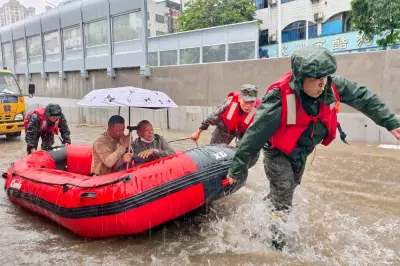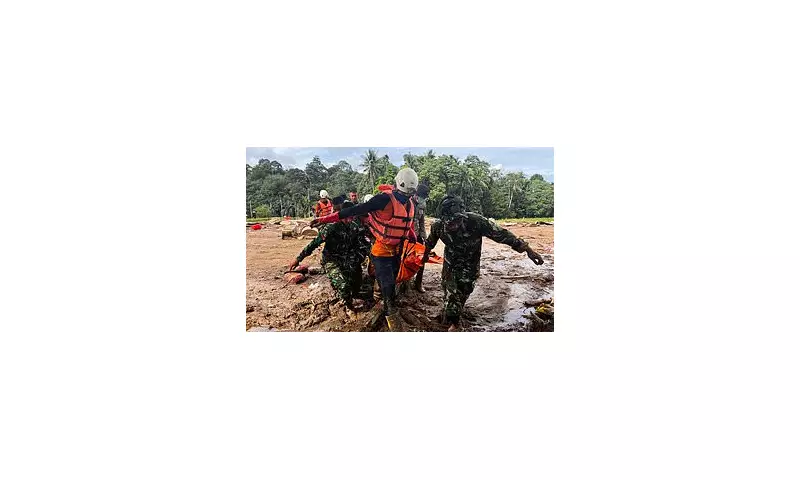
Rescue teams in Indonesia are engaged in a desperate race against time to find hundreds of people missing and feared buried under catastrophic landslides. The disaster is part of a wider wave of devastating floods that have wreaked havoc across Southeast Asia, with the regional death toll now reaching a staggering 900 people.
A Region Submerged and Scarred
The crisis unfolded nearly a week ago when torrential rains, linked to Cyclone Senyar, triggered severe flooding and mudslides. In Indonesia, the impact has been particularly brutal, with the death toll standing at 442 and expected to rise as more bodies are recovered. The National Disaster Management Agency reports that 402 people are missing across the three provinces of North Sumatra, West Sumatra, and Aceh.
The floods have displaced approximately 290,700 individuals and caused extensive damage to infrastructure. Reports indicate that nearly 3,000 houses have been damaged, with 827 completely flattened or swept away. The deluge triggered landslides, severed roads, cut off entire communities, and downed communication lines, severely hampering relief efforts.

Desperation and the Struggle for Aid
In the hardest-hit areas, such as the city of Sibolga and Central Tapanuli district, aid has been slow to arrive. This has led to desperate scenes, with survivors on the island of Sumatra resorting to taking food and water from shops to survive. Social media videos showed people wading through waist-deep floodwaters and scrambling past dangerous debris to secure essential supplies.
Police spokesperson Ferry Walintukan confirmed reports of people breaking into shops, noting that regional police were deployed to restore order. 'The looting happened before logistical aid arrived,' Walintukan explained. '(Residents) didn't know that aid would come and were worried they would starve.'
Rescue operations have been severely challenged by persistent bad weather and a critical lack of heavy equipment. In response, officials and limited communities have turned to Starlink satellite internet to coordinate relief operations after conventional communication lines failed.
Regional Ramifications and Relief Efforts
The disaster has not been confined to Indonesia. In Sri Lanka, authorities confirmed the death toll from floods and mudslides has risen to 193, with 228 others still missing. Nearly 148,000 people have been displaced from their homes and are now housed in temporary shelters after the country was battered by severe weather, including heavy downpours that flooded homes and triggered landslides in the central hill country.
Thailand and Malaysia have also suffered significant devastation from the same extreme weather system, contributing to the grim regional casualty figure. The international community has begun to mobilise support. Tech billionaire Elon Musk announced that his Starlink internet service would provide free connectivity throughout December for those affected by the floods in Indonesia and Sri Lanka.
In Indonesia, the military has been deployed in a large-scale relief operation. Cabinet Secretary Teddy Indra Wijaya stated that eleven helicopters were deployed from Jakarta to airdrop supplies, especially to areas where land access was completely cut off. The Cabinet Secretariat released footage of these operations, showing survivors in villages like North Tapanuli frantically waving to the aid-bearing helicopters. Furthermore, four navy ships have docked at a port to support the mammoth task of aid distribution, a critical step in alleviating the growing humanitarian crisis.