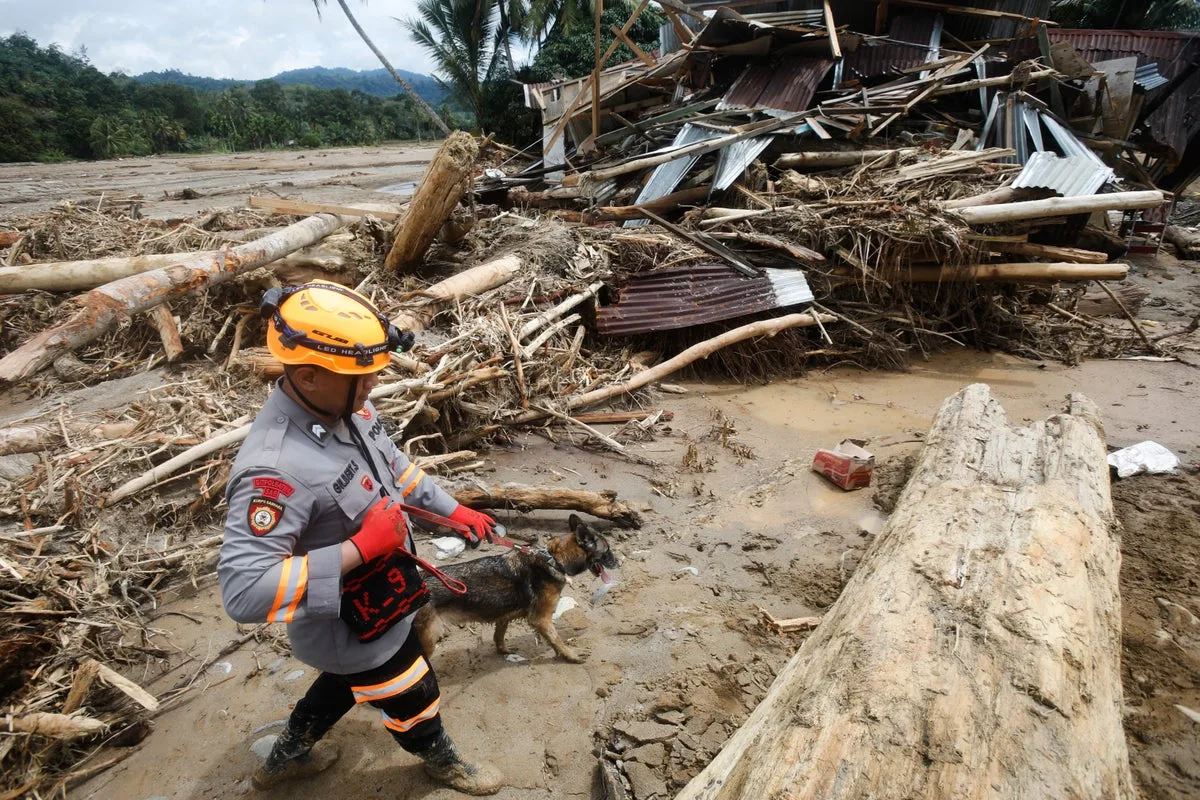
Catastrophic floods and landslides triggered by torrential rain have killed more than 1,400 people across Indonesia, Sri Lanka, Thailand and Malaysia, with rescue teams racing to reach isolated communities as over 1,000 remain missing. The disaster has also highlighted stark economic disparities in the region, with wealthier nations able to mount extensive responses while Sri Lanka struggles under limited resources.
Indonesia has been the hardest hit, with at least 753 deaths, followed by Sri Lanka with 465, Thailand with 185 and Malaysia with three. Indonesian President Prabowo Subianto visited a disaster zone on Monday, promising aid and support for rebuilding, though he has yet to declare a national emergency or seek international assistance. In contrast, Sri Lankan Prime Minister Harini Amarasuriya has urged diplomats to support relief and reconstruction efforts.
The destruction in Indonesia, particularly on the island of Sumatra, is the deadliest since the 2018 Sulawesi earthquake and tsunami that killed more than 4,300 people. The National Disaster Management Agency reported that about 650 people are still unaccounted for in North Sumatra, West Sumatra and Aceh provinces, where thousands were forced to cling to rooftops and treetops awaiting rescue. More than 1.5 million residents have been displaced, with tens of thousands of homes damaged and local hospitals overwhelmed. The government has deployed three hospital ships to the affected provinces.
In Sri Lanka, the flooding is expected to have significant economic repercussions as the country recovers from an unprecedented economic crisis and operates under an International Monetary Fund bailout programme. The costs of rebuilding infrastructure and restoring livelihoods are likely to strain the treasury, and with vast rice-growing regions devastated, Sri Lanka may be forced to deplete its scarce foreign currency reserves. Countries such as India, Pakistan and the United Arab Emirates have launched relief efforts, while other foreign diplomats have pledged additional support.
In Thailand, recovery efforts in the south are progressing well, with water and electricity restored in nearly all affected areas. The government has disbursed over 1 billion baht ($31.3 million) in compensation to more than 120,000 households impacted by the floods.