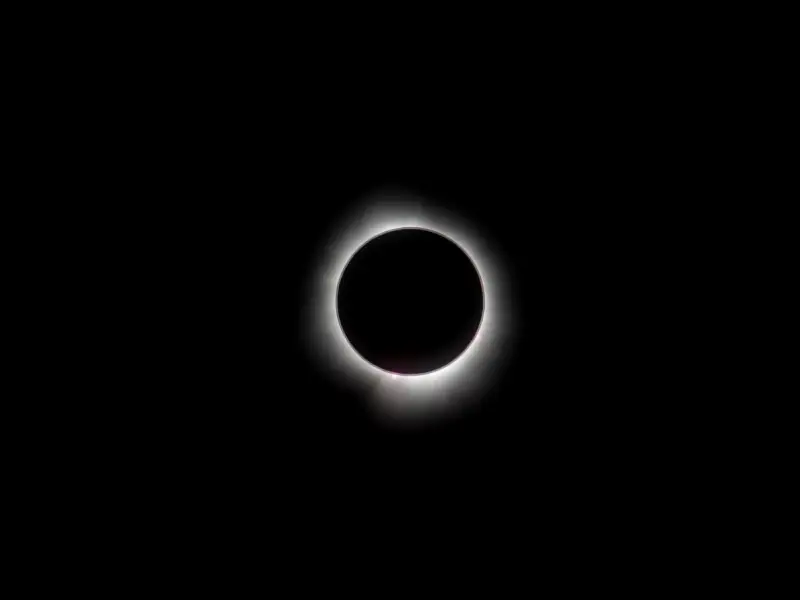
People across Wales are being urged to look to the skies on Wednesday, August 12, when the UK will witness its most dramatic solar eclipse in almost 30 years. The partial solar eclipse will see the moon pass between the earth and the sun, covering around 90% of the sun across much of the UK.
Best Views in Pembrokeshire
In Wales, those in Pembrokeshire will enjoy one of the country's best views, with around 94% of the sun expected to be obscured. The event will be the deepest solar eclipse visible from the UK since the famous eclipse of 1999, when totality swept across parts of Cornwall and Devon.
Timings and Coverage
Across Cardiff, London and Bristol, the eclipse will begin at 6.17pm, reaching its maximum at 7.12pm, before ending at 8.06pm. Exact timings will vary slightly depending on location. The further south-west people are, the greater chance the eclipse will appear. While London is expected to see around 90% of the sun covered, Cornwall could experience approximately 95% coverage. Across the Irish Sea, those travelling to the south-western tip of Ireland may witness almost 97.5% of the sun hidden by the moon.
What Causes a Solar Eclipse?
A solar eclipse happens when the moon moves directly between the earth and the sun, blocking some or all of the sun's light from reaching observers on earth. On August 12, the alignment will create a spectacular partial eclipse across the UK and Ireland. The event will also be visible across large parts of Europe. France, Belgium, Switzerland and northern Italy are expected to experience between 88% and 95% coverage, while parts of Greenland, Iceland and northern Spain lie in the path of totality, where the sun will be completely obscured for a short time.
Safety Reminder
Astronomers are reminding anyone planning to watch the eclipse that it is never safe to look directly at the sun without specially designed solar viewing glasses or other approved solar filters. Ordinary sunglasses do not provide adequate protection.
Future Eclipses
Skywatchers will have to wait more than six decades for the next total solar eclipse visible from the UK, which is not expected until 2090. That makes the eclipse on August 12, 2026, the closest the UK will come to experiencing a total eclipse for many years. Before then, the nearest thing to a total eclipse will take place on September 3, 2081, when up to 99% of the sun will be covered by the moon. There will also be several notable partial solar eclipses over the coming decades, including around 50% coverage in 2030, 40% in 2053, 60% in 2066, 70% in 2075, 70% in 2082 and 40% in 2088, alongside a number of smaller eclipses.