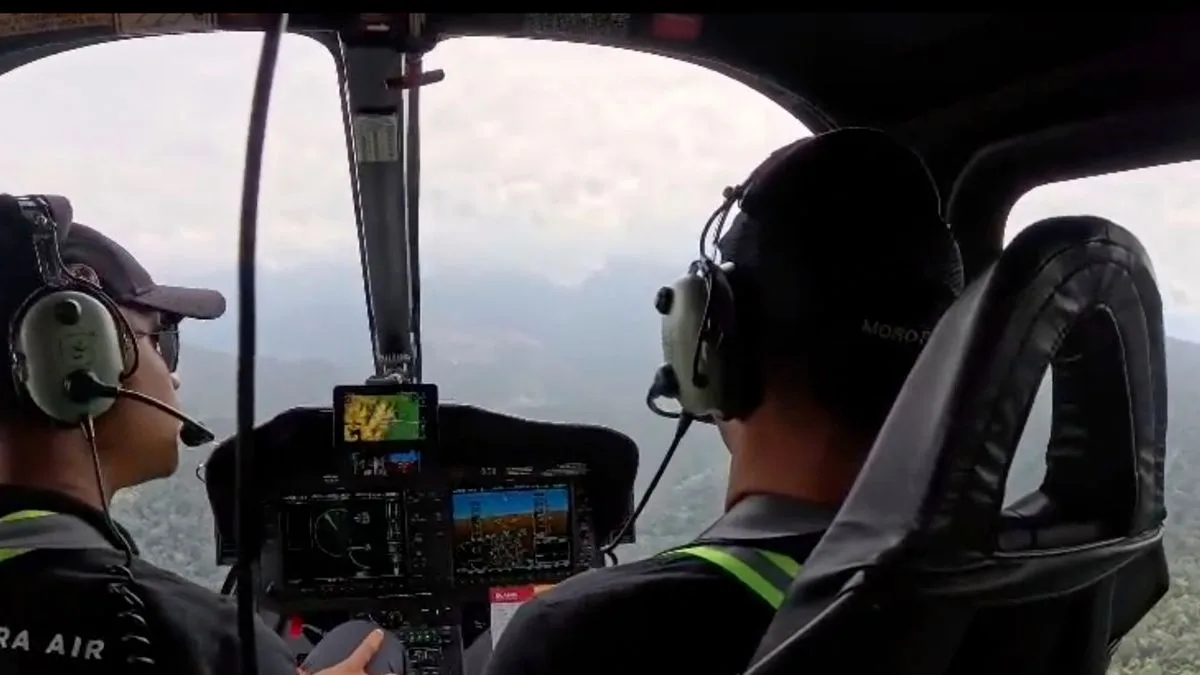
Rescuers are searching for seven people after a helicopter crashed in Borneo's tropical forests, killing at least one person. The Airbus BK117 D-3, owned by Eastindo Air, lost contact with air traffic control eight minutes after departing from Kotabaru airport in South Kalimantan province on Monday.
The wreckage was found after a three-day search, with one body recovered about 100 metres from the helicopter. Initial observations suggest more victims remain inside the burnt-out aircraft. Yudhi Bramantyo, operational director of Indonesia's National Search and Rescue Agency, said the aircraft would need to be dismantled to confirm the number of victims.
The helicopter was en route to Palangkaraya City with eight people on board, including three foreign nationals: Mark Werren from the United States, Santa Kumar from India, and Claudine Quito from Brazil. The others are believed to be Indonesian. Poor weather and limited daylight have hampered the search, which involves over 200 personnel from police, military, and local agencies.
Indonesia has experienced several aviation accidents in recent years, including a helicopter crash in Bali last July that miraculously left five people unharmed.