A powerful 7.4 magnitude earthquake struck near the coast of Chiapas, Mexico, close to the Guatemalan border, triggering a tsunami warning and mass evacuations in the region. The United States Geological Survey (USGS) recorded the quake at 16:58 local time on 17 July 2026, with its epicenter near Puerto Madero, a port and fishing town approximately eight miles from the Guatemalan border. The earthquake had a depth of 6.21 miles.
Tsunami Threat and Evacuations
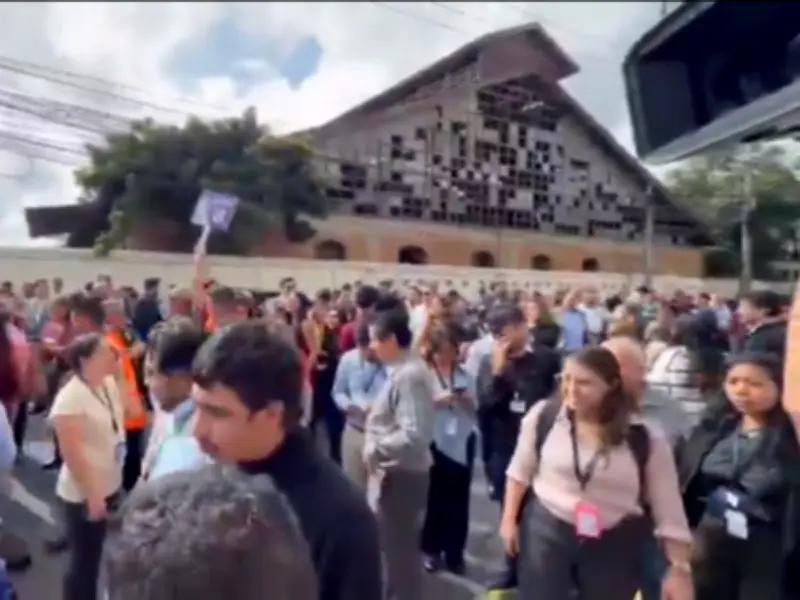
The USGS issued a tsunami threat for parts of the Pacific Ocean near the epicenter. In Guatemala City, the capital, buildings shook violently, prompting residents to flee their homes and office workers to evacuate buildings. A video shared on social media by @CanalAntigua showed a large crowd gathered outside an office block, though no visible damage was apparent. Local media also reported staff evacuating a government building as security protocols were activated.
Impact Across the Region
The earthquake was felt in El Salvador as well, according to reports. In Oaxaca, Mexico, Governor Salomon Jara stated on social media that the quake was felt with moderate intensity in the state capital, but no serious damage was immediately reported. The USGS warned that liquefaction could affect an extensive area and population. Liquefaction occurs when water-saturated soil loses strength during seismic shaking, behaving like a liquid, which can cause significant ground failure.
The USGS also assessed the region's building vulnerability, stating: "Overall, the population in this region resides in structures that are a mix of vulnerable and earthquake resistant construction. The predominant vulnerable building types are adobe block with concrete bond beam and mud wall construction."
Regional Context
Guatemala, the most populous country in Central America, shares borders with Mexico, Honduras, El Salvador, and Belize. The earthquake's proximity to densely populated areas has heightened concerns, though initial reports indicate no casualties or major structural damage. Authorities continue to monitor for aftershocks and tsunami waves.