Harvard Scientist Proposes Solar System is Densely Populated with Interstellar Objects
A prominent Harvard scientist has put forward a startling hypothesis that our Solar System could be significantly more crowded with interstellar objects than previously believed. These chunks of rock or ice, originating from other star systems, may exist in far greater numbers than anyone had realised.
New Data Points to Millions of Interstellar Visitors
Avi Loeb, who gained widespread attention for his controversial assertion that the object 3I/ATLAS might be an alien spacecraft, has presented fresh data and calculations. His analysis indicates that approximately thirty-five million meter-scale interstellar objects are embedded within Earth's orbit alone.
This conclusion stems from the detection of two interstellar meteor candidates, designated CNEOS-22 and CNEOS-25. CNEOS-22 was recorded in 2022 over the Pacific Ocean, while CNEOS-25 was observed in 2025 over the Barents Sea in the Arctic region. Although these objects were relatively small, measuring about six feet and four feet across respectively, they were travelling at velocities sufficient to exceed the Solar System's escape velocity.

Estimating Frequency and Mass of Interstellar Impacts
Loeb and his research team have estimated that meteors of this nature collide with Earth approximately once every three years. This frequency implies a dense population of similar objects orbiting the Sun. Each meter-scale interstellar object could carry roughly three million tons of material. When aggregated, this suggests a staggering total of about two hundred and twenty billion tons of interstellar matter within Earth's orbital path.
Larger interstellar objects, such as 3I/ATLAS, are considerably rarer. However, their greater individual mass means their total contribution to the material present could be comparable. This leads to the intriguing possibility that smaller objects might be fragments of bigger parent bodies that have broken apart.
Loeb has emphasised that studying this population of interstellar objects could yield valuable insights into how material moves and is exchanged between different star systems across the galaxy.
Building on Historic Interstellar Discoveries
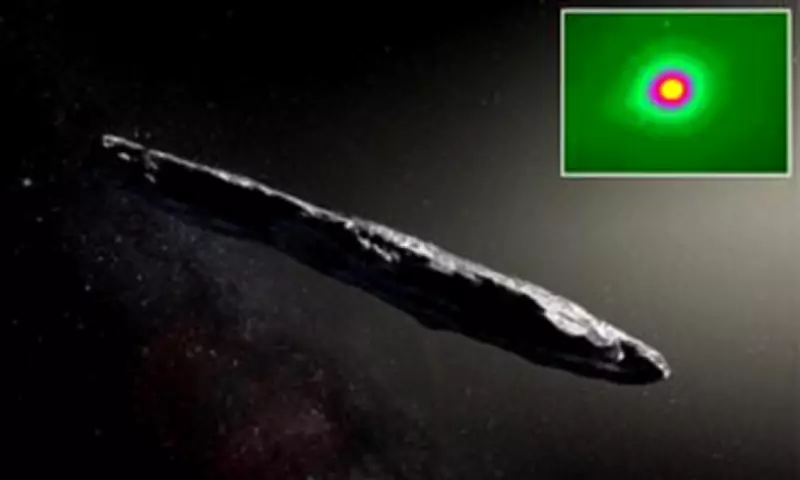
This groundbreaking idea builds upon recent astronomical discoveries. The first known interstellar visitor, the enigmatic object named 'Oumuamua, was detected on October 19, 2017, as it traversed the inner Solar System. Two years later, on August 30, 2019, comet Borisov became the second confirmed interstellar object, identified by its hyperbolic trajectory that marked it as a visitor from another star system entirely.
These findings, combined with newer data about massive interstellar objects, paint a picture of space filled with what some scientists describe as 'interstellar trash' drifting between stars. With advancements in observational technology, including next-generation telescopes and potential space interceptors, scientists are poised to better measure the properties, origins, and trajectories of these interstellar visitors.
Scientific Implications and Future Research Directions
In a recent blog post, Loeb argued that a coordinated international effort could alert Earth to potential threats from natural impacts or, in exceedingly rare cases, from artificial objects. This would expand the scope of planetary defence beyond merely tracking Solar System asteroids.
Loeb plans to seek funding for ocean expeditions aimed at recovering material from the CNEOS-22 and CNEOS-25 impact sites. Radioactive dating of any recovered fragments could estimate how long these objects travelled through interstellar space and help trace their stellar origins.
Loeb has previously contended that debris recovered from a 2014 meteor impact near Papua New Guinea might include artificial fragments, though this claim remains hotly disputed within the scientific community. His team reported discovering hundreds of tiny metallic spheres on the ocean floor, some exhibiting unusual compositions that he states do not match known terrestrial or meteoritic alloys.

Broader Philosophical and Astronomical Considerations
Loeb has also speculated on a fascinating long-term scenario. He posits that a future alien civilization could one day discover a human-made object, such as the Voyager probe, entering its atmosphere. After travelling for billions of years across the Milky Way, Voyager 1 or 2 might eventually strike a habitable exoplanet.
Alien scientists could then discover the probe's 12-inch Golden Record, which carries images, natural sounds, music, and greetings in fifty-five languages. Recognising such an artifact as definitive evidence of intelligent life would represent a profound scientific and philosophical challenge.
By combining data from atmospheric meteor detection, satellite monitoring networks, and powerful new telescopes, researchers could gain unprecedented insight into the material circulating between stars. Such interdisciplinary work could fundamentally transform our understanding of interstellar space while simultaneously improving our readiness for future encounters with objects from beyond our Solar System.
A New Perspective on Our Cosmic Neighborhood
If Loeb's estimates prove accurate, the Sun's immediate neighborhood is far busier than astronomers previously assumed, filled with countless relics from distant planetary systems. Each interstellar object represents a minuscule sample of another star's history, carrying potential clues about how planets, asteroids, and debris form across the galaxy.
Whether these visitors are ordinary rocks or rare technological artifacts, they undeniably offer a thrilling new frontier for astronomy, planetary science, and the ongoing search for extraterrestrial intelligence. For the present, most scientists anticipate that the vast majority of these objects will be natural in origin. However, their sheer proposed number raises profound new questions about what drifts unseen through the vast expanses of interstellar space.
Loeb's work contributes to a growing body of research suggesting that interstellar visitors may be common rather than rare occurrences, and that Earth is constantly moving through a flux of material from other stars. The findings underscore both the immense scientific opportunity presented by these objects and the concurrent need for cosmic vigilance.