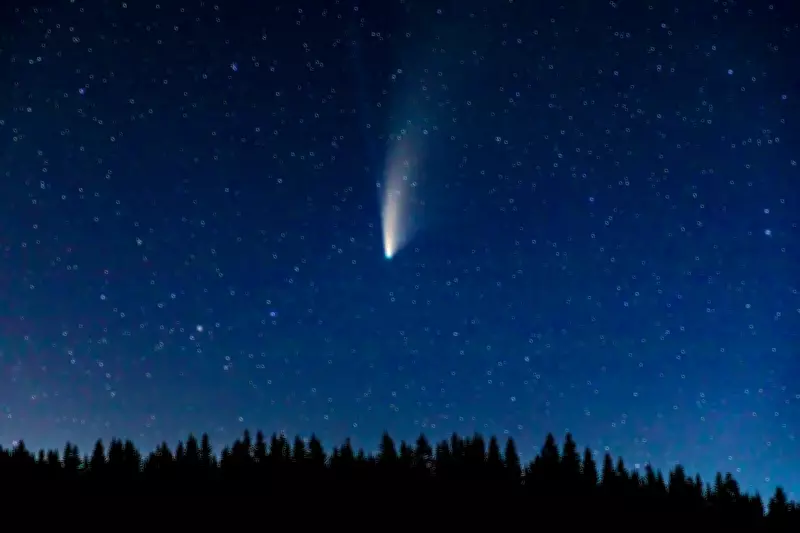
Astronomers across the globe are buzzing with excitement following the discovery of a new comet, designated C/2026 A1 (MAPS), which was first spotted by amateur astronomers in the Atacama Desert on 13 January 2026. This celestial object has been classified as a Kreutz sungrazing comet, a type known for its dramatic and fiery journeys close to the Sun.
What Makes This Comet Special?
The comet is predicted to make an exceptionally close approach to the Sun in early April, passing within approximately 120,000 kilometres of the solar surface. This proximity raises the possibility that, if it survives the intense heat and gravitational forces, it could become a spectacular sight in the sky, potentially visible even in broad daylight. Such an event would be a rare treat for stargazers in the UK and beyond.
Historical Context and Expectations
Kreutz sungrazers are fragments of a giant comet that broke apart thousands of years ago. Historically, many of these fragments have produced dazzling displays, with some becoming known as Great Comets due to their brightness and visibility. While the ultimate brightness of C/2026 A1 (MAPS) remains uncertain, its early discovery suggests it may be a reasonably large fragment, increasing the chances of a notable show.

Observers and professional astronomers are now closely monitoring the comet as it approaches its perihelion, the point of closest approach to the Sun. This period of anticipation is filled with hope that the comet will not only survive its fiery encounter but also put on a memorable performance for skywatchers. The potential for a daylight-visible comet adds an extra layer of excitement to this astronomical event.
For those in the UK, keeping an eye on the skies in early April could reward with a glimpse of this rare phenomenon, weather permitting. As more data is collected, updates on its trajectory and brightness will help enthusiasts plan their observations.