In an unprecedented move for orbital operations, NASA has conducted the first-ever medical evacuation from the International Space Station (ISS). The agency rushed a four-person crew back to Earth following a serious in-orbit health emergency that could not be adequately treated in microgravity.
The Emergency Return to Earth
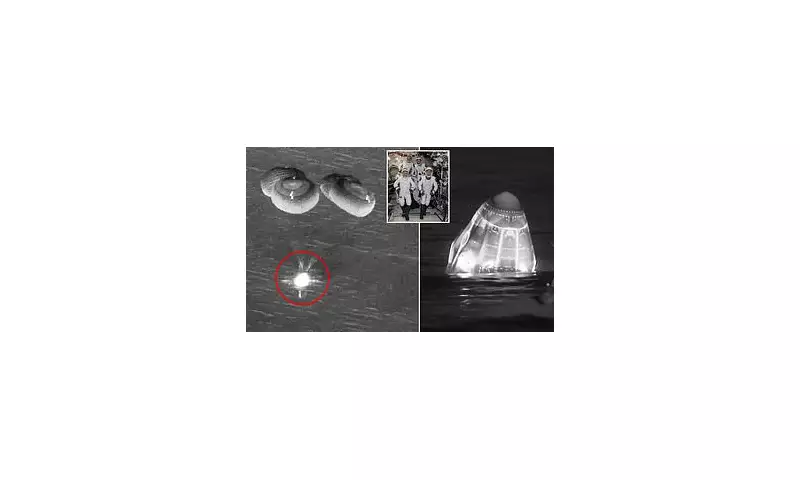
The Crew-11 capsule, carrying its international crew, initiated its return journey with a deorbit engine burn at 2:50am ET. The spacecraft then endured the intense heat of atmospheric re-entry before deploying four parachutes to slow its final descent. It successfully splashed down in the Pacific Ocean off the coast of San Diego, California, at approximately 3:41am ET on Thursday. The entire return flight lasted roughly ten hours.
On board were NASA astronauts Zena Cardman and Mike Fincke, Japanese astronaut Kimiya Yui, and Russian cosmonaut Oleg Platonov. A dedicated recovery vessel with medical teams was waiting at the splashdown site. They immediately retrieved the capsule, conducted health assessments, and transported the crew by helicopter and jet to NASA’s Johnson Space Center in Houston for further evaluation.

Privacy and a 'Serious' Condition
NASA has declined to identify which crew member was affected or disclose the specific nature of the medical condition, citing strict medical privacy rules. However, NASA Administrator Jared Isaacman confirmed the decision to bring the crew home early was made "out of an abundance of caution." He stated the astronaut's medical episode was considered 'serious' and would require additional care that was only available on Earth.
NASA's chief medical officer, Dr. James Polk, provided an update last week, noting the affected astronaut was in stable condition and not in immediate danger. He was careful to clarify that the medical issue was unrelated to a scheduled spacewalk on January 8, which was cancelled, or any other station operations.
Implications and Next Steps
This event marks a significant moment in the history of human spaceflight, demonstrating the protocols and capabilities for handling serious health crises far from Earth. The successful, rapid return underscores the critical importance of robust contingency planning for long-duration missions, especially as agencies look towards more distant destinations like the Moon and Mars.
NASA is set to host a live press conference to discuss the astronauts' return and the mission in greater detail. This developing story highlights the inherent risks of space exploration and the complex procedures in place to safeguard astronaut lives, even when they are orbiting 250 miles above the planet.