NASA's 50-Year Lunar Return: Why Returning to the Moon Took So Long
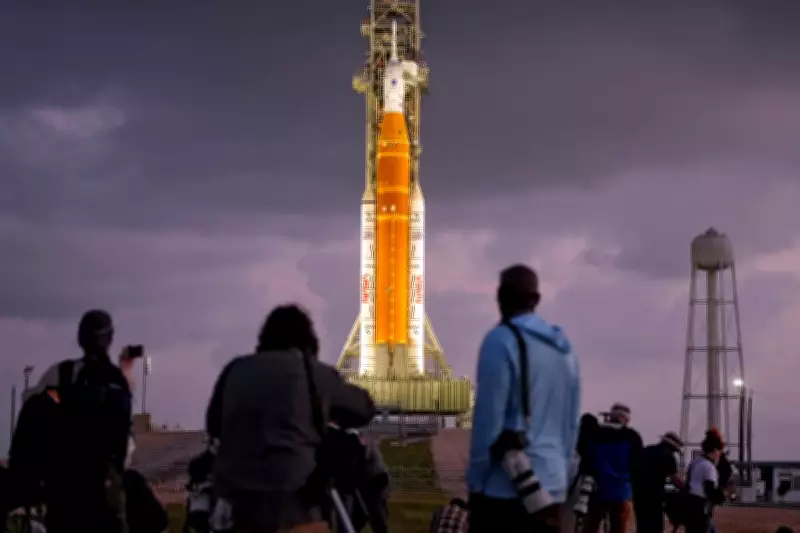
During a tour of the National Air and Space Museum in January 2026, a visitor posed a profound question that has echoed through the halls of space agencies for decades: "Why has it taken so long to return to the Moon?" This inquiry comes as NASA prepares for Artemis II, the first crewed lunar mission in over half a century, despite having successfully landed astronauts during the Apollo era with far less advanced technology.
The Technological Challenge
While modern smartphones possess exponentially more computing power than the systems that guided Apollo missions, sending humans safely into space remains extraordinarily difficult. New space technologies require years of meticulous study, development, and rigorous testing before receiving flight certification. Even then, systems can behave unpredictably, as demonstrated by Boeing's Starliner mission issues and unexpected chipping of the Orion heat shield during Artemis I.
These technical setbacks have caused significant delays. Problems with Starliner's thrusters forced NASA to return the spacecraft from the International Space Station without its crew, while the Orion heat shield anomalies prompted years of research and altered atmospheric reentry plans for the upcoming Artemis II mission.

The Political and Financial Landscape
NASA's ambitious programs require sustained political will and consistent financial support across multiple presidential administrations, congressional sessions, and fiscal years. As a historian of human spaceflight, I have studied how the space agency must continually engage the American public to demonstrate the value of these expensive programs to taxpayers.
The story of NASA's effort to return humans to the Moon is long and winding, revealing the immense complexities of transforming grand ambitions into actual missions. Artemis II represents a crucial milestone—a crew of four will conduct a lunar flyby, laying essential groundwork for the planned Artemis IV landing mission.
Post-Apollo Transitions
In early 1970, following two successful Moon landings, President Richard Nixon sought to reduce NASA's budget to align with his administration's priorities. This decision forced the space agency into difficult positions, ultimately leading to the cancellation of three planned Apollo missions to conserve funding for long-term human activity in low Earth orbit.
NASA ingeniously repurposed the third stage of a Saturn V rocket to create Skylab, America's first space station, which operated from 1973 to 1974. The agency utilized leftover Saturn IB rockets and Apollo command modules to transport crews to this orbital laboratory.
The Space Shuttle Era
Over the subsequent three decades, NASA developed and operated the space shuttle fleet, supporting satellite deployment and microgravity research during orbital missions lasting up to seventeen days. This work enabled future long-duration human missions and provided tangible benefits on Earth, including pharmaceutical developments informed by protein crystal growth experiments.
The space shuttle program facilitated construction, maintenance, and staffing of the International Space Station, with the first modules launching in late 1998, creating a continuously inhabited research platform in orbit.
New Millennium Directions
As the new millennium approached, the Clinton administration tasked NASA with planning beyond the space station, exploring what robots and humans could accomplish next in space—particularly beyond low Earth orbit. NASA Administrator Daniel Goldin had already been considering proposals for the next presidential administration, having recently sponsored a human lunar return study.
In 1999, Goldin established a team to investigate new technologies, missions, and destinations for the twenty-first century. This work gained renewed significance following the tragic loss of the space shuttle Columbia crew in February 2003, prompting serious questions about the future of human spaceflight.

Vision for Space Exploration
Administration discussions culminated in President George W. Bush's Vision for Space Exploration in 2004, directing NASA to retire the space shuttle after completing the space station and return humans to the Moon using a crew exploration vehicle designed for destinations beyond low Earth orbit. The vision also called for continued robotic exploration of Mars and increased engagement with commercial companies and international partners.
Fifteen years earlier, President George H. W. Bush had announced a similar Moon and Mars exploration program, but congressional concerns about costs kept space travelers closer to home.
The Constellation Program Legacy
In December 2004, NASA began seeking manufacturers for the crew exploration vehicle, awarding Lockheed Martin the contract to build the Orion capsule by August 2006—the same Orion spacecraft planned to carry Artemis astronauts to the Moon today. Years of research, development, and testing followed for Orion and the Ares launch vehicles, collectively known as the Constellation program.
Constellation had dual objectives: near-term transportation to and from the space station after the shuttle program ended, and long-term human lunar exploration. Building systems that could function in both Earth orbit and around the Moon was supposed to save time and costs, as was adapting space shuttle program hardware.
Presidential Shifts and Program Continuity
During the first months of Barack Obama's presidency in 2009, an independent review—the Augustine Committee—found that NASA's ambitions exceeded its limited budget, causing significant delays. The committee proposed several paths forward, noting that additional annual investment of three billion dollars would enable human exploration beyond low Earth orbit.
Ultimately, the Obama administration canceled Constellation, but two key technologies survived through political maneuvering. The NASA Authorization Act of 2010 funded Orion's continued development while shifting space station crew transportation to commercial vehicles. It also directed NASA to develop the Space Launch System, a redesigned heavy booster to send Orion to the Moon, preserving aerospace jobs across numerous congressional districts.
The Artemis Program Emerges
In December 2017, the Trump administration issued a policy directive refocusing NASA's human spaceflight program on the Moon. The space agency would utilize Orion and the Space Launch System to meet an ambitious 2024 landing target, officially naming the program Artemis in May 2019.
The twenty-five-day Artemis I mission, launched in November 2022, represented a major milestone as the first flight of the Space Launch System and the first integration of SLS with Orion. This uncrewed flight laid essential groundwork for Artemis II, which will be the first crewed flight of the SLS.
The Long Journey Continues
Over more than fifty years, each new presidential administration has reassessed spaceflight priorities, alternately encouraging or curtailing NASA's efforts to return humans to the lunar surface. Every crewed mission requires alignment of technical expertise, political will, and financial support over years—if not decades.
For space enthusiasts awaiting the Artemis II launch, the countdown may feel prolonged. Yet this wait represents merely a blink in NASA's extensive journey back to the Moon—a testament to the enduring challenges of space exploration that transcend technological advancement alone.