
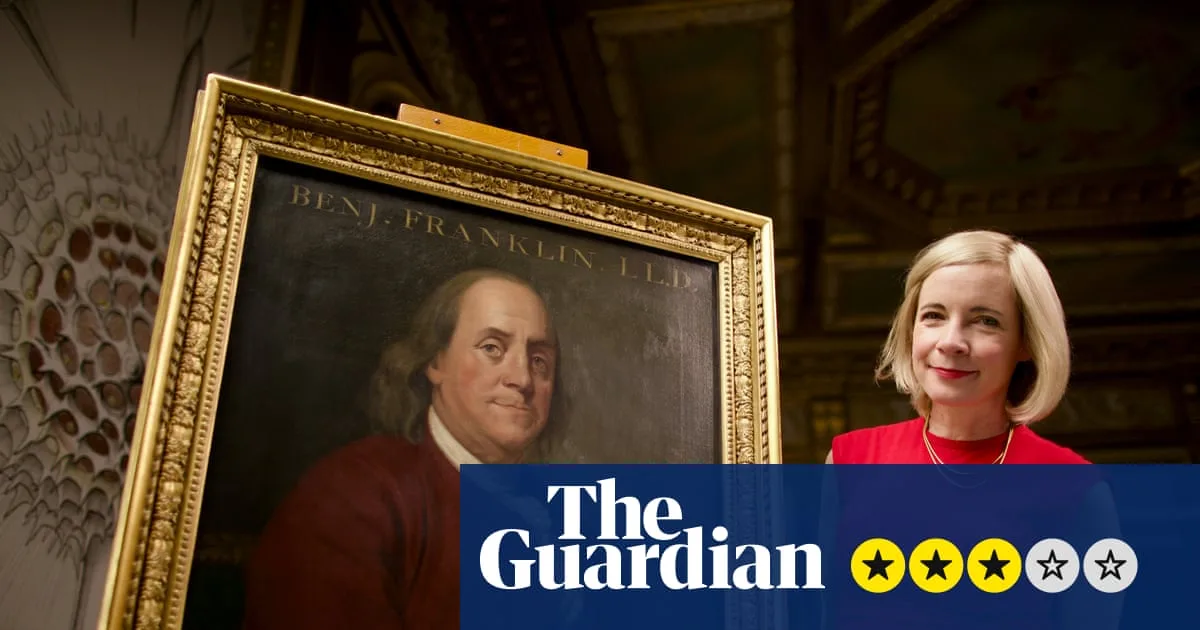
Historian Lucy Worsley brings her characteristic charm to a new two-part documentary, 'Lucy Worsley Investigates: The American Revolution,' framing the conflict as a dysfunctional relationship gone sour. Rather than donning period costumes, Worsley lets actors portray Benjamin Franklin and George III in brief reconstructions, while she visits key sites in the UK and US, consulting experts and examining artefacts.
The series opens with Worsley brandishing a copy of the Declaration of Independence in a Manhattan park, calling it 'the ultimate break-up letter.' She suggests the revolution was not inevitable but resulted from miscommunication, likening Franklin's efforts in 1760s London to those of a marriage counsellor trying to reconcile estranged partners. The narrative highlights Franklin's eccentricities, including his morning 'air baths' on a London balcony and an electrified portrait of George III that shocked visitors who voiced anti-monarchy sentiments.
Britain's post-war debts led to taxation of American colonies without parliamentary representation, sparking protests. The 1765 Stamp Act was nullified, but Britain imposed new tariffs on paper, glass and tea. Radical activist John Wilkes supported the colonists through his pamphlet 'The North Briton,' and Worsley examines commemorative teapots and plates bearing his name and the number 45, calling it an early form of social media campaign.
The documentary covers the 1770 Boston Massacre, showing how propaganda presented conflicting accounts. Franklin's 1773 satirical essay is noted, and Worsley maintains her engaging style throughout, though the relationship metaphor is not fully developed. The series offers a fresh perspective on a pivotal historical event.




