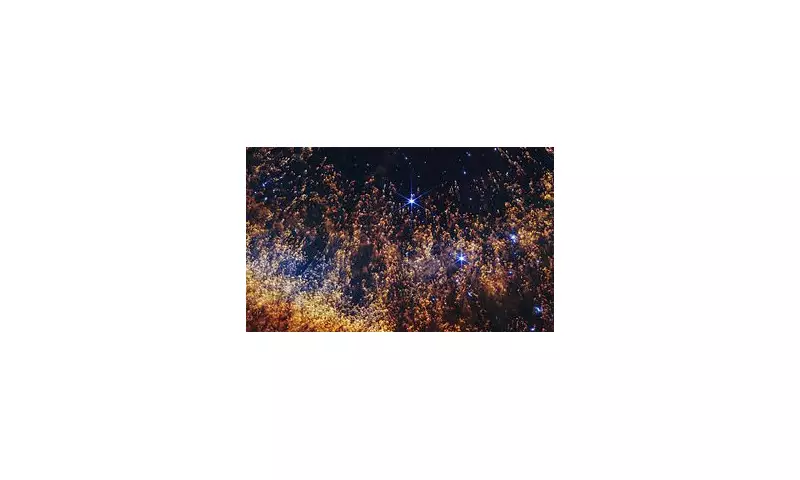
NASA has unveiled a breathtaking and sobering vision of our solar system's ultimate destiny, captured in unprecedented detail by the James Webb Space Telescope. In approximately five billion years, scientists predict our sun will exhaust its nuclear fuel, leading to a cataclysmic transformation that will likely consume Earth before scattering the raw materials for new worlds across the cosmos.
A Cosmic Preview: The Helix Nebula
Located 650 light-years from Earth, the Helix Nebula serves as a celestial time capsule, showcasing the aftermath of a sun-like star's death thousands of years ago. This vast, three-light-year-wide ring of gas and dust represents a planetary nebula—the final, radiant phase of a star's life cycle. NASA emphasises that these newly released images provide an "up-close view of the possible eventual fate of our own Sun and planetary system."
The Inevitable End of Our Sun
For billions of years, our sun has maintained a delicate equilibrium, with the inward crush of gravity balanced by the outward pressure of nuclear fusion in its core. This stable "main sequence" phase converts hydrogen into helium, but this fuel is finite. As hydrogen reserves deplete, the star can no longer sustain fusion reactions, triggering a dramatic sequence of events.

The outer layers will begin collapsing inward, generating immense heat that fuses helium into carbon. This energy surge reignites nuclear fusion in the outer layers, causing the star to balloon outward by 100 to 1,000 times its current size, cooling into an enormous Red Giant. Ultimately, the core will collapse into a dense, Earth-sized White Dwarf, while the expelled outer layers form a glowing planetary nebula, illuminated by the intense radiation from the central remnant.
Earth's Precarious Future
As our sun expands into a Red Giant, Earth faces two grim possibilities: vaporisation by the star's intense heat or disintegration by powerful gravitational tidal forces. Research indicates that stars which have already transformed into red giants are far less likely to host large, close-orbiting planets like Earth, underscoring the vulnerability of our world during this stellar metamorphosis.
James Webb's Revolutionary Vision
Where previous observations, such as those from the Hubble Space Telescope, rendered the Helix Nebula as a hazy blur, the James Webb Telescope's NIRCam instrument reveals stark, intricate details. The image delineates distinct temperature zones:
- Blue regions: Mark the hottest gases, energised by ultraviolet light from the central White Dwarf.
- Yellow areas: Indicate cooler zones where hydrogen atoms can form molecules.
- Red sections: Show the coolest, thinnest gases where dust begins to coalesce.
NASA highlights darker patches within the dust cloud—protective pockets where complex molecules can form, potentially seeding future planetary systems.
Destruction and Creation
While Earth's demise seems inevitable, astronomers frame this process as one of cosmic renewal. Professor Janet Drew, an astronomer from University College London, explains that the nebula's chemically enriched material is "fed into the interstellar medium, where that material can become available for the next generation of stars and planets."
The expelled gases and dust contain the essential ingredients for rocky planets and carbon-based life. "So this is really about where the material comes from that is needed to form a rocky planet and sustain carbon-based life," Professor Drew notes, suggesting that Earth's destruction may ultimately foster new life elsewhere in the galaxy.
The Stellar Life Cycle
Approximately 90% of stars in the universe, including our sun, are main sequence stars. They begin as collapsing clouds of gas and dust, igniting nuclear fusion to become stable stars. After exhausting their hydrogen fuel over billions of years, they evolve based on their mass—becoming red giants, white dwarfs, or, in more massive cases, exploding as supernovae to form neutron stars.

For our sun, the transition will culminate in a White Dwarf surrounded by a planetary nebula, a fate now vividly illustrated by the Helix Nebula. This cosmic recycling ensures that the elements forged in stellar cores are dispersed to birth new stars, planets, and potentially, life—a poignant reminder of the universe's cyclical nature.