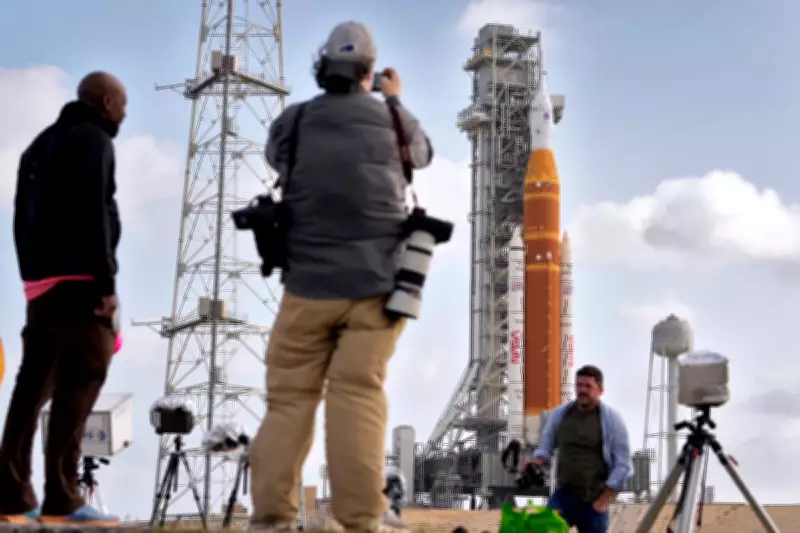
NASA's Artemis II Mission to Launch Four Astronauts on Historic Lunar Journey
NASA is set to launch four astronauts on the Artemis II mission, marking the first crewed journey to the Moon in over half a century. This ambitious mission represents the most significant crewed space exploration effort since the Apollo program more than 50 years ago.
Trouble-Free Countdown and Favorable Weather Conditions
After experiencing weeks of technical issues, including hydrogen fuel leaks and clogged helium lines, NASA now faces a trouble-free countdown for the Artemis II launch. Officials report that the Moon rocket is performing well, with forecasters predicting an 80% chance of favorable weather for the evening launch.
"Everybody's pretty excited and understands the significance of this launch," said senior test director Jeff Spaulding. The launch team plans to fuel the 32-story Space Launch System rocket on Wednesday morning for its evening send-off, confident that previous problems have been resolved.

Historic Crew and Mission Details
The four-person crew consists of NASA astronauts Reid Wiseman, Victor Glover, and Christina Koch, along with Canadian Space Agency astronaut Jeremy Hansen. This mission will see them zip around the Moon without landing or orbiting, then return to Earth on a 10-day journey.
"The nation and the world has been waiting a long time to do this again," mission commander Reid Wiseman told reporters from the Kennedy Space Center in Florida over the weekend. The astronauts arrived in Florida on Friday, having begun their quarantine in Texas on March 18 to protect against viruses.
Record-Breaking Aspects of the Mission
The Artemis II mission will achieve several historic firsts in space exploration:
- It will be the first crewed lunar mission since Apollo 17 in 1972.
- The crew will travel further from Earth than any human has ever traveled, due to the Moon's orbital position in early April.
- This mission includes the first woman, first non-white person, and first non-American to fly to the Moon.
The mission is described as being "on track" by NASA officials, with preparations proceeding smoothly for this landmark event in space history.