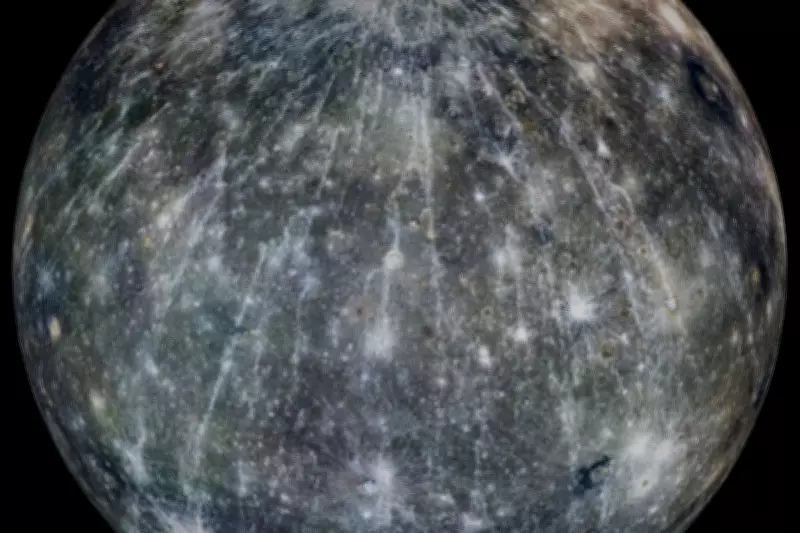
Mercury's February Show: A Planet of Extreme Secrets Revealed
It may bear a superficial resemblance to our Moon, but Mercury, the innermost planet of our Solar System, harbours a wealth of astonishing secrets that set it apart as a world of profound extremes. This February offers a prime opportunity to observe this enigmatic planet as it stages its most favourable evening appearance of the entire year, inviting stargazers to witness a celestial body where the ordinary rules of time and temperature are spectacularly defied.
A World of Bizarre Extremes
Imagine a place where the Sun appears to halt in the sky at midday, executing a peculiar small loop before resuming its journey. Here, you could celebrate your annual birthday twice within a single Earth day, thanks to Mercury's unique orbital dynamics. Surface temperatures swing wildly from searing highs of 420°C—hot enough to spontaneously ignite paper, if oxygen were present—to frigid lows of -170°C in permanently shadowed polar craters, akin to the chill of deep space. This is not a fictional realm from science fiction but Mercury, a very real and extreme neighbour within our own Solar System.
Historical and Observational Challenges
Named for the swift messenger of Roman mythology, Mercury lives up to its moniker by completing an orbit around the Sun in a mere 88 Earth days. However, its rotational period is remarkably slow, resulting in a Mercurian day—from one sunrise to the next—lasting 176 Earth days. This means a day on Mercury is twice as long as its year, a fact that would allow an inhabitant to experience two birthdays before the Sun sets on the same day.

Due to its proximity to the Sun, Mercury never ventures far from our star's glare in our skies, often rendering it invisible against the backdrop of daylight. Even at its greatest elongation, it remains elusive against a fully dark sky. The great astronomer Nicolaus Copernicus, who revolutionised our understanding of the Solar System, never managed to observe Mercury himself, underscoring the challenge and reward of spotting it this month.
Orbital Oddities and Einstein's Breakthrough
Mercury boasts the most elongated orbit of any planet in our Solar System, with its distance from the Sun varying by 50% between its closest and furthest points. This eccentricity, combined with its slow rotation, leads to the Sun's apparent retrograde motion in the sky. During certain periods, particularly when Mercury is nearest the Sun, the orbital speed causes the Sun to appear to stop and move backwards, performing a small loop before continuing its daily path. In regions like the Caloris Basin, this phenomenon can occur at noon, contributing to the extreme heat.
In the 19th century, astronomers were baffled by the precession of Mercury's orbit, which did not align with Newtonian gravity even after accounting for other planets' influences. The hypothetical planet Vulcan was proposed as an explanation, but it remained unseen. The puzzle was ultimately solved in 1915 by Albert Einstein's theory of General Relativity, which accurately described Mercury's motion and cemented a new understanding of gravity that extends from black holes to the Big Bang.
Surface Mysteries and Upcoming Missions
Spacecraft observations reveal a surface heavily cratered, reminiscent of the Moon, with recent impacts scattering ejecta rays across the landscape. Yet, Mercury's interior holds a deeper enigma: a disproportionately large iron core. Two leading theories attempt to explain this anomaly. One suggests that intense heat from the young Sun vaporised much of the rocky material that would typically mantle such a core. Alternatively, Mercury may have originally possessed a thick rocky mantle like Earth or Venus, only to have it stripped away by a catastrophic near-collision with another celestial body.
Answers may soon emerge with the European-Japanese BepiColombo mission, which is scheduled to enter orbit around Mercury later this year. Equipped with sensitive instruments, it will analyse the planet's composition and core structure, potentially unveiling the turbulent events that shaped this most mysterious member of the Sun's planetary family.

What's Up in the February Sky
February is a stellar month for planet enthusiasts. Jupiter shines brilliantly high in the south all night, near the twin stars Castor and Pollux, with the Moon drawing close on the 26th and 27th. Below Jupiter, look for Orion the hunter, with the bright star Sirius to its lower left.
In the western sky, Saturn glows in a relatively star-sparse region. From 8 February, Mercury makes its appearance to the lower right of Saturn, low in the twilight, offering its best evening show of the year. Mid-month, Venus, the glorious Evening Star, emerges below Saturn and Mercury, climbing higher each night to dominate the dusk view by month's end.
The Moon joins this planetary dance: on 18 February, a slender crescent sits between Venus below and Mercury above; on 19 February, it lies above both, with Saturn to the left. For a challenge, try spotting Neptune with binoculars or a small telescope on 20 February, when Saturn passes close by, presenting Neptune as a faint blue-green 'star' about two Moon-widths to Saturn's right.
Note: An annular solar eclipse occurs on 17 February, but it is only visible from Antarctica.
February Stargazing Diary
- 6 February: Moon near Spica
- 9 February, 12:43pm: Last Quarter Moon
- 17 February, 12:01pm: New Moon; annular solar eclipse
- 18 February: Moon near Mercury and Venus
- 19 February: Mercury at greatest elongation east; Moon near Saturn
- 20 February: Saturn near Neptune
- 24 February, 12:27pm: First Quarter Moon
- 26 February: Moon near Jupiter
- 27 February: Moon near Jupiter