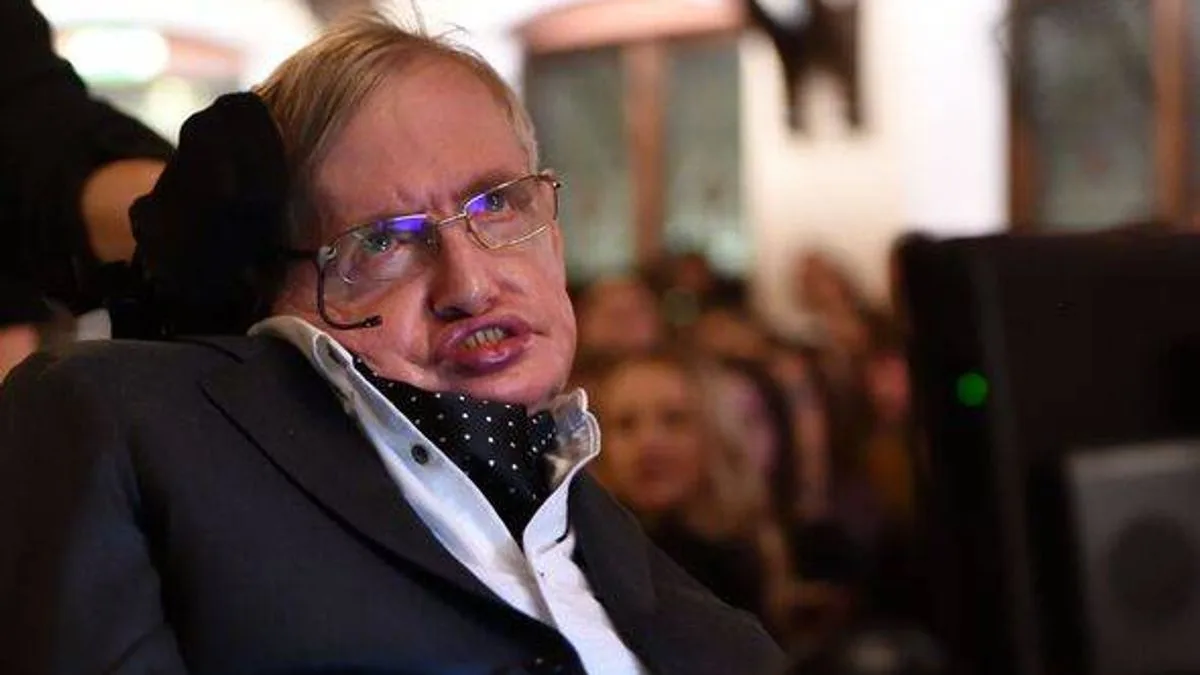
Renowned physicist Stephen Hawking consistently warned against actively contacting extraterrestrial life, arguing it could pose a catastrophic risk to humanity. His cautionary stance has resurfaced amid growing public and governmental interest in unidentified aerial phenomena (UAPs).
Hawking, who died in 2018, believed that any deliberate attempt to communicate with alien civilisations, particularly those technologically superior to us, might endanger our survival. He compared such contact to Christopher Columbus's arrival in America, which had devastating consequences for Native Americans.
Speaking in a 2010 episode of Into the Universe, Hawking said: 'If aliens ever visit us, the outcome might be similar to when Columbus landed in America, which didn't turn out well for the Native Americans.' He argued it would be naive to assume advanced civilisations would be peaceful, given humanity's own history of domination and exploitation.

Hawking theorised that alien societies capable of interstellar travel might have exhausted their homeworld's resources, driving them to seek new planets for colonisation or raw materials. Under such circumstances, Earth could be viewed as a target for conquest rather than an ally.
While Hawking supported passive monitoring of the cosmos through initiatives like Breakthrough Listen, he strongly opposed active messaging programmes such as Breakthrough Message and METI (Messaging Extraterrestrial Intelligence). He considered broadcasting our location to unknown galactic neighbours reckless and foolish.
His warnings have gained renewed attention following the release of classified US military footage of UAPs and whistleblower testimonies about possible non-human intelligence. Critics of active messaging argue that we cannot predict the ethics or intentions of extraterrestrial beings, and that making ourselves known could provoke a response we are ill-equipped to handle.