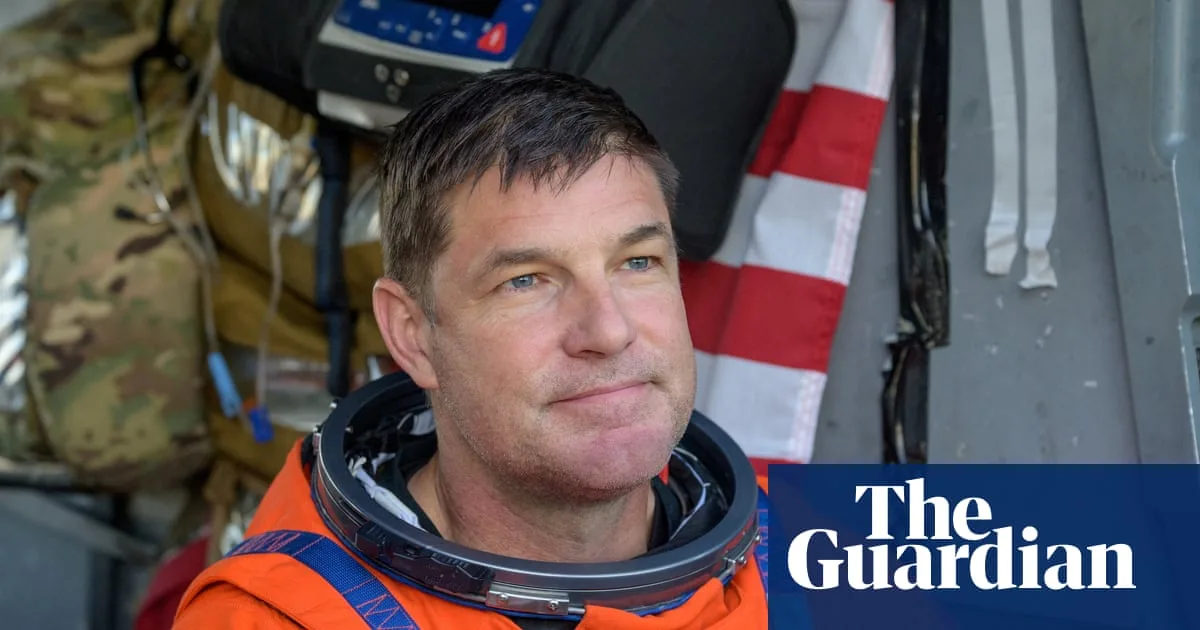
Canadian astronaut Jeremy Hansen has been praised for speaking French during NASA’s Artemis II mission, just weeks after a linguistic controversy involving Air Canada’s former CEO exposed tensions over the French language in Canada.
On the third day of the mission, as the Orion spacecraft hurtled towards the moon, Hansen turned to a camera and said “Bonjour tout le monde” from nearly 125,000 miles away. It was the first time French had been spoken in deep space, prompting a Canadian parliamentarian to note: “Never had French been spoken from so far away.”
Hansen’s decision to speak French came shortly after Air Canada’s then-CEO Michael Rousseau resigned amid public outrage. Rousseau had spoken only two words of French in a video tribute to two pilots killed in a collision, despite having a francophone mother and wife and the airline being based in Montreal, where 80% of the population speaks French. Prime Minister Mark Carney called the video a “lack of judgment, a lack of compassion.”

Weeks later, Carney praised Hansen in French during a conversation with the astronaut. “Canadians are so proud of you … it was incredible to hear you speak French for the first time in space,” he said. The exchange between the two anglophones in heavily accented French drew widespread praise.
Stéphanie Chouinard, a political science professor at Canada’s Royal Military College, said: “Francophones in Canada will celebrate those efforts. Neither of those men speak perfect French. They likely never will. But to see them make that effort publicly … resonates with francophones across the country. The expectation here is not perfection, it’s effort and respect.”
Hansen, who learned French in school and often uses it in public outreach, has also forged close relationships with Indigenous elders to understand the cultural importance of the 13 moon calendar. His custom mission patch, designed by an Indigenous artist, reflects this connection.