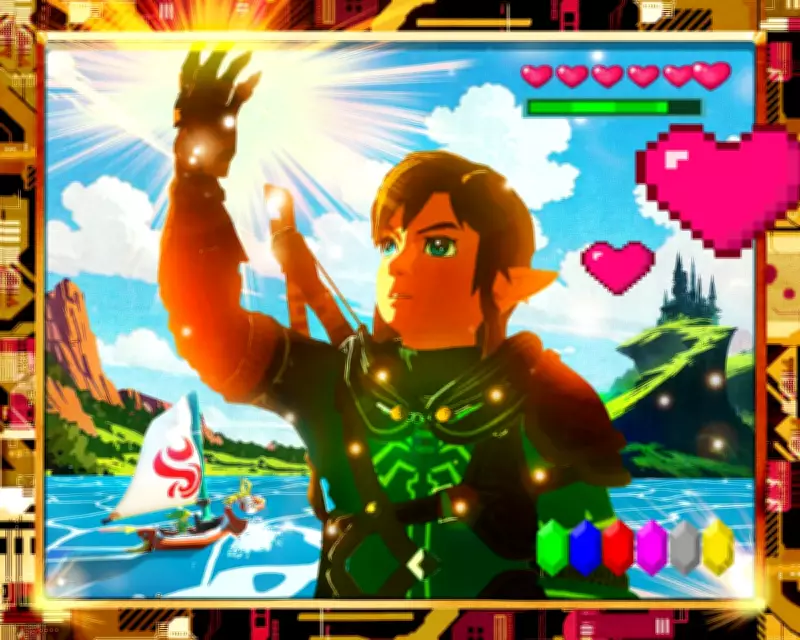
From Dismissal to Discovery: Wind Waker's Impact on My Worldview
As a teenager, my relationship with video games was fraught with complexity. I had adored the vibrant, primary-coloured dreamscapes of Super Mario 64 during my childhood, but as I matured into a pretentious young adult in the early 2000s, my perspective shifted. I began to crave more depth from games, often finding them mindless, juvenile, or excessively violent, with little to say. This led me to question whether gaming was truly a waste of time, echoing the judgmental voices of adults around me.
Intellectualising Play: A Defence Mechanism
In response, I relentlessly intellectualised the games I played, seeking to justify the hours I devoted to them. I immersed myself in highbrow gaming magazines and penned grandiose blogs analysing serious adult themes in titles like Deus Ex, Metal Gear Solid, and the classic Fallout series. My childhood affection for Nintendo, with its bright aesthetics and unselfconscious approach to play, felt increasingly embarrassing. However, everything changed when I finally experienced The Legend of Zelda: The Wind Waker, sparking a profound realisation about the essence and significance of play that would reshape my life.
Rejecting Cartoonish Visuals: A Teenage Misjudgment
The Wind Waker was released in 2003, just before my 15th birthday, but I initially dismissed it as childish based solely on its art style. Unlike the semi-serious fantasy visuals of earlier Zelda games like Ocarina of Time and Majora's Mask, Wind Waker presented a living cartoon. Link, the series' hero, featured enormous eyes and a diminutive stature, while menacing monsters became slapstick visual gags. At a time when gaming trends leaned towards graphical realism and mature themes, with titles like Call of Duty and Grand Theft Auto dominating the scene, Nintendo's boisterous cartoon faced ridicule from self-proclaimed serious gamers.

A Route Back to Joy: Embracing Childlike Curiosity
It wasn't until I was 17, deep in an existential crisis about video games and contemplating abandoning my budding career as a games journalist, that I returned to Wind Waker. What I discovered was a pathway back to pure joy. This cartoonish Link, with his expressive face and tiny sword, embodied childlike curiosity. Zelda games are designed around exploration, rewarding playful impulses without overthinking. Embodying this character, I felt liberated to simply play—swishing my sword at grass, sailing in a talking boat, chasing pigs on beaches, and seeking secrets on distant islands. For the first time in years, I was fully absorbed in a game, not analysing it, but genuinely enjoying it.
The Realisation: Childlike Does Not Mean Childish
Wind Waker prompted a fundamental shift in my relationship with games, teaching me that childlike does not equate to childish. Play is inherently important, not just permissible but essential—something we should never outgrow or intellectualise away. Since then, I have nurtured and cherished my innate playfulness. A keen sense of fun has guided me through life, helping me recognise when jobs and relationships weren't working, serving as a coping mechanism during times of grief, and making me a better parent. It has fostered open-mindedness and curiosity, making me unafraid of new experiences. Organising one's life around fun is not a negative pursuit.
Challenging Capitalist Notions of Productivity
In adulthood, particularly for women, there is often pressure to ensure every activity is productive or self-improving. Reading is framed as edification rather than pure enjoyment, exercise as improving metrics rather than enjoying movement, and hobbies as potential side hustles. This capitalist mindset frames everything through an abstract lens of worthiness, undermining the intrinsic value of play.

Play as a Survival Strategy in a Demanding World
Even today, the pervasive idea persists that playing games is juvenile, a waste of time, or shameful. Yet, play is vital—humans are among the few species that continue to play past childhood. Maintaining space and time for play in your life and heart is a survival strategy against a world that seeks to extract maximum productivity from you. Wind Waker has made me open-minded and curious, unafraid of new things, proving that embracing play can be a powerful tool for personal growth and resilience.