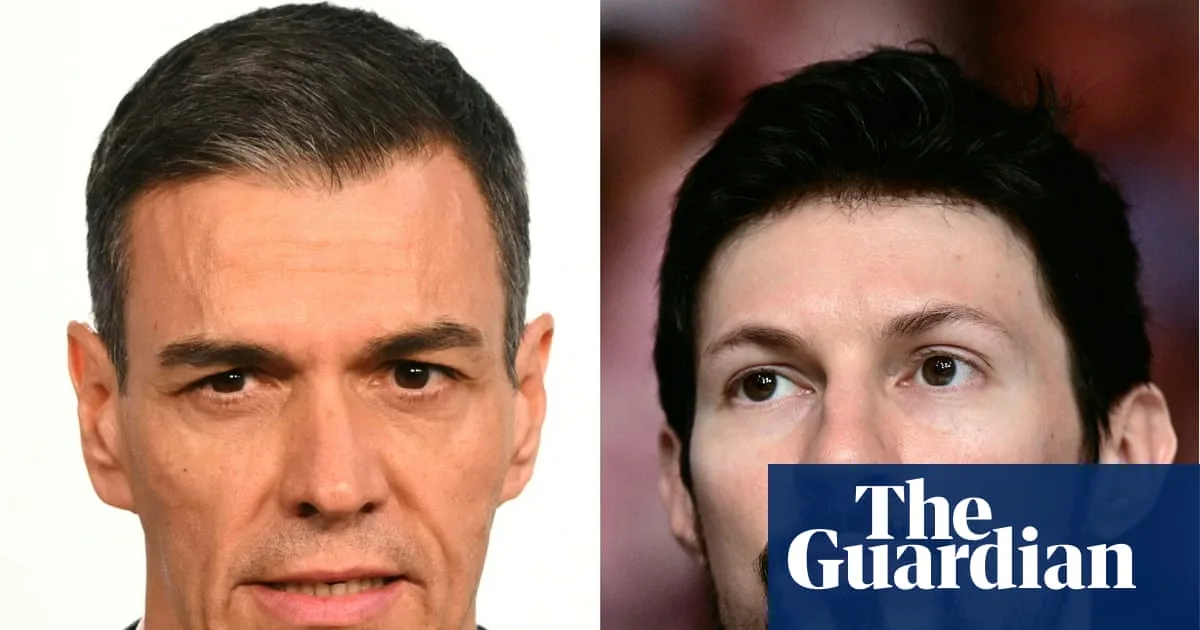
Spain Accuses Telegram Founder of 'Spreading Lies' Over Social Media Ban Plan
Spain Hits Back at Telegram's Durov Over Social Media Ban

In a dramatic escalation of tensions between European governments and global tech leaders, Spain has launched a fierce rebuttal against Telegram founder Pavel Durov, accusing him of "spreading lies" and attempting to undermine democratic institutions. The confrontation erupted after Durov utilised his platform to broadcast a blanket message to all Telegram users in Spain, vehemently criticising proposed legislation that would introduce a social media ban for individuals under 16 years of age and hold technology companies accountable for hateful and harmful content circulating on their networks.

Durov's Unprecedented Mass Message

On Wednesday afternoon, the Russian technology entrepreneur, Pavel Durov, sent an extraordinary communication directly to millions of Spanish Telegram users. In his message, he launched a scathing attack on the government led by Prime Minister Pedro Sánchez, alleging that the administration is "pushing dangerous new regulations that threaten your internet freedoms." Durov contended that these measures, framed under the guise of protection, risk transforming Spain into a surveillance state.

Core Allegations in Durov's Critique

The Telegram founder's intervention focused on two primary aspects of the proposed Spanish legislation:

  • Mandatory Age Verification: Durov claimed this component would establish a perilous precedent for tracking "EVERY user's identity," thereby eroding online anonymity and facilitating mass data collection.
  • Executive Liability for Content: He argued that making tech executives legally responsible for illegal or harmful content would inevitably lead to "over-censorship." Durov warned this could cause platforms to pre-emptively delete anything remotely controversial, stifling political dissent, independent journalism, and everyday public discourse.

Spanish Government's Forceful Rebuttal

Spanish government sources responded with considerable force, characterising Durov's mass messaging as an unprecedented act in the nation's history designed to erode public trust in its institutions. They asserted that the incident starkly demonstrates the urgent necessity for regulating social media and mobile messaging applications.

"Spaniards cannot live in a world where foreign tech oligarchs can flood our phones with propaganda at will simply because the government has announced measures to protect minors and enforce the law," the sources stated. They further accused Durov of having "deliberately designed a minimal moderation architecture" that has allowed Telegram to become a recurring venue for serious criminal activities, including child sex trafficking and drug trafficking, with ongoing investigations in Spain, France, and South Korea.

Broader Context of Tech Tensions in Europe

Durov's public intervention occurred merely a day after Elon Musk, the owner of platform X, labelled Prime Minister Sánchez a "true fascist totalitarian" over the same proposed regulatory measures. This sequence of events highlights the rapidly intensifying conflict between European governments and powerful technology chiefs.

This friction is not isolated to Spain. Growing anxieties across the continent regarding the harmful societal impacts of social media have prompted several nations, including Britain, Greece, and France, to adopt or consider more stringent legislation. In a landmark move last December, Australia became the first country to formally ban children under 16 from social media platforms.

European Pushback and Digital Sovereignty

Concern over the influence of tech billionaires in domestic politics is compelling some European governments to abandon traditional diplomatic decorum in favour of direct, often humorous, pushback on social media itself. The French foreign ministry, for instance, operates the @FrenchResponse account, explicitly crafted to engage these figures using their own platforms and vernacular.

In response to Durov's claim that Europe is "weaponising child protection to legitimise censorship and mass surveillance," @FrenchResponse retorted: "Protecting children online is only 'controversial' for those who profit from not doing it. Everyone else agrees."

Prime Minister Sánchez has also actively engaged on platform X. Following criticism from Musk regarding Spain's plan to regularise 500,000 undocumented migrants, Sánchez posted the now-famous retort: "Mars can wait. Humanity can't." On Wednesday, he adapted a line from Don Quixote to address the barbs from both Musk and Durov, stating: "Let the tech-oligarchs bark, Sancho, it means we're on track."

Movements Towards Digital Independence

Worries about over-reliance on U.S. tech products are catalysing concrete steps towards digital sovereignty within Europe. Last week, the French government announced plans for 2.5 million civil servants to cease using American video-conferencing tools like Zoom and Microsoft Teams by 2027, switching instead to a homegrown service named Visio. The objective, according to Civil Service Minister David Amiel, is to "guarantee the security and confidentiality of public electronic communications" with a sovereign tool.

Similarly, Denmark's government and major cities are experimenting with open-source software. Danish Digital Minister Caroline Stage Olsen articulated the underlying philosophy, writing: "We must never make ourselves so dependent on so few that we can no longer act freely."

The clash between Spain and Pavel Durov, set against a backdrop of legal scrutiny following his arrest in Paris in 2024 on multiple charges which he denies, underscores a pivotal and contentious moment. It reflects a broader European struggle to balance the protection of citizens, particularly minors, with the defence of digital freedoms and national sovereignty in an era dominated by a handful of powerful global technology platforms.