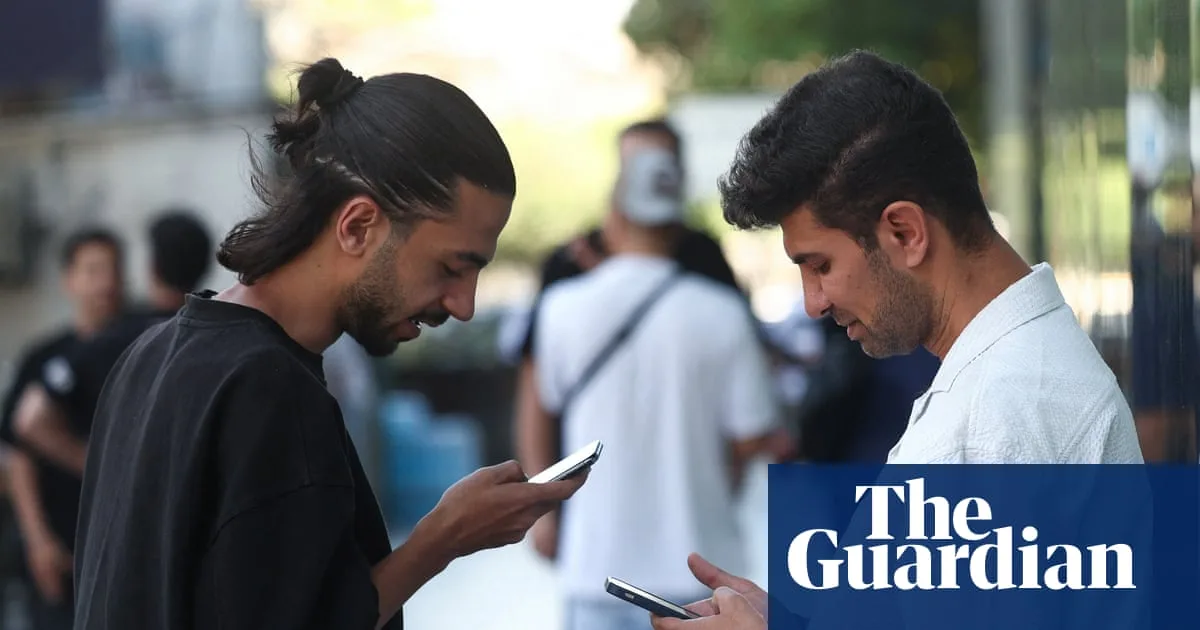
After 88 days of near-total internet blackout in Iran, limited connectivity flickered back to life on Tuesday afternoon. Long-delayed messages, images, and poems flooded phones and social media feeds, but the first reactions were not celebratory. Many new posts were threaded with scepticism, anxiety, and anger.
Ellie, a 42-year-old artist from Tehran, was able to connect for the first time since 28 February. 'I lit a cigarette, played SoundCloud and listened to our favourite music,' she said. 'Ali [her husband] and I held back tears, then cried and convinced ourselves that this was a small taste of a much greater freedom after the fall of this regime.'
Maryam, a photographer in Tehran, described it as 'nauseating to watch the celebrations and applause' from some quarters. 'What an absolute joke,' she said. 'The internet is our basic right.' She noted that mobile internet still could not connect and WhatsApp was barely in use, with the only improvement being that VPNs were easier to connect to now.
The blackout was initially imposed on 8 January during a crackdown on nationwide anti-government protests. Connections were gradually restored in February before a new blackout after US and Israeli strikes against Iran in late February. Most Iranians were stuck in digital isolation, with only a few able to access costly VPNs or satellite internet.
Some expressed fears that the partial restoration was a ploy for increased surveillance. Mina, a 23-year-old protester arrested in January, said, 'They have no reason to open the internet unless this is a way to move the population towards “internet pro” or into tunnels where they can monitor us more easily. We call this filternet.'
Posts mourned those executed or killed in protests, with many Iranians describing scrolling through their phones in tears. 'My accounts are filled with videos of funerals of mothers wailing, fathers screaming and children lying on the graves of their parents,' said Amin, a professor in Tehran. 'We lost our livelihoods, our youth and our trust in the international community.'