Wikipedia, the volunteer-run online encyclopedia, has marked its 25th anniversary by announcing a series of new commercial agreements with leading artificial intelligence companies. The landmark deals signal a strategic shift for one of the internet's last remaining free knowledge bastions as it navigates the economic realities of the AI era.
Monetising the AI Boom: New Deals with Tech Titans
On Thursday, 15 January 2026, the Wikimedia Foundation revealed it has signed licensing pacts with a host of AI developers, including Amazon, Meta Platforms, Perplexity, Microsoft, and France's Mistral AI. These agreements follow earlier deals with Google in 2022 and smaller players like the search engine Ecosia last year.
The foundation stated that these companies are now paying for tailored access to Wikipedia's vast content repository, allowing them to draw data "at a volume and speed designed specifically for their needs." While financial details remain confidential, the move is a direct effort to generate revenue from the heavy, automated traffic AI firms place on Wikipedia's servers.

This comes amid concerns about who funds the infrastructure for the AI boom. Wikimedia CEO Maryana Iskander, who is stepping down on 20 January, emphasised in an interview from Johannesburg that "our infrastructure is not free." Maintaining servers for both human users and tech giants scraping data carries significant cost.
A Founder's View: Collaboration Over Conflict
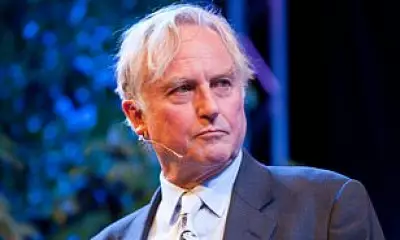
Wikipedia founder Jimmy Wales struck a pragmatic tone in an interview with The Associated Press. He expressed personal satisfaction that AI models are being trained on Wikipedia's "human curated" data, contrasting it with training solely on platforms like X (formerly Twitter), which he jokingly suggested could create "a very angry AI."
Wales's philosophy is one of cooperation, not blockade. "You should probably chip in and pay for your fair share of the cost that you’re putting on us," he stated, underscoring the principle behind the new licensing model. He also pointed out that Wikipedia's 8 million individual donors are not contributing to subsidise large AI corporations.
The need for such deals was highlighted last year when the foundation reported an 8% drop in human traffic, while visits from bots—often disguised—skyrocketed, placing a heavy burden on servers as they scraped content for large language models (LLMs).
Future Visions and Present Criticisms
Looking ahead, Wales envisions AI integrating positively into Wikipedia's own ecosystem. The foundation has an AI strategy that could lead to tools reducing tedious editorial work, such as automatically updating dead links. Furthermore, the search experience could evolve from keywords to a chatbot style, where users ask questions and receive quoted answers from relevant articles.
However, Wikipedia faces external challenges. It has been criticised by some on the political right, dubbed "Wokepedia" and accused of left-wing bias, with US Republican lawmakers investigating alleged editing manipulation. A notable critic is Elon Musk, who launched his own AI-powered rival, Grokipedia, last year and has urged people to stop donating to Wikipedia.
Wales dismissed Grokipedia as a "real threat," arguing that LLMs often produce rambling, nonsensical text on obscure topics and largely regurgitate Wikipedia. "Large language models aren’t good enough to write really quality reference material," he said.
As it enters its next quarter-century, Wikipedia, with its 65 million articles in 300 languages maintained by 250,000 volunteers, is charting a careful course. It aims to preserve its foundational principle of free knowledge while ensuring the tech giants benefitting from its content contribute to its sustained existence.