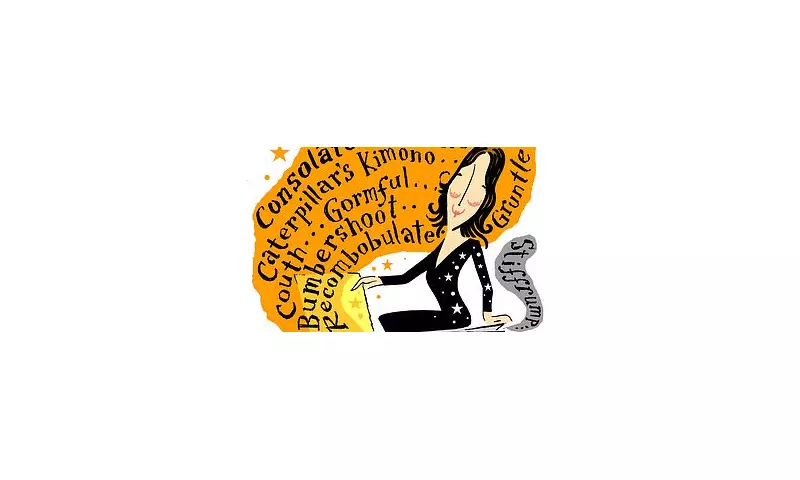
The linguistic landscape of 2025 has been, by most accounts, a rather gloomy party. The words capturing our collective attention—'slop', 'ragebait', 'glazing', 'parasocial'—speak to a digital culture mired in low-quality AI content, manufactured outrage, fake flattery, and unhealthy obsessions. It's a lexicon that might make anyone want to 'latibulate', a charming 17th-century term for finding a corner to hide in.
The Power of Positive Language
This prevailing negativity matters because research consistently shows our vocabulary choices actively shape our reality. Using positive words can boost feel-good hormones like dopamine and lower stress-inducing ones, making us happier and healthier. In the face of 2025's linguistic pessimism, deliberately reaching for a 'happy dictionary' becomes an act of psychological self-defence for the year ahead.
This bias towards the negative isn't new. Historical dictionaries reveal a long-standing trend: for every expression of joy, you'll find a dozen for sorrow. Insults are plentiful and creative, while genuine compliments are scarce. Most of us know a 'stiffrump' (an 18th-century stubborn grouch), and many offices harbour a 'catch-fart' (a fawning flatterer).

Rediscovering Lost Lexical Gems
Yet, hope persists in the dusty corners of the lexicon. You can still find delightful expressions of praise. Instead of calling something perfect, you could tell a colleague they are 'bang up to the elephant' or 'butter upon bacon'. Move beyond 'the cat's meow' with 1920s American slang like 'the kipper's knickers', 'the gnat's elbow', or 'the caterpillar's kimono'.
Lexicographer Susie Dent highlights the value of not taking things too seriously. Giving our irritations friendlier labels can significantly dial down our annoyance. The next time a colleague drones on irrelevantly, you might simply mutter 'flapdoodler'. To their face, you could try the mellifluous 'quisquilious', which sounds complimentary but secretly suggests their ideas belong in the dustbin.
The dictionary is also full of 'orphaned negatives'—words like 'ruthless', 'gormless', and 'inept' that have lost their positive counterparts. Thankfully, those happier relatives cling on. We can hope our leaders are 'feckful' (full of effect) and 'gormful' (discerning). The political lexicon has long been brutal, from 'quockerwodgers' (puppet leaders) to 'snollygosters' (unprincipled opportunists). Perhaps 2026 could see a return to 'eunomy'—good laws, well administered—rather than 'empleomania', the obsessive desire to hold office at any cost.
A Prescription for Positivity in 2026
Choosing positive words actively reframes our worldview. It's the linguistic equivalent of flexing our 'gelastic' (laughter) muscles. A forced smile signals happiness to the brain, triggering a wash of dopamine and endorphins. The dictionary is a trove of smiles, from Victorian slang where umbrellas were 'bumbershoots' to 18th-century sailors dubbing penguins 'arsefoot'. Their intestines, consequently, were 'arseropes'—a handy excuse for a duvet day if ever there was one.
There is also solace in shared experience. The Old English 'uhtcearu' perfectly describes pre-dawn anxiety, proving our ancestors felt the same grip of despair. Simply knowing the word exists can be soothing.
The year ahead could be one where we slow down, rejecting the German 'Eilkrankheit' (hurry sickness) to 'gongoozle' (stare contentedly at water or a cuppa). We might embrace Japanese 'shinrin-yoku' (forest bathing) or 'seijaku' (finding tranquillity in chaos). As 'philocalists', we can seek beauty in the smallest things.

May 2026 bring 'resipiscence'—an 18th-century term for coming to our senses and returning to a better frame of mind. Let's hope for 'respair' (a 1500s word for fresh hope) and even a few 'eucatastrophes', J.R.R. Tolkien's term for unexpectedly joyous endings. After Oxford's Word of the Year highlighted 'rage bait', it's time to rage against the bait itself. Here's to a more 'couth', 'gruntled', and decidedly positive new year.