
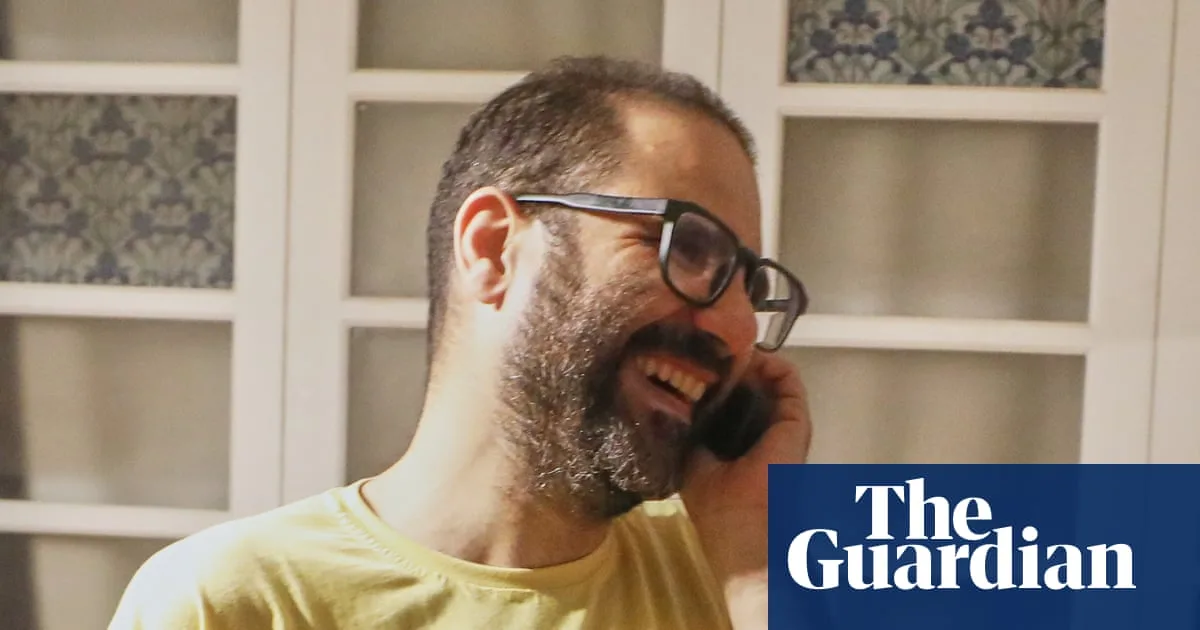
British-Egyptian activist Alaa Abd el-Fattah has arrived in London after the Egyptian government lifted a travel ban that had prevented him from leaving the country. Abd el-Fattah, who was released from jail in September after nearly a decade of detention, had been blocked from flying to the UK in November when security forces stopped him at Cairo airport.
His arrival was announced by his mother, Laila Soueif, on Facebook. His sister Mona Seif expressed disbelief and relief, saying: 'I can't believe it's finally happened and Alaa has made it to London. We thought it was impossible, but here he is.' The family believe the agreement will allow him to travel freely between the UK and Egypt.
Abd el-Fattah had been held in jail almost continuously for 10 years, mainly for expressing opposition to the Egyptian government's treatment of dissidents. He served two years beyond his five-year sentence because authorities refused to count his pre-trial detention as time served. His teenage son Khaled, who lives in Brighton and attends a special educational needs school, visited him in Cairo after his release.
The UK Prime Minister, Keir Starmer, made three calls to President Abdel Fatah al-Sisi and the national security adviser also urged Egypt to end his detention. Starmer said: 'I'm delighted that Alaa is back in the UK and has been reunited with his loved ones. Alaa's case has been a top priority for my government since we came to office.'
Human rights organisation FairSquare, which worked with the family, said: 'I'm delighted that Alaa has safely returned to the UK to be reunited with his son after such a lengthy ordeal.' Abd el-Fattah's mother twice came close to death during an eight-month hunger strike to pressure the UK Foreign Office.




