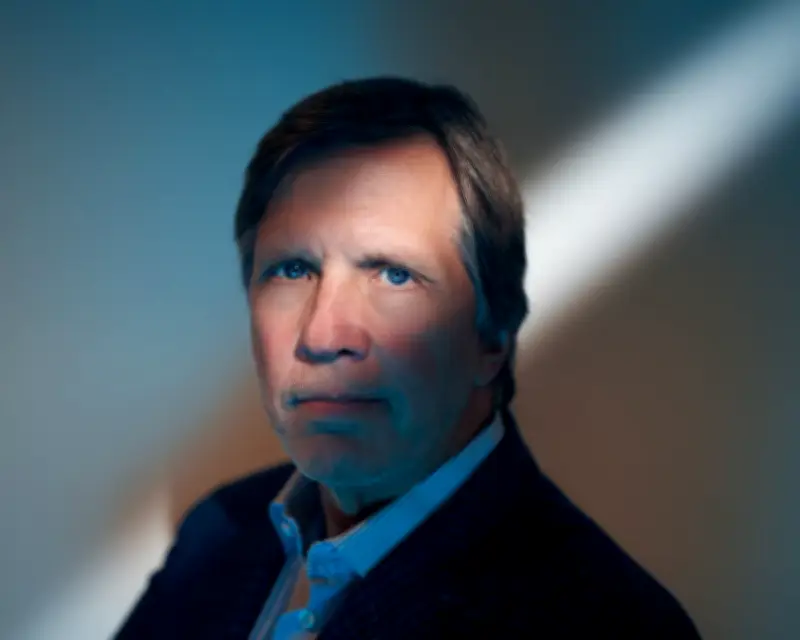
Mark Lanier, the Texas lawyer who secured a landmark $6m verdict against Meta and Google earlier this year, describes his case as a “holy war” against tech giants that knowingly built addictive platforms harming children’s mental health. In an interview, Lanier revealed how he used artificial intelligence to outmaneuver the defendants and why he believes litigation—not legislation—is the only way to hold Big Tech accountable.
Landmark Verdict: Meta and Google Found Liable
On 25 March 2025, a Los Angeles jury found Meta and Google liable on all counts in the case of KGM v Meta et al. The plaintiff, identified as Kaley, was awarded $3m in compensatory damages and $3m in punitive damages after the jury determined the companies acted “with malice, oppression or fraud.” Meta will pay 70% of the damages, with Google covering the remainder. The verdict marks the first time a jury has held social media companies liable for the inherent design of their platforms rather than the content hosted on them.
Kaley, who is now 20, claimed she became addicted to YouTube at age six and Instagram at age nine, leading to body dysmorphia, anxiety, and depression. Her mother brought the case to lawyers after years of struggling to limit Kaley’s screen time. Snapchat and TikTok, originally named in the complaint, settled out of court before trial.

David vs. Goliath: Lanier’s Strategy
Lanier, a veteran litigator who previously won billions from Johnson & Johnson and opioid manufacturers, described the disparity between his team and the tech giants as even greater than the biblical matchup. “The opposing side had unlimited resources. They had dozens of lawyers in the courtroom,” he said. “To call it a David versus Goliath storyline is maybe giving too much credit to David, but it’s the best descriptor I can give.”
To level the playing field, Lanier deployed a bespoke AI system built by BoodleBox, combining Gemini, Claude, ChatGPT, and other models. During jury selection, the AI created psychological and demographic profiles of each juror based on detailed questionnaires, allowing Lanier to test arguments on individual members. Each evening, he fed court transcripts to the AI shadow jury to gauge reactions. “Pretty cool,” he grinned.
Internal Documents Reveal ‘Addiction Machines’
Key evidence came from internal documents showing Meta and Google deliberately engineered their platforms to be addictive. A 2012 Google memo stated YouTube’s “goal is not viewership; it’s viewer addiction.” Another Google document referred to its products as “slot machines,” adding, “The house always wins.” Meta documents revealed the company aimed to “bring them in as tweens” and used “dark patterns” to make parental controls hard to find and reset every 30 days.
Lanier highlighted a 2019 Meta-commissioned study that found teens had “an addicts’ narrative about their Instagram use” and wished they could spend less time on the platform. “Through the industrious hard work of a lot of young lawyers reading, and the industrious hard work of AI, we were able to find the lines of gold,” he said.
Zuckerberg’s Courtroom Appearance
When Mark Zuckerberg testified—the first time he faced a jury—Lanier confronted him with an internal email stating “Mark has decided the top priority for the company is teens.” Zuckerberg claimed the company no longer operates that way and has worked to address “problematic use.” Lanier asked if Meta ever investigated Kaley’s account; Zuckerberg did not answer. The prosecution also unrolled a 50ft-wide collage of Kaley’s filtered selfies, urging Zuckerberg to look at the images.
Lanier noted that Zuckerberg’s entourage wore Meta Ray-Bans in court, potentially capable of facial recognition. “We had fought hard for an anonymous jury,” Lanier said. “Then Zuckerberg shows up with security guards wearing Meta glasses. They can easily do facial identification and figure out exactly who the jurors are.” The judge made the team swear they had not taken pictures and ordered the glasses removed.

Impact on Future Litigation
The verdict has opened the floodgates: more than 2,000 similar lawsuits are now pending against social media companies. Former Facebook whistleblower Frances Haugen estimated Meta could face $1tn in damages, though Lanier called that “an overestimation.” He said, “Tens of billions, easy. Part of it also is: are they willing to make real change?”
Lanier’s firm is also working on a claim against OpenAI over a teenager’s suicide linked to ChatGPT, and a forthcoming suit against Roblox, which he calls “a breeding ground for child exploitation.”
Kaley’s Story: From Addiction to Advocacy
Kaley, who spoke in her first newspaper interview, described how social media consumed her life. “I was on it every day from the moment I woke up to the moment I went to bed,” she said. She once spent more than 16 hours on Instagram in a single day. When her mother confiscated her phone, Kaley would “beg and beg and cry” and sneaked a hand-me-down phone to re-download Instagram. She started cutting herself at age 10 and was later diagnosed with depression, anxiety, and body dysmorphia.
Despite the victory, Kaley remains on social media. “It’s very difficult,” she said. But she feels relief that her case will help others. “I knew it meant that other cases would get to go to court, so I was feeling happy for the other families.” Google and Meta are appealing, a process Lanier expects to take seven years.
Lanier’s Broader Mission
Lanier, a devout Christian who preaches every Sunday, sees his work as a divine mission. “This was a righteous case, without a doubt. It was a holy war,” he said. He has funded a religious study centre in Oxfordshire, purchased with proceeds from the Johnson & Johnson case. “My wife and I call this the J&J Manor House,” he joked.
He believes litigation is the only effective check on tech power. “Politicians will never hold these people accountable. The only thing they fear is a jury,” Lanier said. “I get 12 ordinary people, and they’re empowered. And when they hear that evidence and they take their oath seriously – bam! – they can do something.”