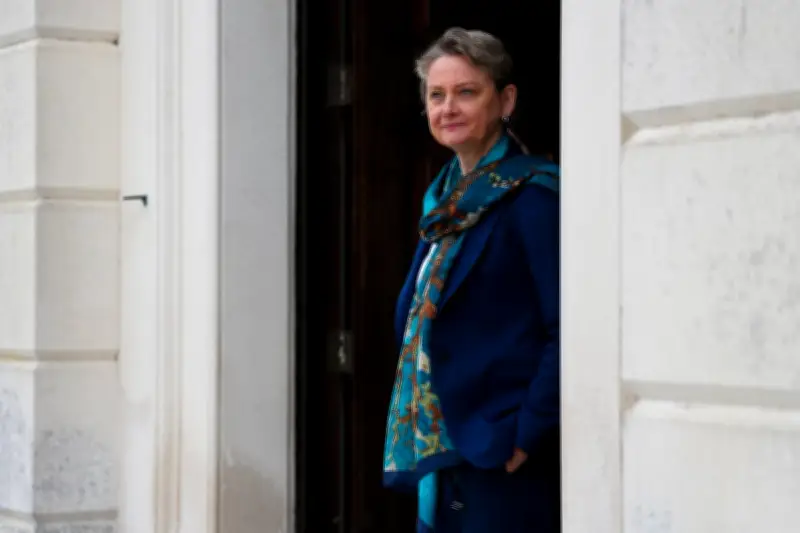
Foreign Secretary Yvette Cooper has warned that artificial intelligence needs to be globally regulated before a potentially devastating display of its power, arguing that the world cannot afford to wait for an 'AI equivalent of Hiroshima' before acting on safety concerns.
UK Positioned to Lead on AI Safety
In an essay for the Chatham House international affairs think tank published on Monday, Cooper suggested the UK was well placed to lead global work on AI safeguards, building on the 2023 Bletchley Park summit under then prime minister Rishi Sunak. She argued that international agreement on AI security was needed to safely exploit its potential.
Cooper drew parallels with nuclear weapons, noting that international agreements on nuclear safety only came about following a display of their 'terrifying power' at the end of the Second World War. 'But there are no such agreements between global powers on AI,' she said. 'On nuclear, international agreement came only after the world saw the terrifying power of the new technology at Hiroshima – and asked what would happen if it fell into the wrong hands. We cannot afford to wait for an AI equivalent of Hiroshima before we act.'
Growing Concerns Over AI Risks
Earlier this month, the UN's AI panel warned that 'the gap between rapidly improving capabilities and effective risk management methods may lead to catastrophic outcomes.' The Five Eyes intelligence alliance—the UK, US, Canada, Australia and New Zealand—has warned that AI-powered cyber attacks could be just months away.
In her essay, titled 'Britain's Place In The New World Order', Cooper noted that people in the UK are increasingly feeling the impact of global instability, from rising energy and food prices to migration pressures and the risk of cyber attacks. She said there was renewed competition between great powers, weakened international rules, and the weaponisation of global supply chains in areas including energy and technology.
Call for Global Cooperation
Cooper emphasised the need to 'build Britain's strength in every form, and use that strength as both a force for good in the world and, above all, a force to improve the lives of British people.' She argued that the UK could help build international consensus around AI safety, similar to the role it played after the Second World War in establishing nuclear safety accords that allowed the development of nuclear power and the containment of nuclear weapons.