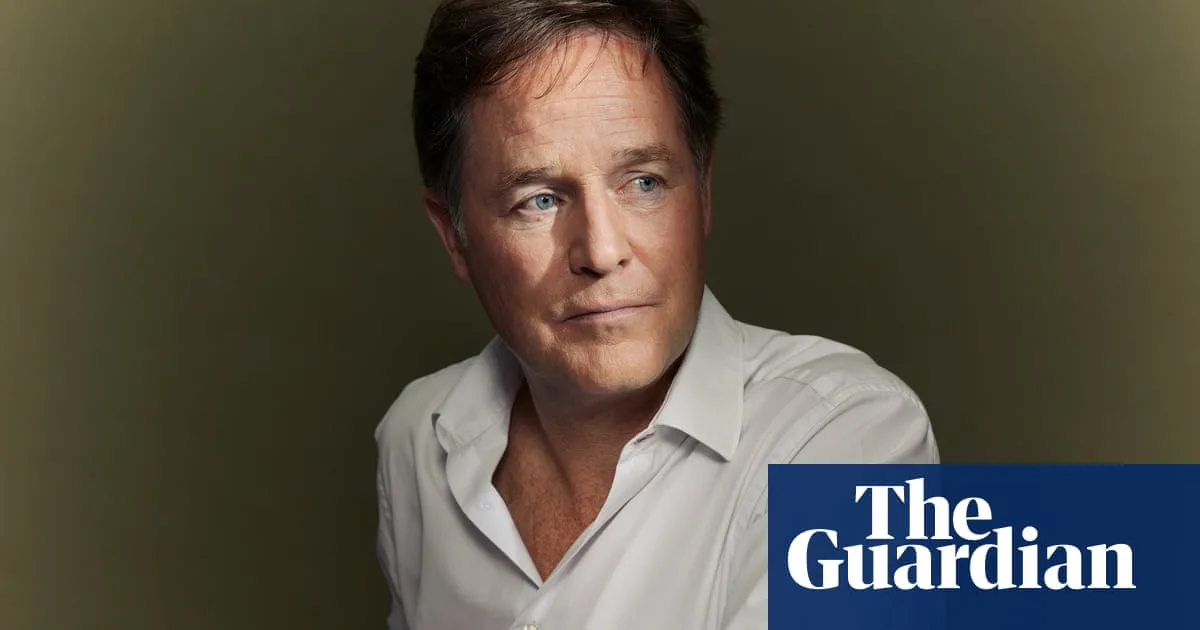
Nick Clegg Warns of 'TikTokification' and AI's 'Poisoned Chalice'
Ex-Meta boss Clegg slams 'TikTokification' of social media

Sir Nick Clegg, the former deputy prime minister and Meta executive, has delivered a stark critique of modern social media, labelling it a "poisoned chalice" and warning that the rise of generative artificial intelligence represents a "negative development" for society.

From Silicon Valley Insider to Vocal Critic

Sir Nick's remarks, made during an evidence session for the cross-party Independent Commission on Community and Cohesion on Wednesday 14 January 2026, mark a significant shift in tone from his time as Meta's president of global affairs. He stepped down from that role in January 2025.

He told the commission, co-chaired by former Conservative home secretary Sir Sajid Javid and former Labour MP Jon Cruddas, that the "recent advent of generative AI is doing something very, very profound, and in my view, potentially actually very negative." He argued it strips platforms of their social purpose, stating: "It means, actually, these apps are no longer social at all."

The Dangers of 'TikTokification' and Automated Content

Sir Nick specifically criticised the "TikTokification" of platforms like Instagram, which is owned by his former employer, Meta. He described users being "bombarded by short-form video recommendations" that are algorithmically selected from the "deepest, darkest recesses of the internet."

He contrasted this with the human-centric social media he engaged with upon moving to Silicon Valley in autumn 2018. "It's an increasingly automated experience," he warned, where passive consumption of synthetic, algorithmically recommended content is becoming the norm.

He highlighted clear academic evidence showing this passive consumption is "much worse, particularly for younger people's mental health, than interaction with other human beings via social media."

A Call for Transparency and the Power Dilemma

Sir Nick called for much tougher regulatory action, stating he would "be way tougher with the big companies on the transparency that they must provide on these algorithmic systems." This stance notably contrasts with comments he made just a month before leaving Meta, where he railed against "needless regulatory complexity" in the EU.

While acknowledging the "democratising" and economically vital role of social networks, he emphasised the "really difficult trade-off in terms of power." He cautioned that individual empowerment comes "with dramatic, excessive centralisation and aggregation of power in the hands of the small number of men" running tech behemoths in the US and China, who are "not elected by anyone."

Ofcom Investigates Grok AI Amid Deepfake Row

Sir Nick's warning coincides with growing alarm over AI-generated content. Ofcom has launched an investigation into reports that Elon Musk's Grok AI chatbot on X was being used to create deepfake nude images and content "that may amount to child sexual abuse material."

Following the controversy, in which Mr Musk accused the UK Government of being "fascist," the UK will bring into force a law making the creation of non-consensual sexual deepfake images illegal.

The commission's fifth evidence session, part of nine planned to address community divisions after the 2024 summer riots, also heard Sir Nick distinguish between platforms. He described X as a "highly elite" app for a "tiny number" to debate politics, while Facebook is used by "slightly older people" who "don't want to talk about politics at all."

Emeka Forbes, director of the commission’s secretariat, said Britain is at a "turning point" grappling with a "twin crisis of connection and cohesion." The commission's final report is expected later this year.