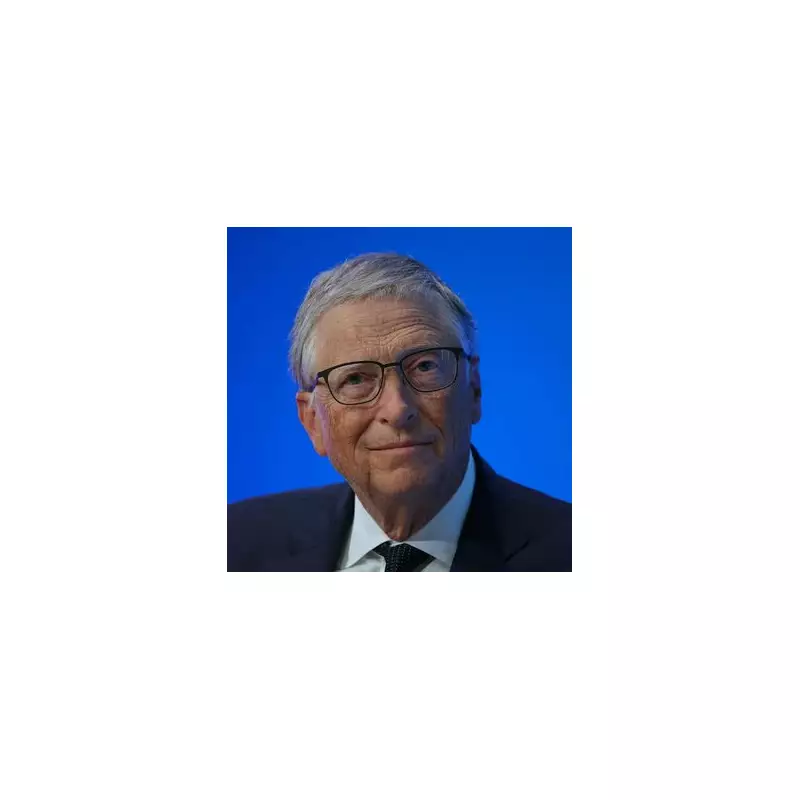
Microsoft co-founder Bill Gates has issued a stark warning about the potential dangers of artificial intelligence, describing "scary" outcomes if the powerful technology falls into the wrong hands. The billionaire philanthropist made the comments during an interview on BBC Radio 4's Today programme.
The Double-Edged Sword of Artificial Intelligence
While hailing AI as "the greatest solution that mankind's ever created," Gates emphasised its dual nature. He stated that the same transformative power could lead to alarming scenarios if exploited by malicious actors. "AI at the same time is the greatest solution that mankind's ever created, and yet such an amazing change agent that in the hands of people with bad intent it creates lots of scary scenarios," Gates told the BBC.
He highlighted the technology's immense potential to revolutionise global healthcare within the next ten years. Gates envisions a future where a personal AI assists individuals throughout their lives, particularly during medical consultations. This, he argued, could dramatically improve care in both wealthy and poorer nations, reduce pressure on overstretched doctors, and cut down on diagnostic errors.

Microsoft's AI Boss Calls for 'Healthy Fear'
Echoing and expanding on these concerns was Mustafa Suleyman, the head of Microsoft's AI division. In a separate guest editing slot on the Today programme, Suleyman asserted that a degree of fear is a necessary and rational response to AI's rapid advancement. "I honestly think that if you're not a little bit afraid at this moment then you're not paying attention," he said.
Suleyman, who grew up in Islington, London, described himself as a "techno-optimist" but admitted to feeling personal apprehension. He urged the public to adopt a healthily sceptical stance to drive responsible action. His warnings extended to the concept of superintelligent AI systems that could surpass human capabilities on all tasks.
"A system like that would almost certainly not be controllable," Suleyman cautioned. He specifically warned against developing AI with the ability to self-improve, set its own goals, and operate with complete autonomy, arguing such a combination would make it impossible to control and potentially overwhelming for humanity.
Job Displacement and Digital Overload
Beyond existential risks, Suleyman addressed more immediate societal impacts. He labelled AI a "fundamentally labour replacing" technology, noting its current effect on call centre workers and predicting that legal roles and junior accountancy positions could be next.
He also acknowledged the technology's potential drawbacks for mental wellbeing, suggesting the digital world has already bombarded people with complexity. "I think more digital connectivity is probably just going to make that anxiety and confusion even greater," Suleyman said, advocating for more free time for people to connect in the real world.
Both tech leaders implied a need for robust governance. Bill Gates explicitly called for governments to impose heavier taxes on the tech titans who are controlling the development of this transformative technology, a move seen as crucial for managing the upheavals it will create.