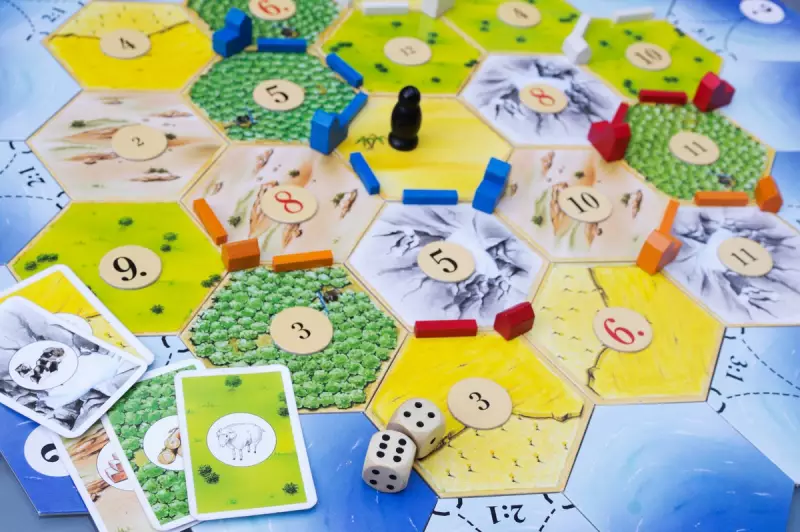
As Christmas approaches and long afternoons loom, many families seek alternatives to traditional board games. For those weary of Monopoly's familiar disputes, the strategic world of Settlers of Catan offers a compelling and intellectually stimulating escape.
The Game That Transformed an Industry
Since its launch in 1995, Settlers of Catan has fundamentally reshaped the board game landscape. It has sold more than 40 million copies worldwide and spawned dozens of spinoffs. Designed for three to four players, the game involves competing to become the dominant force on the fictional Catan island through building roads, trading resources, and collecting victory points.
Beyond mere entertainment, academics and business leaders now recognise Catan as a powerful tool for developing strategic capabilities. These are the very skills required to navigate complex problems, job insecurity, and rapid technological change in the modern world.

Strategic Lessons from the Catan Board
According to Nelly Liyanagamage, a Lecturer in Strategic Management at the University of Wollongong, the game creates an artificial environment that mirrors our social and business realities. It provides a safe space to hone communication, risk-taking, and decision-making while building resilience.
"People say, 'Where do I get my business strategy?' It's from game playing," remarked LinkedIn co-founder Reid Hoffman. He identified Catan as "the game that is closest of all the board games to entrepreneurship."
The game's core lessons translate directly into business and personal strategy:
1. Analyse Your Context and Resources
Success in Catan, as in business, begins with a thorough analysis of the environment. Players must assess their starting resources and position, akin to evaluating market conditions and future trends. This involves understanding your unique strengths and the opportunities and threats around you.
2. Adapt Your Strategy and Differentiate
While many players compete for the same resources, savvy strategists find alternative pathways. This mirrors the business principle of differentiation—offering something competitors do not. In Catan, this might mean leveraging underused resources; in business, it means finding a unique value proposition.
3. Manage Finite Resources Wisely
Catan's resources are limited, forcing players to make constant trade-offs. This is a fundamental lesson in both corporate and personal budgeting, where strategic choices about spending, saving, and investing must always consider the bigger picture.
4. Negotiate with Foresight
You cannot win Catan alone. The game teaches the importance of forming—and sometimes breaking—alliances. Effective trading requires research, understanding the rules, and anticipating an opponent's motives, much like conducting due diligence in a business deal.
Building Resilience for the Long Game
Above all, Catan teaches resilience—the capacity to rebound from adversity. The game is filled with uncertainty, much like life and business. The journey of Sir James Dyson, who created over 5,000 prototypes before perfecting his vacuum cleaner, exemplifies this resilient mindset.
Catan is easy to learn but never plays the same way twice, directly reflecting the messy, unpredictable nature of the real world. This festive season, building settlements on Catan island might just be the most enjoyable way to build crucial skills for future success.