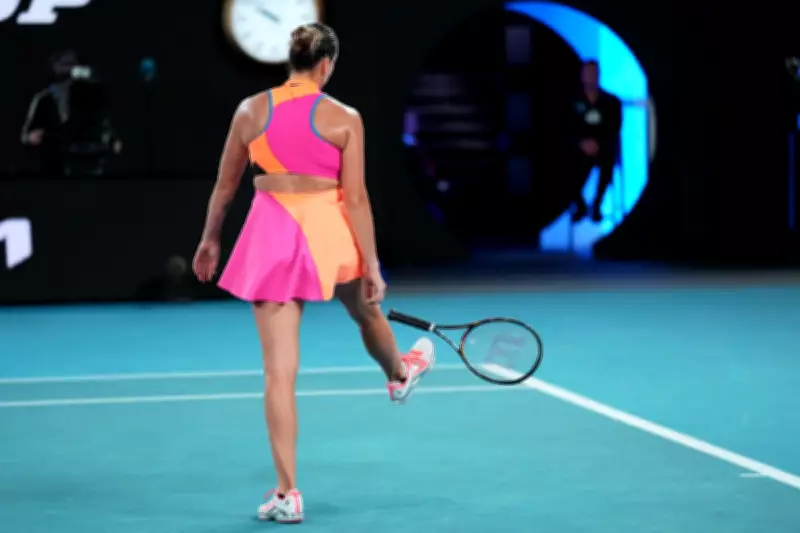
In a moment of pure frustration that encapsulated her ongoing battle with pressure, Aryna Sabalenka kicked at her racket as the Australian Open final slipped from her grasp. The image captured the essence of another painful chapter in the Belarusian's quest for tennis immortality.
The Statistical Reality Versus Psychological Perception
Following her excruciating loss to Elena Rybakina in Melbourne, Sabalenka lamented what she perceived as a poor record in grand slam finals. The statistical truth reveals a balanced 4-4 record in major finals, yet the psychological weight feels significantly heavier. This disconnect between numbers and mindset highlights the central challenge facing the world's top-ranked player.
A Career of Remarkable Consistency
Sabalenka's career achievements are nothing short of extraordinary. She has reached five of the last six grand slam finals and eight overall throughout her career. In her past thirteen major tournaments, she has advanced to twelve semi-finals, demonstrating a level of consistency few players in tennis history have matched. The sole exception came at the 2024 French Open, where food poisoning limited her to a quarter-final appearance that still stretched to three sets against Mirra Andreeva.

This remarkable run reflects genuine mental toughness through the early and middle rounds of tournaments, where Sabalenka appears the most formidable competitor on the planet. Her ability to handle the mounting pressure through multiple matches showcases a resilience that makes her final struggles all the more perplexing.
The Final Hurdle: Pressure Points and Psychological Battles
Where Sabalenka's mental fortitude shines through most tournaments, it has repeatedly faltered at the final hurdle. When a major title comes within touching distance, the player known for her power and aggression becomes vulnerable to nerves and indecision. Her loss to Rybakina followed a familiar pattern: after brilliantly recovering from a slow start and building a 3-0 lead in the decisive third set, Sabalenka's composure evaporated as she lost five consecutive games.
"Compared to some of her previous losses, this wasn't a catastrophe," tennis analysts noted, pointing to Rybakina's current form and unique ability to match Sabalenka's power. Yet surrendering such a commanding position in a grand slam final remains unacceptable for the world's top-ranked player.
Addressing the Mental Game
Sabalenka has been refreshingly honest about her psychological challenges in these crucial moments. She has previously worked with sports psychologists and openly discusses how pressure affects her decision-making when titles are on the line. The Belarusian understands better than anyone that her fluctuating performances in finals stem from an inability to maintain clarity of thought during tennis's most pressurized situations.
Her career stands at a fascinating crossroads. At 27, Sabalenka has already compiled incredible achievements: four grand slam titles, 75 weeks as world number one, and 22 tournament victories. She remains the dominant figure in women's tennis and one of her generation's finest competitors.
The Legacy Question
The central question now revolves around legacy. With the physical peak of her career coinciding with her most complete game, Sabalenka has created more opportunities to win majors than perhaps any contemporary player. Yet each missed chance represents what could have been. As she herself acknowledged with characteristic dark humor and frankness after the Melbourne defeat, the ambitions remain unchanged.
"Keep fighting, keep working hard, keep putting myself out there," Sabalenka stated, looking ahead to future opportunities. "Try my best if I'll have another chance in the final. Just go out there and do my best."
The window for converting these consistent appearances into additional major titles won't remain open indefinitely. Sabalenka's challenge is clear: overcome the psychological barriers in decisive moments to transform remarkable consistency into legendary status. Her career narrative continues to be one of tennis's most compelling stories, defined equally by extraordinary achievement and frustrating near-misses.