Victoria Mboko and Mirra Andreeva: A New Era of Friendly Rivalry in Women's Tennis
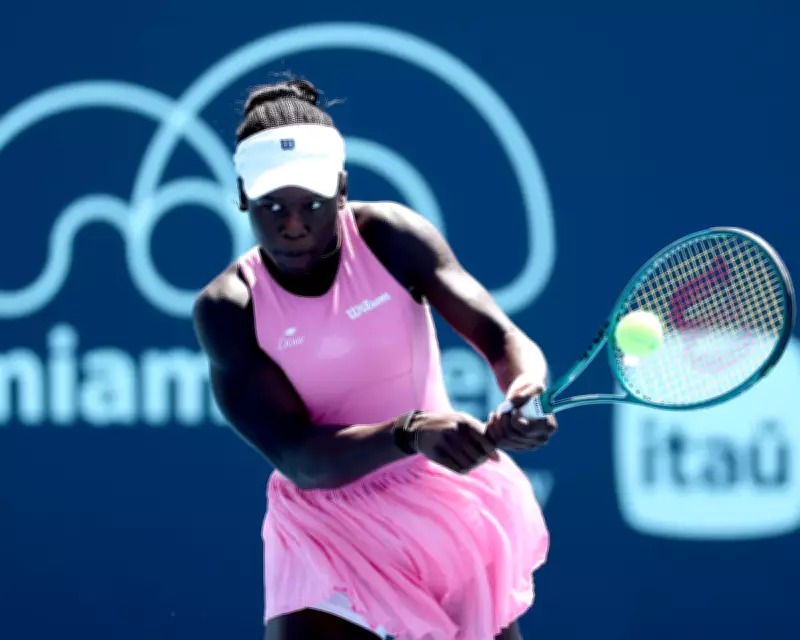
In a captivating display of sportsmanship and skill, Victoria Mboko triumphed over her doubles partner Mirra Andreeva to secure a spot in the quarter-finals of the Miami Open. This match not only showcased their individual talents but also underscored a significant shift in the dynamics of women's tennis, where fierce competition and genuine friendship coexist.
Doubles Partnership Precedes Singles Clash
Before facing off in the fourth round, Mboko and Andreeva, the two highest-ranked teenagers globally, teamed up in doubles. Their partnership on a smaller court in Miami was marked by laughter and relaxation, yet their competitive spirit shone through. Trailing 0-5 against the eighth seeds, Demi Schuurs and Ellen Perez, and facing eight set points, they mounted a remarkable comeback to win in straight sets. This resilience highlights their determination and sets the stage for their singles encounter.
The Rise of a New Generation
The success of Mboko and Andreeva reflects broader trends in women's tennis in 2026. While teenagers have long been prominent in the sport, recent years saw a scarcity of young talent at the top. In March 2023, Coco Gauff was the sole teenager in the top 50. Today, the landscape has transformed dramatically.

Mboko and Andreeva are part of a robust group of players aged 20 and younger who are climbing the rankings and pushing each other to new heights. Notable among them are Iva Jovic, an 18-year-old American ranked No. 17 after reaching the Australian Open quarter-finals, and Maya Joint, a 19-year-old Australian established in the top 30. Alexandra Eala, the first elite player from the Philippines, has drawn massive crowds, sometimes overshadowing stars like Carlos Alcaraz and Novak Djokovic.
Friendliness Amidst Fierce Competition
What sets this new generation apart is the camaraderie they share off the court. Even after a tough loss, players like Eala express gratitude for the friendships within the tour. "I think it's super healthy that we have these friendships off the court and we're able to balance that professional life and still separate it from our actual relationships," Eala remarked. This supportive environment marks a departure from past eras, where tension and rivalry often defined women's tennis.
Historically, the sport was built on intense rivalries, with players like Martina Hingis, Lindsay Davenport, Justine Henin, Maria Sharapova, and Victoria Azarenka emphasizing competition over camaraderie. In contrast, today's top players, such as Aryna Sabalenka, Iga Swiatek, Gauff, and Elena Rybakina, frequently train together, demonstrating that friendships can be set aside during matches without animosity.
A Tense and Bruising Encounter
The singles match between Mboko and Andreeva was a testament to their competitive drive. After their doubles success, they faced each other on the Butch Buchholz court for their third meeting of 2026. The battle was intense, with Mboko ultimately prevailing 7-6(4), 4-6, 6-0 to advance to her first Miami Open quarter-final.
The match also revealed the challenges of maintaining friendships in a high-stakes sport. Andreeva, struggling with a hip injury, called for a medical timeout during the second set. While such timeouts can be contentious, Andreeva apologized to Mboko after the match, and the pair hugged warmly, reaffirming their bond. Their ability to compete fiercely and then reconnect as friends exemplifies the new ethos in women's tennis.
Looking Ahead
As Mboko and Andreeva continue their careers, their rivalry and friendship symbolize a healthier, more collaborative era in the sport. With a talented young cohort rising through the ranks, women's tennis is poised for exciting growth, driven by both skill and mutual respect. This evolution promises to attract fans and inspire future generations, making the game more dynamic and inclusive than ever before.