Rugby's Identity Crisis: Parling-Doyle Spat Sparks Debate on Sport's Future
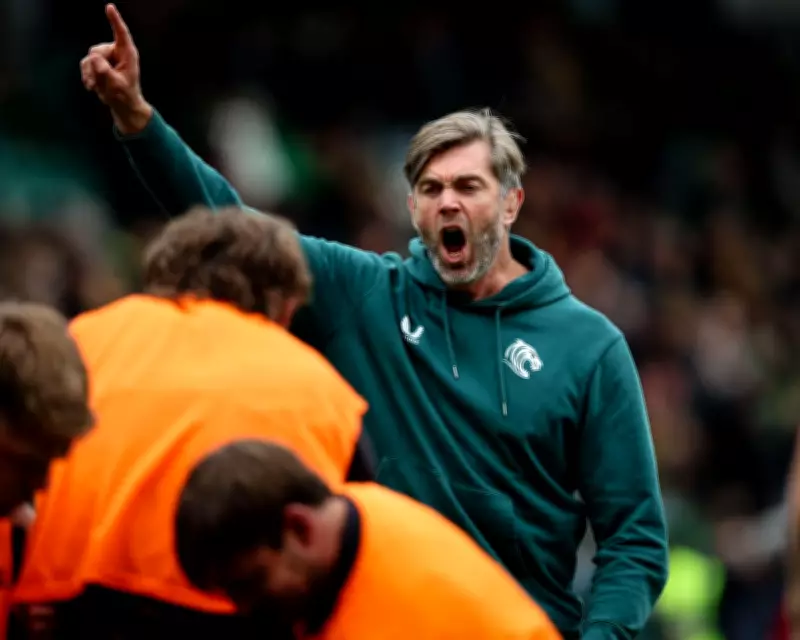
Geoff Parling, once known as a stern-faced Premiership coach, has unexpectedly become a global social media sensation. His pre-game confrontation with TNT Sports presenter Craig Doyle has gone viral, amassing over three million views on X and igniting a fierce debate about rugby's modern identity.
The Incident That Captured Global Attention
The viral clip shows Parling, the Leicester Tigers coach, angrily interrupting Doyle and colleague Liam MacDevitt during their on-field segment before Gloucester's match at Villa Park. When Doyle cheerfully asked if he'd consider signing MacDevitt after a near-miss kick, Parling responded by shoving the presenter away and bluntly declaring, "It's fucking not on!" before demanding they leave the pitch.
The internet immediately erupted with reactions, with most observers concluding both parties shared responsibility. While coaches shouldn't physically confront broadcasters, presenters arguably shouldn't disrupt professional athletes' pre-game preparations. Parling's concern centered on safety - a stray ball could potentially injure players moments before a crucial league fixture.

Doyle's Diplomatic Recovery and Broader Implications
The incident's entertainment value was undeniable for those familiar with both individuals. Doyle's immediate damage control - "Geoff's not happy about that" - has already entered the annals of great live television understatements, worthy of end-of-season recognition.
Beyond the entertainment, however, this spat directly taps into rugby's existential dilemma. The Parling-Doyle confrontation symbolises the intensifying tug-of-war for rugby's soul. Does the sport belong to broadcasters whose financial support prevents a return to amateurism? Or to the players and coaches who create the spectacle? Or perhaps to the often-overlooked paying audience?
Rugby's Crossroads: Entertainment Versus Tradition
Recent developments highlight this tension. Boxing promoter Eddie Hearn has added Northampton and England back-row Henry Pollock to his Matchroom talent roster, despite admitting limited rugby knowledge. Hearn clearly sees crossover potential and financial opportunity, but rugby remains a team sport where individual stardom differs fundamentally from boxing's solo spotlight.
The 21-year-old Pollock now faces increased scrutiny without major trophies to his name. His bleach-blond haircut and crowd-shushing antics divide opinion, illustrating how pursuing fame carries risks in rugby's collective environment.
Club Rugby's Contradictory Pressures
Club rugby stands at a crossroads. On one side, there's desperate need for fresh investment and new audiences to address financial strains. On the other, rugby maintains its traditional identity as a family-friendly sport valuing humility, integrity, and respect for officials.
Leicester's statement following the Parling-Doyle incident captured this contradiction perfectly. Alongside Parling's apology came a revealing quote: "It is important we stay a family focused game and it wasn't appropriate for viewers to see that. We have a great product in the Prem and I offer my thanks to Craig Doyle and TNT for continuing to innovate and think differently."
The Future: Gladiatorial Sport or Entertainment Spectacle?
Rugby increasingly faces pressure to embrace full-scale entertainment, potentially transforming into a modern equivalent of 1970s ITV wrestling with pre-match stunts and manufactured drama. Alternatively, the sport could emphasise its authentic strengths.
As demonstrated by thrilling encounters like France versus England in the Six Nations, modern rugby already provides substantial gladiatorial entertainment without artificial additives. While viral social media moments come and go, the quality of rugby's core product will ultimately determine its future trajectory.
The Parling-Doyle incident serves as a microcosm of rugby's broader struggle. As the sport navigates between tradition and modernization, between authentic competition and manufactured entertainment, its choices will shape its identity for generations to come. The viral clip may fade from memory, but the questions it raises about rugby's soul will persist long after the views stop counting.