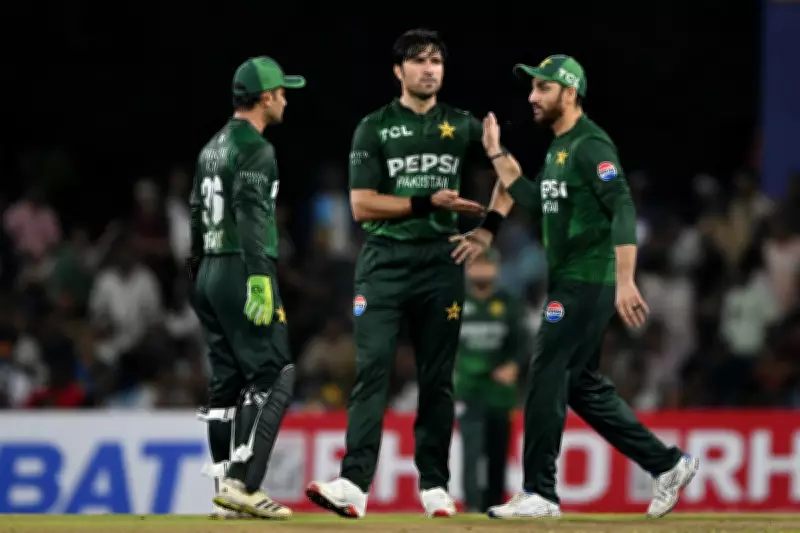
The International Cricket Council has delivered a pointed response to Pakistan's decision to withdraw from its scheduled Twenty20 World Cup match against arch-rivals India, labelling the move as damaging to the fundamental principles of global sport.
Government Directive Overrides Cricket Diplomacy
Pakistan's government formally announced via its official social media channels on Sunday that while it would permit the national cricket team to participate in the ICC Men's T20 World Cup 2026, it would specifically prohibit them from taking the field for the high-profile group stage encounter against India scheduled for 15th February. This directive reflects Pakistan's longstanding policy of avoiding sporting tours to India amid persistent geopolitical tensions between the two nuclear-armed neighbours.
Consequently, all of Pakistan's Group A fixtures have been arranged to take place in Sri Lanka, the tournament's co-host nation, rather than on Indian soil. The Pakistan Cricket Board had previously announced its squad for the 20-team competition, which commences on 7th February, with the crucial caveat that final participation remained subject to governmental clearance.

ICC's Firm Stance on Selective Participation
In an official statement, the global governing body expressed significant concern, noting it had taken cognisance of the Pakistani government's announcement. The ICC emphasised that while it respects the roles of national governments in policy matters, this specific decision poses a serious challenge to the tournament's foundational values.
"This position of selective participation is difficult to reconcile with the fundamental premise of a global sporting event where all qualified teams are expected to compete on equal terms per the event schedule," the ICC declared. The council stressed that its tournaments are constructed upon pillars of sporting integrity, competitiveness, consistency, and fairness, arguing that picking and choosing matches directly "undermines the spirit and sanctity of the competitions."
The statement further elaborated that the move is not in the interest of the global game or the welfare of fans worldwide, including the millions of passionate cricket supporters within Pakistan itself. The ICC urged the PCB to carefully consider the significant and potentially long-term repercussions for cricket within its own borders, warning that such actions could negatively impact the wider global cricket ecosystem of which Pakistan is both a member and a beneficiary.
Tournament Logistics and Broader Boycott Context
Meanwhile, sources within the Board of Control for Cricket in India confirmed to the ANI news agency that the Indian team intends to proceed as planned. "Team India will travel to Sri Lanka and follow ICC protocol. They will practice as per schedule, do a press conference and reach the stadium according to time and wait for the match referee to call off the match," a BCCI source stated, outlining the procedural steps expected for a forfeited fixture.
This controversy unfolds against a backdrop of broader tournament disruption. In a separate development, Bangladesh has already been replaced in the global showpiece by Scotland following its refusal to travel to India, citing unspecified safety concerns. The Bangladesh Cricket Board had formally requested an exemption based on security reasons, a decision seemingly influenced by regional tensions following the release of bowler Mustafizur Rahman from his Indian Premier League contract and reports of communal unrest.
However, the ICC stated it did not find "any credible or verifiable security threat to the Bangladesh national team in India," leading to their exclusion. Scotland's late entry sets up an intriguing group stage clash with England in Kolkata on 14th February.
The ICC concluded its statement by reaffirming that its primary focus remains the successful delivery of the T20 World Cup. It expressed hope that the PCB would work towards a mutually acceptable resolution that protects the interests of all stakeholders, from players and boards to the millions of fans anticipating one of world sport's most intense rivalries.