Climate Change Puts Winter Olympics at Risk as Alpine Temperatures Soar
New data has revealed the devastating impact climate change is having on the Winter Olympics, with rising temperatures threatening the very future of the global sporting event. This year's competition, set to begin on 6th February in Milano Cortina, will see athletes from across the world compete in 16 disciplines, many of which depend heavily on abundant natural snow.
Alarming Temperature Increases in Historic Venues
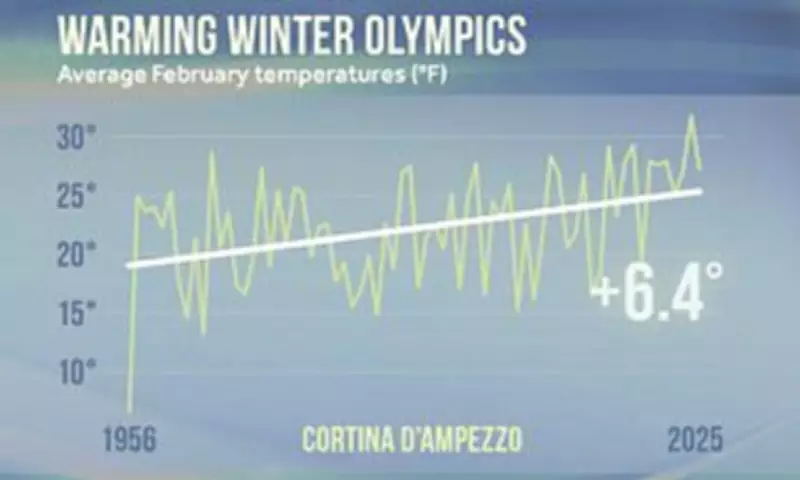
Climate Central has published concerning findings about the high-altitude Italian Alps location. In the seven decades since Cortina first hosted the Winter Games in 1956, February temperatures in the northern Italian town have increased by a staggering 3.6°C (6.4°F). This significant warming has resulted in fewer freezing days, with Cortina d'Ampezzo now experiencing 19 per cent fewer freezing days annually compared to 1956.
The 2026 Olympics will be held across eight locations: Milano, Verona, Tesero, Predazzo, Bormio, Livigno, Antholz-Anterselva, and Cortina d'Ampezzo. Cortina d'Ampezzo, which first hosted the Winter Olympics seventy years ago, has seen its average February temperatures pushed closer to thawing point by global warming.

Artificial Snow Becomes Essential for Competition
As a direct consequence of these temperature changes, this year's event will rely heavily on artificial snow production. Climate Central explains that despite taking place in the high-altitude Italian Alps, centered around Cortina, the 2026 Olympics will require more than 3 million cubic yards of artificial snow.
"With artificial snow becoming a regular part of winter sports, the challenge of ensuring adequate conditions highlights the central role that the weather plays in the Winter Olympics and Paralympics," Climate Central stated. "This is especially crucial for the reliability and safety of outdoor competitions."
Multiple Venues Affected by Warming Trends
Cortina is not the only Olympic site experiencing significant warming. Milan, which will host figure skating and ice hockey events, has warmed by 3.2°C (5.8°F) since 1956. Studies show that average February snow depth in Cortina has decreased by about 15 centimetres (6 inches) from 1971 to 2019 due to warming.
Climate Central warns that without sufficiently cold temperatures and adequate snow coverage, Olympic athletes may face challenging conditions including rain, wet snow, or low snow coverage. "Resistant and hard surfaces are required for elite competition to ensure fair and safe conditions for athletes," the organisation explained. "If surfaces cannot refreeze, the risk of injuries increases and athletes later in the start list are likely to experience less favourable conditions."
Beyond Skiing: Bobsled Events Face Particular Challenges
While skiing and snowboarding might be the most obvious sports affected by warming conditions, Climate Central highlights particular challenges for bobsled events. These high-speed races take place on outdoor ice tracks where sleds compete in timed runs.
Although ideal bobsled tracks require temperatures at freezing or below, many tracks now need constant refrigeration to maintain these conditions. "While necessary to prevent melting, refrigeration creates frost which can make the track slower, presenting fairness concerns for athletes," Climate Central explained.
Future Winter Olympics Face Uncertain Prospects
Looking ahead, the situation appears increasingly concerning. A 2024 study found that of 93 potential host cities for the Winter Olympics, only 87 currently have reliable conditions. However, by 2050, that number will drop to just 52 under a high-emissions scenario.
"The future of the Winter Olympics — and the reliability, safety, and fairness of many outdoor winter sports competitions — is uncertain in a warming climate," the experts concluded, highlighting the profound challenges facing winter sports as global temperatures continue to rise.