As the Milan Cortina 2026 Winter Games approach, the issue of diversity remains a prominent challenge across the Olympic landscape. However, the United States is demonstrating tangible progress, with its bobsled and skeleton federation on the cusp of announcing a landmark team.
A Historic Roster Takes Shape
When USA Bobsled and Skeleton reveals its official selections, the federation is expected to send either eight or nine women to compete on the ice in Italy. In a significant shift, the majority of these athletes will likely be women of colour. This development positions the 2026 squad to potentially become the most diverse U.S. Winter Olympic team in history.
The benchmark for comparison is the 2018 PyeongChang team, which included 21 athletes of Black or Asian descent, representing roughly 8% of the American contingent. Early indications suggest the 2026 team could surpass that figure. While acknowledging there is considerable room for further growth, athletes within the programme feel momentum is building in the right direction.

"We're really doing this," said Mystique Ro, a U.S. skeleton athlete of Black and Korean heritage who, with teammate Austin Florian, won the mixed event world championship last year. "The train has left the station. We're going. And it's such a surreal feeling... We're really making history out here and it's not slowing down at all."
Trailblazers Leading the Charge
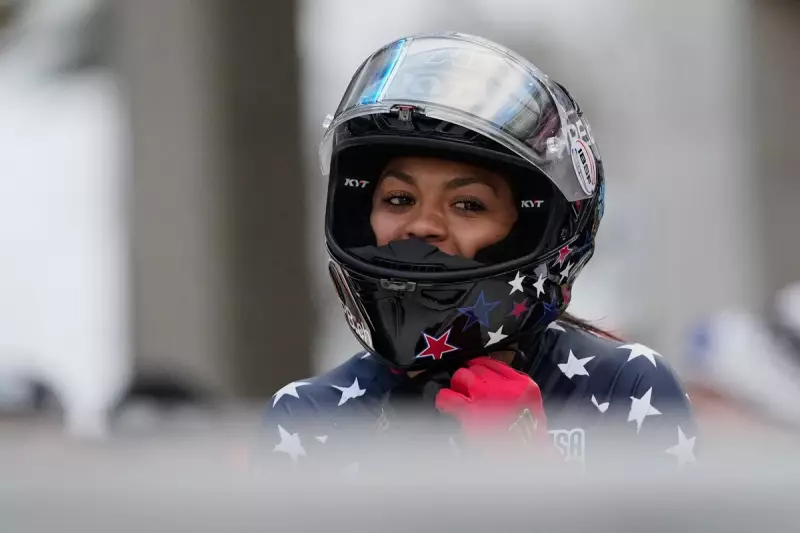
This progress is not entirely unprecedented, particularly in bobsled. The sport has seen several pioneering Black women achieve at the highest level. Elana Meyers Taylor, a five-time Olympic medallist, stands as the most decorated Black athlete in Winter Games history. In monobob, Kaysha Love is the reigning world champion, making her the first Black woman to hold that title.
The trend extends beyond sliding sports. Speedskater Erin Jackson, who in 2022 became the first Black woman to win an individual Winter Olympic gold, will return for the 2026 Games. In ice hockey, rising star Laila Edwards is set to become the first Black woman to represent the United States on the Olympic stage.
"It's a really big deal," Edwards remarked upon the team announcement. "Representation matters. In terms of processing it, I think I'm just trying to use it as something that motivates me to be the best role model and person I can be."
Systemic Barriers and Future Progress
Despite these encouraging signs, systemic barriers within winter sports persist. The Winter Olympic programme inherently offers fewer opportunities for athletes of colour, often due to high costs and limited accessibility. A 2024 report from the National Ski Areas Association noted that only about 1% of visitors to U.S. ski resorts identify as Black, citing expense and remote locations as key factors.
The composition of recent Games underscores the scale of the challenge. At the Beijing 2022 Olympics, the overwhelming majority of the approximately 2,900 competitors were white. While nations like Jamaica, Ghana, Nigeria, and Haiti have fielded athletes, the legacy of Jamaica's iconic "Cool Runnings" bobsled team from decades ago continues to inspire a new generation.
"I never thought I would be doing this," said Jamaican bobsledder Adanna Johnson, who competed at last year's world championships at age 17. "The sport is growing. There are more opportunities."
Athletes like Mystique Ro emphasise that visibility must extend beyond the Olympic spotlight. "There's a lot more diversity," Ro stated. "But seeing us without the helmet, seeing the roster, seeing the names, it's just really important how we present it to the people so it's not just at the Olympics. It has to be every year because we compete every year."
The recruitment pathway for bobsled, often drawing from track and field for its requisite speed and power, has been a conduit for diversity. Since Vonetta Flowers became the first Black woman to win a bobsled medal for the U.S. (gold in 2002), American women of colour have consistently reached the podium.

For athletes like Kaysha Love, a former record-setting sprinter, being part of this change is profound. "Growing up, I was really only excited about summer sports because that's where I saw me. That's where I saw representation," Love explained. "You always had Black athletes in gymnastics and track and even swimming sometimes. So, to know that now I get to be that representation... that change is inspiring."