Ukrainian Skeleton Star Expelled from Winter Olympics Over Memorial Helmet
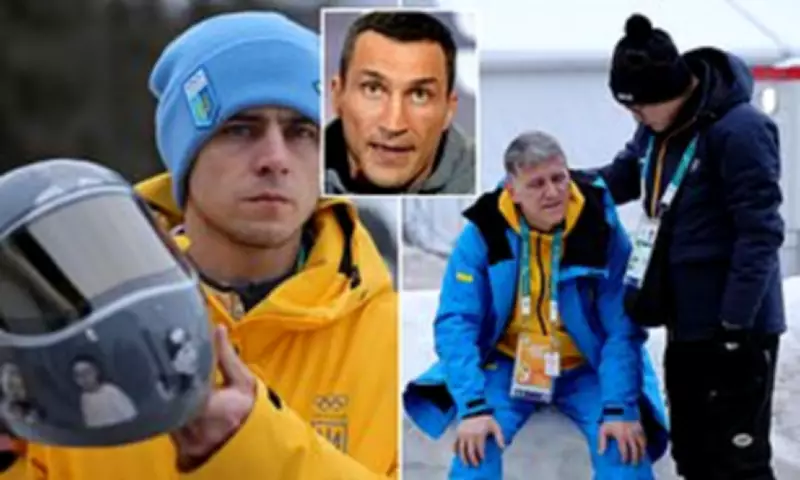
Vladyslav Heraskevych, the 27-year-old Ukrainian skeleton racer, has been dramatically expelled from the Milano Cortina 2026 Winter Olympic Games after refusing to remove a helmet commemorating victims of the Russian invasion of Ukraine. The decision by the International Olympic Committee has ignited a firestorm of controversy, drawing fierce condemnation from Ukrainian leaders and sports figures worldwide.
Klitschko's Scathing Critique of Olympic Ideals
Former heavyweight boxing champion Vladimir Klitschko, who won gold at Atlanta 1996, expressed profound shame over his Olympic medal in response to the ban. In an emotional interview with Bild, Klitschko declared: "Taking part is everything. For Russian and Belarusian athletes, but for the killed Ukrainian athletes, not even a commemoration is allowed."
Klitschko, whose brother serves as mayor of Kyiv, accused the IOC of abandoning Olympic neutrality in favour of protecting its corporate image. "The faces of the Ukrainian athletes who gave their lives for freedom are 'too political' for your perfect TV show," he stated. "Olympic idealism is being lost in the cold calculation of the global sports business."

The Heartbreaking Disqualification
Heraskevych's disqualification came less than an hour before he was scheduled to compete as a serious medal contender. The skeleton athlete, who carried Ukraine's flag at the opening ceremony, had trained throughout the week wearing the evocative helmet featuring images of fallen Ukrainian athletes. "Some of them were my friends," he revealed earlier in the week.
Despite multiple meetings with IOC officials, including a face-to-face discussion with IOC President Kirsty Coventry on Thursday morning, Heraskevych remained steadfast. "I am disqualified from the race. I will not get my Olympic moment," he lamented after the decision. "They were killed, but their voice is so loud that the IOC is afraid of them."
Zelensky's Presidential Support
Ukrainian President Volodymyr Zelensky responded with immediate support, awarding Heraskevych a state honour for "selfless service to the Ukrainian people, civic courage, and patriotism." In a social media post, Zelensky praised the athlete for acting with dignity and declared: "Having courage is worth more than any medal."
Zelensky sharply criticised Olympic authorities, stating: "The Olympic movement should help stop wars, not play into the hands of aggressors." Ukrainian Sports Minister Matviy Bidny echoed this sentiment, writing: "Vladyslav, you acted with dignity!"
IOC's Emotional Defence
IOC President Kirsty Coventry became visibly emotional while explaining the decision to reporters. "I was not meant to be here, but I thought it was really important to come here and talk to him face to face," she said, her voice breaking. "No one, especially me, is disagreeing with the messaging. It's a powerful message of remembrance. I really wanted to see him race. It's been an emotional morning."
The IOC maintained that Heraskevych violated Rule 50 of the Olympic Charter, which governs athlete expression during competition. Spokesperson Mark Adams defended the decision, arguing: "There are according to the Red Cross, 130 conflicts going on at any one time. We can't have them all in competition with each other at the Games. The field of play could become a field of expression, you could see it would lead to chaos."
Family Anguish and International Backlash
In heartbreaking scenes, Heraskevych's father and coach, Mykhailo, was photographed weeping on a mound of snow upon learning of his son's disqualification. The Ukrainian Olympic team has announced plans to appeal to the Court of Arbitration for Sport, though the competition has already commenced.
British double Olympic champion Lizzy Yarnold expressed shock at the decision during BBC coverage, stating: "I'm quite shocked. I think the IOC owe him an apology. I think this was the wrong decision. He was also a medal contender for the race. He's a phenomenal athlete."

The Athlete's Final Plea
Just hours before his scheduled competition, Heraskevych made a final public appeal to the IOC, writing on social media: "I never wanted a scandal with the IOC, and I did not create it. The IOC created it with its interpretation of the rules, which many view as discriminatory."
He proposed a three-point resolution: lifting the helmet ban, an apology for the pressure exerted upon him, and provision of electric generators for Ukrainian sports facilities damaged by shelling. "I very much hope for a response before the start of the skeleton competitions," he wrote, but received none.
Despite having his accreditation initially stripped, Heraskevych was later permitted to remain in the Olympic village for the remainder of the Games. His immediate response to the ban was a poignant social media post: "This is the price of our dignity."