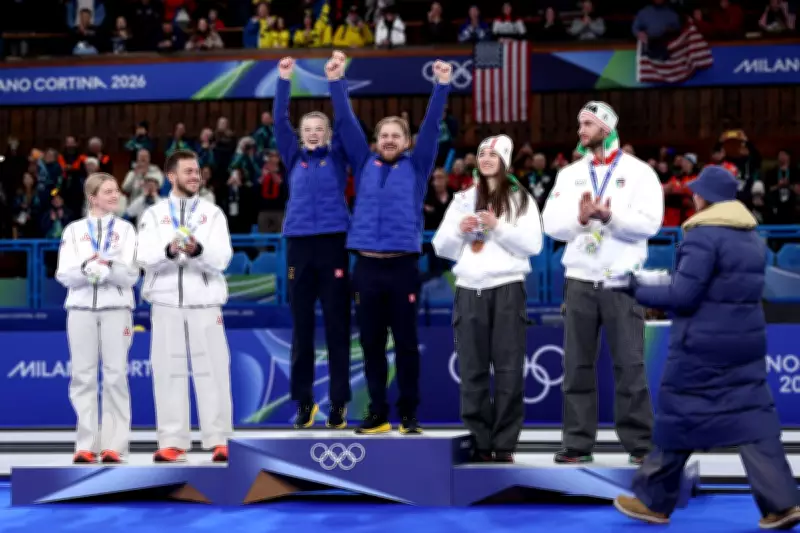
In a thrilling and historic showdown at the Milano Cortina Winter Olympics, Sweden has captured its first-ever mixed doubles curling gold medal. The Swedish duo, represented by Isabella and Rasmus Wranaa, triumphed over the United States pair of Korey Dropkin and Cory Thiesse with a narrow 6-5 victory in a tense final on Tuesday.
A Nerve-Wracking Finale
The match was a closely contested affair, with both teams displaying exceptional skill and strategy throughout. Sweden, despite being the second-most successful nation in curling at the Winter Olympics, had never previously won a gold medal in the mixed doubles event, adding significant pressure to the encounter.
Isabella Wranaa's Decisive Moment
Isabella Wranaa delivered a nerveless performance under immense pressure, ultimately sealing the win for Sweden with the final stone of the match. Her precise shot in the closing moments turned the tide, overcoming a late 5-4 deficit that had threatened to derail Sweden's gold medal aspirations.

Strategic Power Play
Despite deploying a power play that yielded only one point, Sweden managed to maintain composure and capitalize on key opportunities. This strategic move, though not as fruitful as hoped, played a crucial role in setting the stage for their comeback victory.
Bronze Medal Match Highlights
Earlier in the day, the bronze medal was claimed by Italy's Amos Mosaner and Stefania Constantini, who defeated Great Britain's Jennifer Dodds and Bruce Mouat with a 5-3 score. This result added to the day's excitement, showcasing the high level of competition in mixed doubles curling at the global stage.
Historic Achievement for Sweden
This gold medal marks a significant milestone for Swedish curling, solidifying their reputation as a powerhouse in the sport while breaking new ground in the mixed doubles discipline. The victory is celebrated as a testament to the team's resilience and skill, particularly in high-stakes Olympic finals.
The intense match and Sweden's historic win have captivated audiences worldwide, highlighting the growing popularity and competitive nature of curling at the Winter Olympics.