Ski Mountaineering's Olympic Debut Faces Criticism Over Format and Execution
The Winter Olympics introduced its newest sport, ski mountaineering, at the Milano-Cortina 2026 Games, but the debut has been met with significant criticism. While entertaining to watch, fundamental flaws in the Olympic format have led many to label it as merely a gimmick rather than a serious athletic competition.
A Controversial Beginning in Bormio
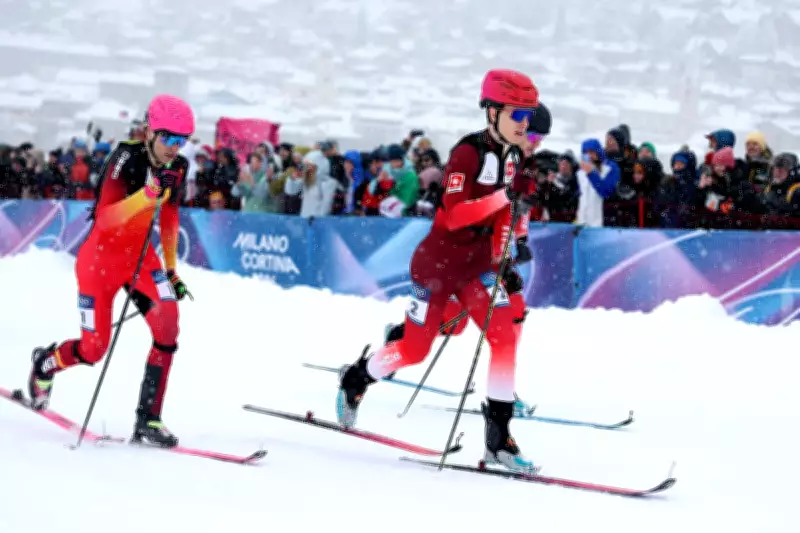
The first-ever Olympic ski mountaineering medals were awarded on Thursday, with world champions Oriol Cardona Coll of Spain and Marianne Fatton of Switzerland claiming gold in the men's and women's races respectively. However, the event began under inauspicious circumstances as heavy snowfall blanketed Bormio, creating powdery conditions that proved less than ideal for competitors.
The entire competition unfolded in a frenzied few hours, with heats, semi-finals and finals all contested on the same day. Only eighteen competitors participated in each gender category, with just six athletes advancing to the final round. This condensed format stands in stark contrast to traditional ski mountaineering events, which typically involve several thousand feet of altitude gain over approximately three hours on difficult, rugged terrain.

The 'T20 Version' of a Traditional Sport
Olympic ski mountaineering has been dramatically shortened from its traditional format, with races lasting only about three minutes. The course features two brief uphill sections on skis, separated by an on-foot section, followed by a technical descent to the finish line. British athlete Iain Innes, who failed to qualify for the event, described it as the "breakdancing" of the Winter Olympics, referencing the widely-criticised breakdancing competition at Paris 2024.
"It has all the symptoms of 21st century sport - gimmicky, snappy, seemingly designed for social media hits - but none of what Olympic sport is all about," observed one commentator. The format raises questions about why the International Olympic Committee chose to introduce this particular sport rather than addressing existing gender imbalances in events like Nordic combined.
Transitions Prove Decisive in Medal Outcomes
The majority of race time appeared to be spent transitioning between sections: removing skis, putting them back on, and stripping skins off for the final descent. This emphasis on transitions rather than pure athletic ability proved decisive in determining medal winners, drawing comparisons to reducing a triathlon to mere 100-meter segments of swimming, cycling and running.
In the women's competition, French favourite Emily Harrop - born to British parents but raised in the French Alps - dominated the early stages but faltered during transitions. Swiss athlete Marianne Fatton capitalised on Harrop's difficulties, catching up during the bootpacking section and charging ahead after removing her skins for the downhill finale.
Weather Conditions and Course Challenges
Heavy snowfall in Bormio transformed the normally smooth, developed piste into deep snowdrifts, significantly impacting several competitors' chances. The Swiss duo of Arno Lietha and Jon Kistler led the men's race initially, but Lietha slipped on the snow-covered stairs and never recovered. Spain's Oriol Cardona Coll executed rapid transitions and bounded up the stairs to establish an unassailable lead.
Russian athlete Nikita Filippov claimed silver to become the first neutral athlete of these Games to win a medal, while France's Thibault Anselmet took advantage of Swiss misfortune to secure bronze. The entire competition concluded in approximately ten minutes, leading some to question whether ski mountaineering might follow the path of previous demonstration events like ski ballet and skijoring that never became Winter Olympic classics.
Future Prospects and Format Concerns
A mixed relay event scheduled for Saturday will conclude ski mountaineering's inaugural Olympic appearance. However, based on Thursday's events, many observers believe the sport in its current Olympic format lacks the gravitas and athleticism expected of proper Olympic competitions.

Critics argue that a three-hour epic of climbing and descending amid the beautiful vistas of the Italian Alps would better represent what ski mountaineering truly entails. Such a format would more accurately reflect the sport's traditional challenges while aligning with the Olympic ideals of endurance, skill and athletic excellence that have defined the Games for over a century.