Ski Mountaineering: The Newest Winter Olympic Sport Arrives in Milan-Cortina
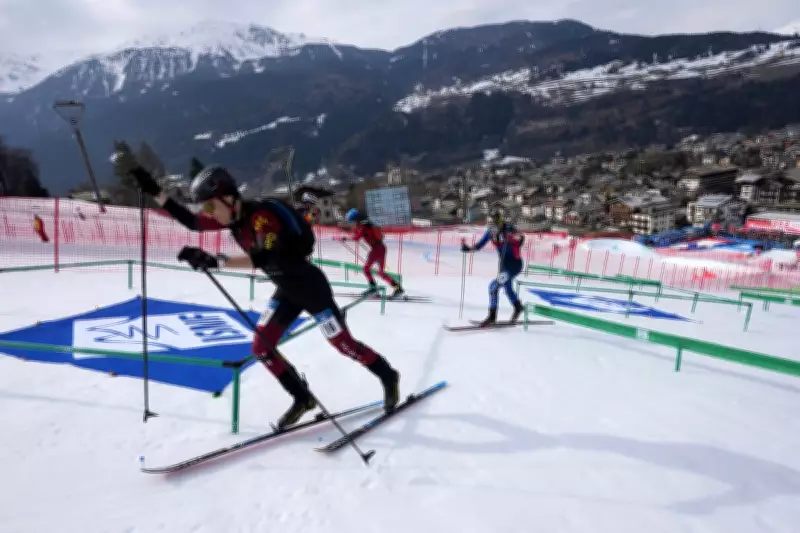
The 2026 Winter Olympic Games in Milan and Cortina d'Ampezzo, northern Italy, will witness a historic sporting debut. Ski mountaineering, commonly referred to as 'skimo', becomes the first new sport introduced to the Winter Games since skeleton joined the programme at Salt Lake City in 2002. This endurance discipline features eight new medal events, with 36 athletes competing at the Stelvio Ski Centre in Bormio.
What Exactly Is Ski Mountaineering?
Ski mountaineering is a demanding endurance sport where athletes ascend mountains using skis fitted with climbing skins, carry their equipment over steep sections unsuitable for skinning, and then descend challenging alpine terrain. The Olympic format includes two primary events: the individual sprint and the mixed relay. Competitors alternate between uphill climbing with skins, boot-packing, and downhill skiing phases.
Sprint races typically last three to four minutes, while the mixed relay involves longer, more rigorous courses that test athletes' stamina and technical skills. Alongside skimo, the 2026 Games introduce women's doubles luge, women's large hill individual ski jumping, freestyle skiing dual moguls, and alpine skiing team combined events.

A Sport with Deep Historical Roots
Ski mountaineering boasts origins stretching back over a millennium, long before formal competition emerged. It began as an adventure activity in the Alps during the late 1800s, with the first major race, the Trofeo Mezzalama, held in Italy in 1933. The inaugural world championships occurred in France in 2002, leading to biennial championships and an annual World Cup circuit that professionalised the sport.
Now governed by the International Ski Mountaineering Federation, skimo featured at the Lausanne 2020 Winter Youth Olympics before achieving full Olympic status. Its inclusion marks a significant shift in Olympic programming, emphasising human-powered vertical movement rather than the downward or horizontal motion characteristic of most winter sports.
Democratising Winter Sports Participation
Skimo offers relatively accessible entry compared to other mountaineering disciplines, relying on widely available equipment like climbing skins and micro-spikes. This accessibility could democratise winter sports participation, allowing enthusiasts to engage in various mountainous environments with minimal technical gear. However, this does not eliminate inherent risks.
Most ski mountaineering occurs off-piste, where hazards such as avalanches, unpredictable weather, and navigation challenges increase accident potential. As interest surges post-Olympic debut, inexperienced participants may venture into dangerous terrain. Experts emphasise the necessity of proper training, safe route selection, and supervised environments to mitigate risks.
Canadian Prospects and International Competition
Canadian athletes are making notable progress on the international skimo circuit. Emma Cook-Clarke, a former mountain runner, achieved sixth place in both the team event and women's sprint at the 2025 world championships. Although Canada narrowly missed Olympic qualification for 2026, future success appears promising with sustained investment.
Current favourites for the 2026 Games include Switzerland in the women's sprint, France in the mixed relay, and Spain in the men's sprint. For Canada, building a robust elite programme requires grassroots growth and expanded international competition experience, positioning the nation as a potential future leader in this emerging Olympic discipline.
Environmental and Sustainability Implications
Skimo's inclusion reflects evolving Olympic priorities around sustainability and athletic challenge. The sport offers a meaningful test case for the International Olympic Committee's climate goals, as athletes ascend and descend using human power rather than energy-intensive lift systems. This shift gains importance in the Italian Alps, where above-average temperatures highlight climate change impacts on winter sports.

As the Winter Games face scrutiny over environmental footprints and snow reliability, ski mountaineering signals a broader cultural shift toward more sustainable practices. While travel and venue construction emissions remain concerns, this small but significant change demonstrates how the Olympics might adapt to a warming world.
The debut of ski mountaineering at Milan-Cortina 2026 not only introduces a thrilling new sport but also prompts important conversations about accessibility, safety, and environmental responsibility in winter athletics.