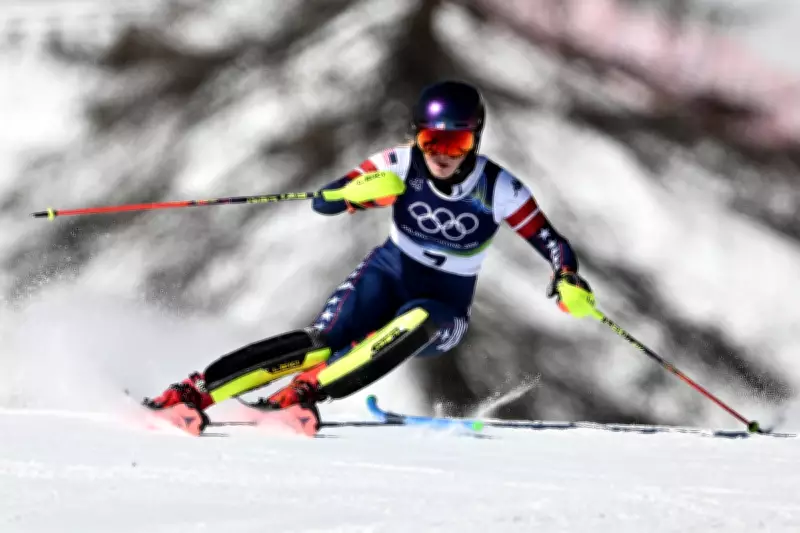
Mikaela Shiffrin Breaks Eight-Year Olympic Drought with Slalom Gold Victory
American alpine skiing legend Mikaela Shiffrin has ended an eight-year Olympic medal drought by securing a brilliant gold in the women's slalom at the Milano-Cortina 2026 Winter Games. The triumph came on Wednesday at the Tofane Alpine Centre, where Shiffrin delivered a peerless performance in her favourite discipline, marking her first Olympic title since Pyeongchang 2018.
Shiffrin's Journey to Olympic Redemption
Shiffrin entered the event with a remarkable record of 71 World Cup wins in slalom out of her total 108 victories, yet she had struggled to replicate that dominance at the Olympics. In the six races she contested at Beijing 2022, she failed to medal, and in Pyeongchang, she narrowly missed the slalom podium by just 0.08 seconds. This drought followed her historic achievement as the youngest-ever Olympic slalom champion at Sochi 2014, when she was an 18-year-old prodigy.
Recent performances added pressure, with Shiffrin missing the podium in the giant slalom on Sunday and finishing fourth in the alpine combined with teammate Breezy Johnson. However, she put those setbacks behind her with an imperious display in Cortina d'Ampezzo.

Dominant Performance on the Slopes
Shiffrin set the fastest time in the first run, clocking 47.13 seconds, which was 0.82 seconds quicker than her nearest challenger. She extended her lead in the second run, finishing with a total time of 1:40.60 and a winning margin of 1.5 seconds. This commanding victory showcased her technical prowess and mental resilience, reaffirming her status as one of alpine skiing's greats.
Dramatic Turn of Events in the Competition
The slalom event saw intense competition, with the leaderboard shifting dramatically during the second run. Switzerland's Wendy Holdener initially snatched the lead from Austrian skier Katharina Truppe, only for Sweden's Anna Swenn-Larsson to catapult to the top. Switzerland then regained the top spot through Camille Rast, who edged ahead of Swenn-Larsson by two-tenths of a second.
Ultimately, Shiffrin's flawless performance relegated Swenn-Larsson to silver, securing the gold medal by a significant 1.5-second margin. This victory not only breaks her Olympic medal drought but also adds to her legacy, coming 12 years after her first Olympic gold in slalom at Sochi 2014.
The win highlights Shiffrin's enduring talent and determination, setting a new chapter in her illustrious career as she continues to inspire fans and athletes worldwide.