The ancient Ladin minority of Italy, whose ancestors settled in the Dolomite mountain hamlet of Cortina d'Ampezzo a millennium ago, are expressing deep disappointment as the upcoming Milan-Cortina Winter Olympics appear set to overlook their unique cultural heritage. Despite Cortina hosting the Games for a second time, this distinct ethnolinguistic community feels marginalised, prompting them to launch independent initiatives to showcase their traditions across their five-valley homeland known as Ladinia.
Unanswered Calls for Recognition
Ladin community leaders had anticipated that organisers of the Milan Cortina Olympics would proactively reach out to feature their language and customs, following precedents set by previous host cities from Lillehammer to Beijing in highlighting indigenous cultures. However, these expectations have been unmet. A formal letter sent by the mayors of all seventeen Ladin towns, requesting representation in Olympic programming, received no official response.
Elsa Zardini, head of the Ladin community in Cortina, articulated the widespread frustration: "We are cut out, as if we don't exist." This perceived exclusion stands in stark contrast to previous Olympic celebrations of indigenous cultures, such as the prominent inclusion of the Arctic Sami people during the 1994 Lillehammer Games or Indigenous Australian athlete Cathy Freeman lighting the cauldron at Sydney 2000.

A Rich Cultural Heritage at Risk
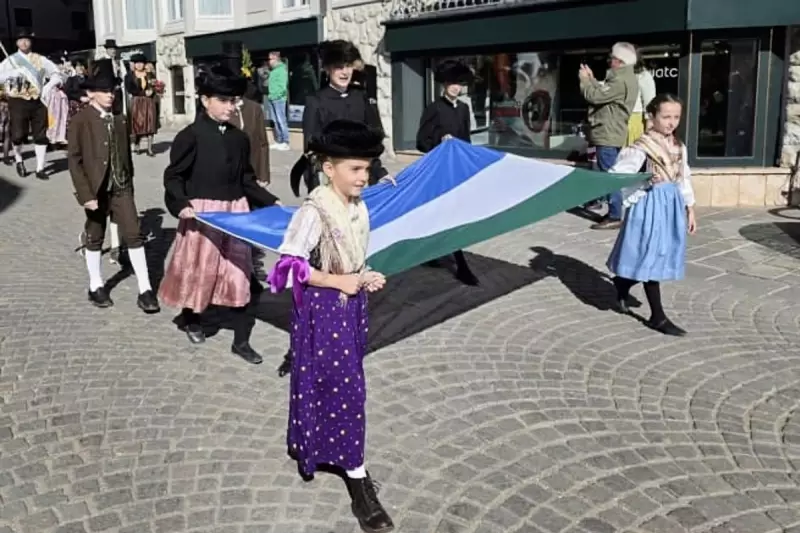
The Ladins, renowned as skilled wood carvers and dedicated stewards of the forest, have inhabited the dramatic Dolomite landscape for approximately two thousand years. Their rich folklore includes the enduring legend of Laurin, king of the dwarfs, whose mythical curse is said to have bestowed the region's pale limestone peaks with their distinctive pinkish glow at sunset. For religious ceremonies, community members don elaborate traditional costumes, featuring colourful dresses and intricate headpieces for women.
The Ladin language itself represents a unique linguistic treasure – a Romance language blending Latin with ancient Rhaetic elements. Currently listed as endangered by UNESCO, it is spoken by only around 35,000 people globally, with approximately 2,500 residing in Cortina, constituting about half the town's permanent population.
Olympic Ceremonies Focus on Mainstream Italian Culture
Local organisers have confirmed that the two-and-a-half-hour opening ceremony on 6th February will celebrate "Italian beauty and culture", with a focus on globally exported elements like fashion, design, and mainstream music. Marco Balich, the ceremony's creative director, told The Associated Press: "We want to celebrate those elements that have been exported all over the world."
This programming decision continues a historical pattern of tension. The 1956 Olympics significantly transformed Cortina from a Ladin-majority town into an international luxury resort, complete with high-end boutiques. Today, Ladins face practical challenges in retaining inherited family properties due to soaring real estate values and corresponding inheritance taxes, forcing many younger families to relocate and threatening the community's long-term cultural continuity.
Minimal Visibility in Official Programming
Within the official Olympic schedule, Ladin representation will be limited to just two minor appearances:
- A single pair in traditional dress during the torch arrival, invited by the town council but not officially photographed or promoted by the local organising committee.
- A small costumed parade preceding the main ceremony, which officials have confirmed will not be broadcast to the global television audience.
Ms Zardini lamented the inadequacy of these gestures: "It's really not much. Yes, there will be someone in our costumes – our costumes will be seen. We had other goals, to highlight that we are a linguistic minority and to explain our culture, but that is not the case."

Community-Led Initiatives for Visibility
In response to this institutional neglect, the Ladin community is proactively organising its own cultural outreach during the Games. Ms Zardini is distributing traditional Ladin flags – whose azure, white, and green colours represent the sky, snow, and meadows of their mountain homeland – for display throughout Cortina. She clarified: "It isn’t so much a protest as a welcome, so visitors realise that the people living here speak a certain language and have their own traditions. That is our intention. And then, some have, of course, displayed it in protest."
An umbrella organisation representing six Ladin communities has prepared miniature dictionaries translating essential Ladin terms into five languages for Olympic visitors. According to its president, Roland Verra, examples include "Nief" for snow and "Juesc Olimpics da d’ivern" for Winter Games. The General Ladin Union of the Dolomites has also produced an educational video with English subtitles detailing their history from Roman conquest to their region's incorporation into Italy in 1919, which will screen continuously in front of Cortina's Town Hall.
In the neighbouring Trentino region, Ladins are preparing a separate cultural event featuring traditional music and literature, hoping to attract Olympic tourists. Mr Verra views this as "a great opportunity to represent the ancient legends that would certainly be very well seen, very spectacular." These grassroots efforts represent a determined bid for visibility and recognition that the official Olympic programme has thus far failed to provide.