Biathlon's Military Heritage Endures as Olympians Blend Sport with Service
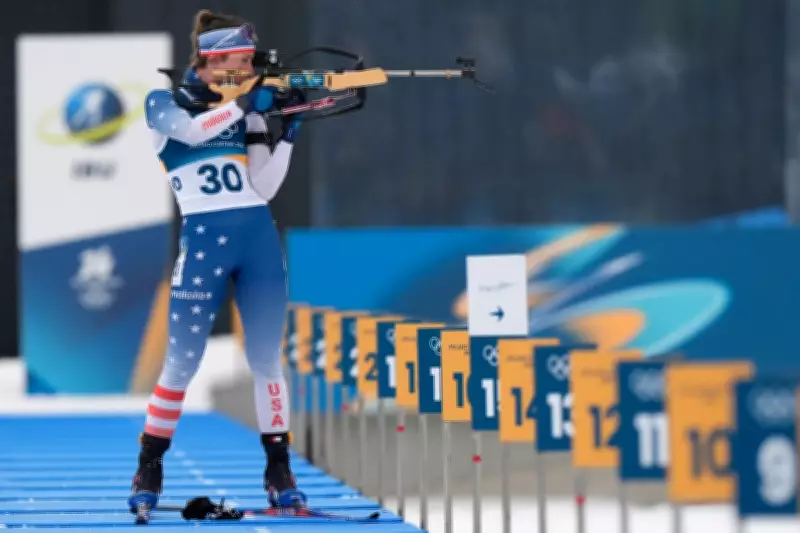
The sport of biathlon, which uniquely merges cross-country skiing with precision rifle shooting, has deep roots in Scandinavian military training exercises. This historical connection remains vividly alive today, as numerous athletes competing at the Milan Cortina Winter Olympics maintain careers in the military or law enforcement. These dual roles not only help them hone their athletic skills but also provide crucial support during their competitive years and ensure stable employment after they retire from the sport.
American Biathletes Serving in the National Guard
In the United States, three members of the biathlon team are affiliated with the Vermont National Guard: Staff Sgt. Deedra Irwin, Spc. Sean Doherty, and Spc. Maxime Germain. Irwin and Doherty are also part of the U.S. Army's World Class Athlete Program, which supports elite soldiers in their sporting pursuits. Doherty is stationed at Camp Ethan Allen Training Site in northern Vermont, a sprawling 11,000-acre facility that houses the Army Mountain Warfare School, the 86th Mountain Infantry brigade combat team, and a dedicated biathlon training course and rifle range.
Micah Nevard, director of the U.S. Army's National Guard Biathlon program, highlighted the importance of this infrastructure. Doherty, who has trained there since beginning his biathlon career, explained that the National Guard's support extends his athletic longevity and offers resources independent of the national team. "As my career in the sport progressed, I realized the support and benefits of the National Guard would extend my career and provide resources and support independent of the national team, as well as support and opportunities after my athletic career ended," he told The Associated Press.

He added that the discipline required for professional athletics aligns seamlessly with the structured environment of military service. "I would also say that the military provides a counterpoint to the small world of elite sport — getting you out of your comfort zone a bit," Doherty said. "It is a powerful thing knowing you have so much support behind you, and support that goes beyond just your racing career, allows you to commit fully to performing at your best."
European Athletes Embracing Military and Police Roles
This trend is not confined to the United States. In Europe, many top biathletes are similarly connected to military or law enforcement institutions. For instance, French gold medalists Lou Jeanmonnot and Éric Perrot both hold the rank of sergeant in the French Army. Lisa Vittozzi, who secured Italy's first Olympic gold medal in biathlon by winning the pursuit event, is a member of the Italian Army sports group Centro Sportivo Esercito, showcasing how Italy supports its elite athletes through prestigious military sports bodies.
In Germany, the pathway from biathlon to a career in the police or military is well-established. German biathlon head coach Tobias Reiter noted that when athletes start out, they undergo rigorous training schedules, with two hours of practice in the morning and afternoon. In between, they attend classes to learn military or police skills at bases near Ruhpolding or Oberhof, Germany's two World Cup biathlon venues. This system ensures that upon retirement, athletes have a job for life.
German biathlete Philipp Nawrath, for example, works as a police sergeant for the Bavarian state police. Retired Olympians Erik Lesser and Arnd Peiffer have also benefited from this program, transitioning into secure careers post-competition. Peiffer, an Olympic gold medalist and world champion, trained to become a federal police officer before his full-time biathlon career. Now retired, he helps young athletes pursue their dreams. "I think it's a great support," Peiffer said of the program. "You can't achieve to be an athlete when you are 20 years old. You have no prize money and it depends on the parents. So actually I think it's a good system because young athletes, who have not parents who have a lot of money, are able to do sport if they are good."
He emphasized the security it provides: "I knew, maybe when I get sick or have an injury, I always have a job. I have insurance."

Nordic Countries: A Weaker Military Connection
Despite biathlon's origins in Scandinavian military exercises, the link has weakened in modern times in countries like Norway and Sweden, which are leading nations in the sport. Siegfried Mazet, head coach of the Norwegian team, stated that Norway lacks programs to prepare biathletes for military service after retirement. Instead, many retired athletes, such as Tiril Eckhoff and Johannes Thingnes Boe, have moved into roles as broadcast commentators.
In Finland, head coach Erik Torneus-Kulstad noted that while some biathletes may work in the military, it is neither required nor common. This contrasts sharply with the strong military ties seen in other nations, highlighting a diverse approach to athlete support systems across the biathlon world.
The enduring legacy of biathlon's military roots continues to shape the careers and lives of Olympians, blending sport with service in a unique and supportive framework.