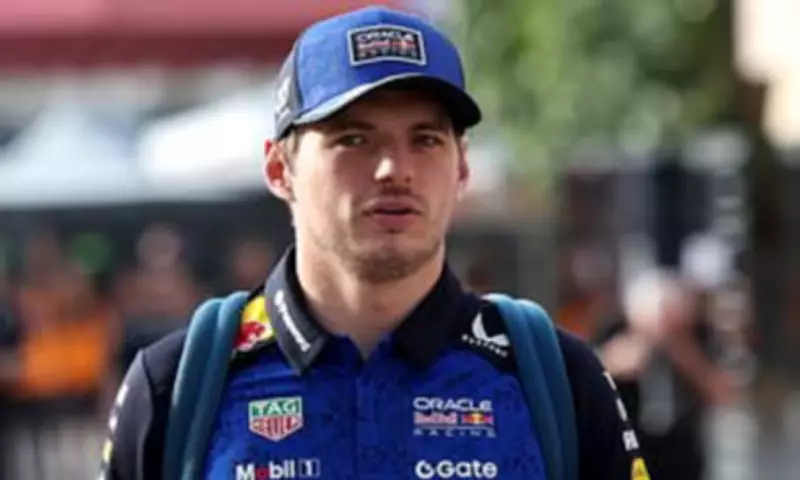
In a blistering critique that has sent shockwaves through the motorsport world, reigning four-time Formula One world champion Max Verstappen has declared that the sport's latest regulatory overhaul has produced cars that are unrecognisable from the Formula One he knows and loves. The Dutch superstar delivered his damning verdict as pre-season testing unfolded in Bahrain, ahead of the new campaign's curtain-raiser in Melbourne on March 8.
A Scathing Indictment of the New Era
Verstappen did not mince his words, stating that driving under the new rules is 'not a lot of fun' and bears a closer resemblance to 'Formula E on steroids' than traditional Formula One. The core of his complaint centres on the heightened emphasis on energy management, a fundamental shift mandated by the latest technical regulations.
The Heart of the Controversy: Energy Management
The new rules demand that 'lifting and coasting' – a technique where drivers briefly ease off the throttle to recover energy – becomes a central component of race strategy. This is crucial to ensure the hybrid power unit's battery retains sufficient charge to optimise performance over an entire lap. For a driver renowned for his aggressive, flat-out style, this represents a profound philosophical change.

'The right word is management,' Verstappen conceded. 'But, as a driver, the feeling is not very Formula One-like. It feels a bit more like Formula E on steroids. As a pure driver, I enjoy driving flat out. And, at the moment, you cannot drive like that. There's a lot going on.'
He elaborated on the intrusive nature of the new demands: 'A lot of what you do as a driver, in terms of inputs, has a massive effect on the energy side of things. For me, that's just not Formula One. Maybe it's better to drive Formula E, right? Because that's all about energy efficiency and management. That's what they stand for. Driving-wise, it's not so fun.'
Purity Lost and Adaptation Required
Verstappen emphasised that his issue is not with the challenge of adaptation, which he believes all top drivers will manage, but with a perceived loss of the sport's essence. 'The whole way of racing is changing, and I would say less pure,' he stated. 'I just want normal driving, just how it should be, without having to think, "If I brake a bit longer or less or more, or one gear up or down", so it heavily impacts the performance on the straights.'
The irony of his criticism is that his own Red Bull team, with backing from Ford, appears to have developed a highly competitive first in-house power unit under these very regulations he decries.
A Starkly Contrasting View from the Paddock
While Verstappen voiced his discontent, his friend and rival, reigning world champion Lando Norris of McLaren, offered a completely opposing perspective. Fresh from claiming his maiden title in Abu Dhabi last year, Norris described the new driving experience as 'a lot of fun'.
'I really enjoyed it,' Norris said. 'Formula One changes all the time. Sometimes it's a bit better to drive, sometimes not as good to drive. We get paid a stupid amount of money to drive so we can't really complain. Any driver can go and find something else to do. It's not like any driver has to be here.'
Embracing the New Challenge
Norris framed the new regulations as a positive challenge for the entire sport. 'It's a challenge, but it's a good, fun challenge for the engineers and the drivers. It's different. You have to drive it in a different way and manage things differently. But I still get to drive cars and travel the world and have a lot of fun, so there is nothing to complain about.'
This fundamental disagreement between two of the sport's biggest stars highlights the divisive nature of Formula One's latest technological direction. The contrast pits Verstappen's desire for traditional, unadulterated racing against Norris's acceptance of evolution and new strategic complexity.
As the teams complete their testing in Bahrain, the debate over whether these new cars represent progress or a departure from Formula One's core identity is set to be a defining narrative of the upcoming season.