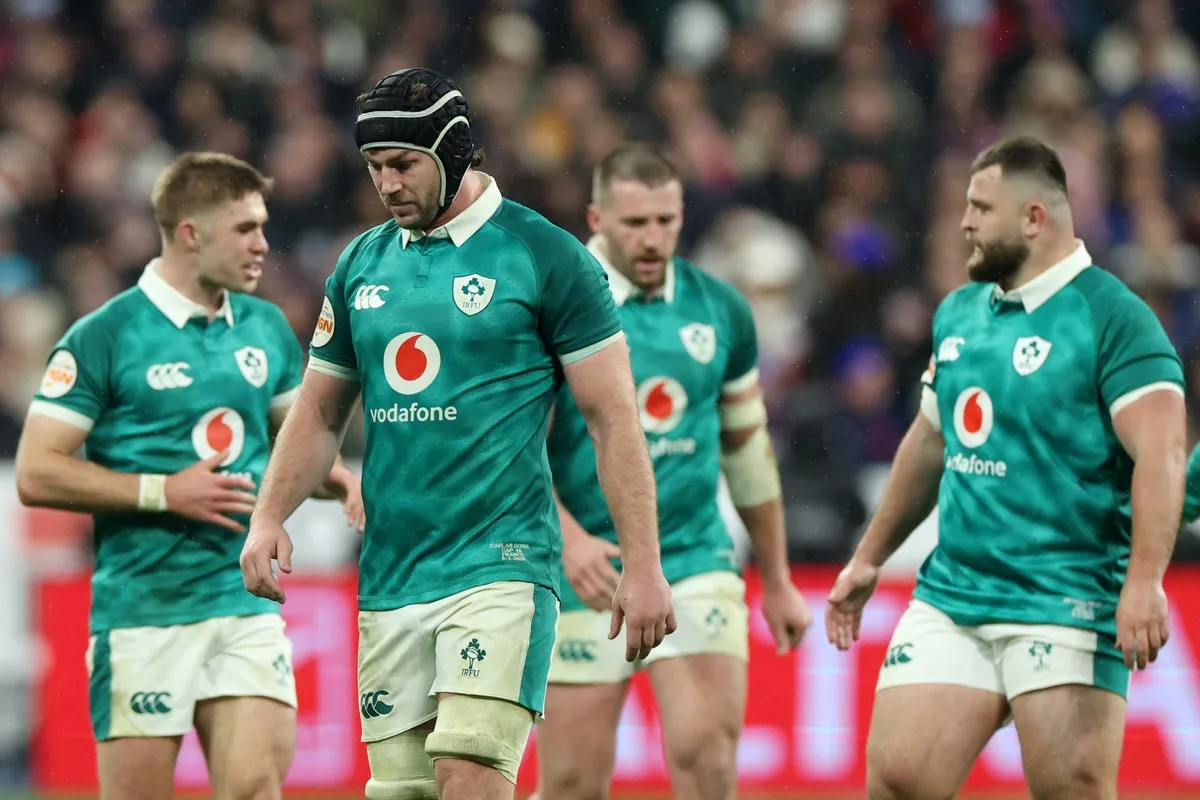
Ireland's Rugby Identity Questioned After Paris Defeat
A bruising evening in Paris has forced Irish rugby to confront uncomfortable truths following a comprehensive defeat to France. The performance has sparked intense scrutiny of Andy Farrell's leadership and the team's direction, with fundamental questions emerging about their competitive edge at international level.
Farrell's Uncharacteristic Frustration Signals Deeper Issues
In the dressing room after the match, Andy Farrell displayed rare public frustration with his team's performance. The Ireland coach, typically measured in his assessments, made his disappointment abundantly clear to both players and media. "I'm obviously very disappointed," Farrell told ITV, emphasizing a concern he never anticipated raising about this Irish team. "We displayed a noticeable lack of intent during that first half - missed tackles, losing ground battles, failing to compete effectively in aerial contests. It all comes down to intent. Without that fundamental quality, you cannot expect to win any international match, particularly not one in Paris."
The striking aspect of this assessment was how unfamiliar it felt. While observers have noted Ireland's gradual decline over the past twelve months, even during their most challenging periods, nobody could question their desire, commitment, or technical quality. Even during November's difficult encounter with South Africa, when the Springboks dominated the scrum and challenged rugby's basic principles, Ireland remained competitive until the final moments, suggesting victory remained possible. In Paris, however, any prospect of an Irish triumph evaporated rapidly into the damp night air.
Captain Doris Acknowledges Mountain Too High to Climb
Caelan Doris, the team captain, absorbed Farrell's critical message in the immediate aftermath. The coach demanded that players return with "proper opinions" when they reconvene ahead of the tournament's second round. With problems now exposed, responsibility falls squarely on the squad to identify solutions and implement corrections. "We don't want to be a team that is constantly chasing the game," Doris reflected soberly. "Unfortunately, we created too substantial a deficit to overcome on this occasion."
While overreaction to a single week's performance should be avoided, Farrell's visible frustration reveals deeper concerns. If, as some fear, the decline of a great rugby team occurs gradually before accelerating suddenly, Irish supporters worry their side may no longer compete effectively with elite opposition. Certainly, mitigating factors existed for aspects of their Paris performance - twelve injuries, a prop crisis, Bundee Aki's suspension - but numerous elements fell short of required standards. Ireland struggled both aerially and on the gainline, with France dominating key contests. Although fortunate bounces favored the hosts, Farrell emphasized that "you make your own luck in this sport."
Structural Concerns Emerge Beyond Immediate Result
Questions extend beyond the match itself to broader structural considerations. Farrell's British and Irish Lions sabbatical potentially arrived at an inopportune moment for a squad requiring regeneration. Nobody would criticize the Englishman for accepting this prestigious opportunity, nor for selecting a strong Irish contingent, but the hiatus essentially paused efforts to refresh and rebuild the national team. While England and Scotland accelerated their next generation's development through challenging tours to Argentina and the Pacific Islands, Ireland's matches against Georgia and Portugal last July provided less rigorous assessment opportunities for emerging talent.
Farrell expressed frustration about perceived inadequate preparation time before Thursday's opening fixture, despite the squad's customary Algarve training camp. Additionally, strategic divergence between Ireland and Leinster in recent years may have created integration challenges, with players from other provinces facing steeper adaptation curves. Highly-talented lock Edwin Edogbo might have pressed for a Paris debut with more preparatory time, though his inclusion likely wouldn't have altered the outcome significantly.
Evolution of International Rugby Challenges Irish Approach
The United Rugby Championship has presented mixed fortunes for Irish provinces this season. Munster failed to sustain their strong start, while Leinster achieved results without consistently impressive performances. Ulster's form offers encouragement, but whether Ireland's next generation of Test-ready players is genuinely emerging remains uncertain. This represents natural fluctuation for a nation with a relatively modest player pool.
More concerning is the sense that international rugby has evolved beyond Ireland's established dogma. Where their highly-accurate, intense multiphase attack once dominated, modern rugby increasingly emphasizes quick-strike transitions from kicking contests - an area where Ireland don't necessarily excel. This tactical challenge appears solvable, however, as France demonstrated significant aerial improvement after prioritizing that aspect. Ireland's injury-depleted back three undoubtedly contributed to their struggles in this department.
Fly-Half Conundrum Compounds Broader Concerns
The fly-half position presents particularly difficult questions. Sam Prendergast's current limitations, especially defensive vulnerabilities, appear more evident than his considerable potential. This contrasts sharply with memories from Marseille two years ago, when Jack Crowley seemingly claimed the number ten shirt with a commanding performance. While Crowley's form and confidence have since diminished, Prendergast awaits his own defining statement performance. Although Ireland's Six Nations aspirations aren't completely extinguished, both the young fly-half and the broader squad face considerable reflection and adjustment before their next challenge.