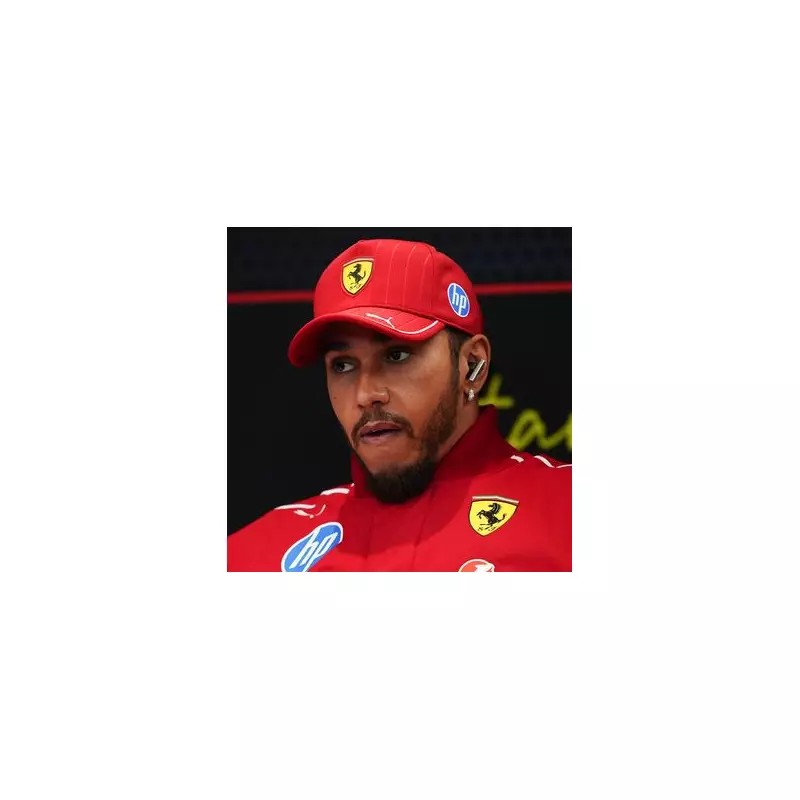
Speculation surrounding Lewis Hamilton's Formula 1 future has intensified following a challenging debut season with Ferrari, but the seven-time world champion would be making a grave error to consider walking away now.
A Season of Struggle for the Champion
Lewis Hamilton has endured what he himself described as "definitely the hardest year" of his illustrious career. The low point came during the Las Vegas Grand Prix weekend, where the 40-year-old qualified last and later expressed that he was ready for the season to end. Journalists in the media pen witnessed an unusually downcast Hamilton, who even admitted he was not looking forward to the next campaign.
This disillusionment has been visible throughout the year, with the British driver appearing more frustrated than ever after qualifying sessions and races. However, these emotional reactions often come minutes after stepping out of the car, when disappointment remains raw.

The 2026 Rule Changes: A Complete Reset
The crucial factor that makes retirement talk premature is the sweeping regulatory changes coming to Formula 1 in 2026. New engine and aerodynamic design rules will effectively reset the competitive landscape, meaning this difficult season provides no accurate measure of what Ferrari might achieve next year.
There remains a genuine possibility that Ferrari could master the new regulations, potentially creating a scenario where Hamilton and teammate Charles Leclerc battle for the championship in a two-horse race. Alternatively, it could lead to another season of midfield struggles. The point is that nobody knows yet which scenario will unfold.
Why Walking Away Now Makes No Sense
Retiring without discovering where Ferrari stands under the new regulations wouldn't just be premature—it would be fundamentally illogical. Hamilton has committed to the Ferrari project, and abandoning it before seeing through the most significant regulatory shift in years would be an unsatisfactory conclusion to his legendary career.
If the 2026 season proves equally challenging, then retirement would be a understandable choice that nobody could fault. But making that decision based on a season run under outgoing regulations, without the new competitive picture emerging, would be a mistake of monumental proportions for the sport's most successful driver.
The broader F1 context also presents challenges, such as the recent Qatar Grand Prix where artificial rules limited tyre usage to 25 laps due to abrasive track surfaces. While safety-driven, such regulations can create processional racing where strategies become homogenised and qualifying positions often determine final results.