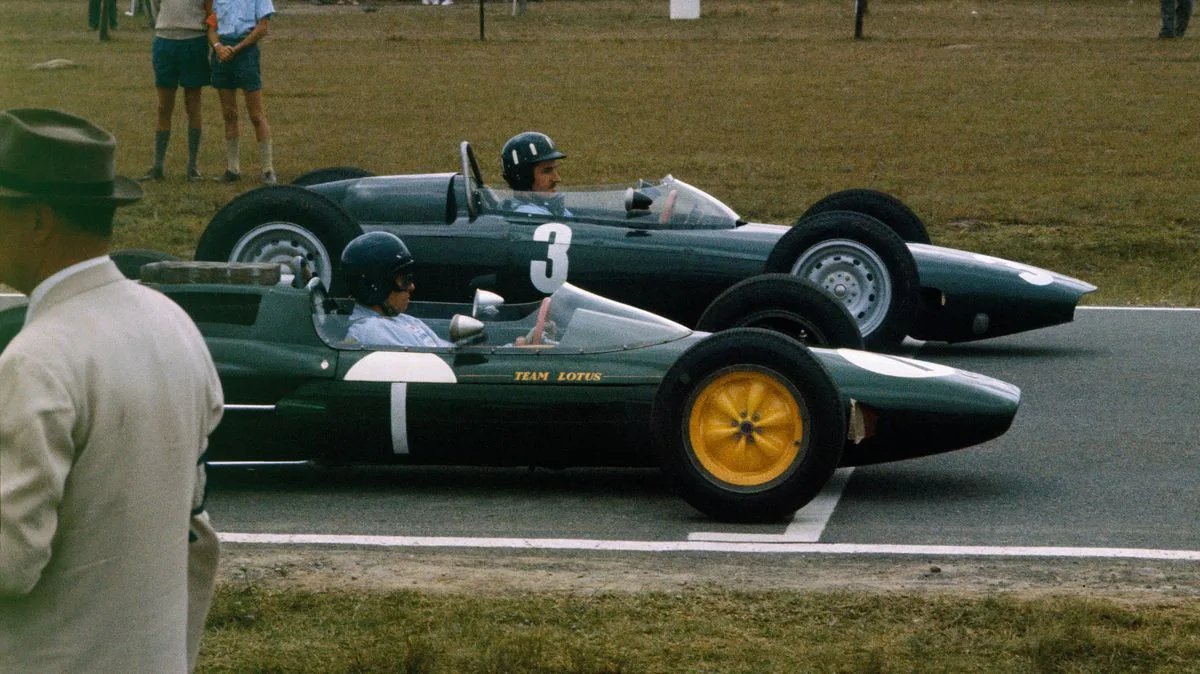
While Britain shivered under the historic 'Big Freeze' of December 1962, a dramatic battle for the Formula One World Championship was reaching its climax thousands of miles away in the South African sun. This is the story of the rare Christmas-time Grand Prix that decided the destiny of the title, crowning Britain's Graham Hill as champion for the very first time.
The Big Freeze vs. The South African Sun
The winter of 1962-63 remains etched in UK meteorological history. Dubbed 'The Big Freeze', it was the coldest three-month period since the 19th century, with deep snowdrifts paralysing the country. The pivotal blizzards struck overnight on December 29-30, blanketing the nation in a layer of snow and ice that would linger for months.
Yet, several of Britain's finest racing drivers were far removed from the Arctic conditions. Jim Clark, John Surtees, and Graham Hill had travelled to the city of East London on South Africa's south-east coast for the season-ending South African Grand Prix. This race, held on December 29, 1962, was not just another event—it was a direct showdown for the ultimate prize.
A High-Stakes Duel in the Southern Hemisphere
The championship battle had distilled into a straight fight between two British icons. Graham Hill, driving for British Racing Motors (BRM), held a nine-point lead over Jim Clark of Lotus. However, under the unique scoring system of the era, which counted only each driver's best five results, the maths was tense. A race win was worth nine points, meaning if Clark took victory, he would leapfrog Hill to become champion, despite Hill's greater points tally overall.
The team championship was also on a knife-edge, with BRM narrowly ahead of Lotus. The stage in East London was set for a winner-takes-all climax.
Qualifying intensified the drama. Clark and Hill were in a league of their own, the only drivers to lap in under 90 seconds. Clark seized pole position, edging out Hill by three-tenths of a second. This placed Hill in the precarious position of needing to overtake his rival during the race to secure his championship dreams.
Drama, Despair, and Ultimate Triumph
As snow began to fall over the UK on race day, Jim Clark dominated the early stages in South Africa. He converted his pole into a commanding lead, stretching his advantage to over half a minute. For a long time, it appeared the Scottish driver was cruising to his maiden world title.
Then, with just 20 laps remaining of the 82-lap race, disaster struck for Clark. His Lotus developed a catastrophic oil leak, forcing him to retire from a seemingly unassailable position. The championship was suddenly, and cruelly, ripped from his grasp.
Graham Hill, now inheriting the lead, was assured of the title regardless of the final result. He sealed his maiden crown in the most emphatic style possible, crossing the finish line nearly 50 seconds clear of Bruce McLaren in second place. It was a double celebration for British engineering, as BRM also secured its first Constructors' Championship.
The defeat was a bitter pill for Jim Clark, but he demonstrated his champion's resolve the very next season. In 1963, he returned to South Africa, won the race, and claimed the world title that had eluded him. Both men would cement their places as legends of the sport, each winning two world championships.
Their lives, tragically, were cut short. Jim Clark died in a Formula Two accident at Hockenheim in April 1968, aged just 32. Graham Hill survived his racing career but was killed in a plane crash in November 1975 at the age of 46, alongside members of his Embassy Hill team.
The 1962 South African Grand Prix remains a poignant and unique chapter in F1 history—a Christmas-time title decider played out under African skies, far from the frozen British landscape, where Graham Hill ascended to the top of the motorsport world.