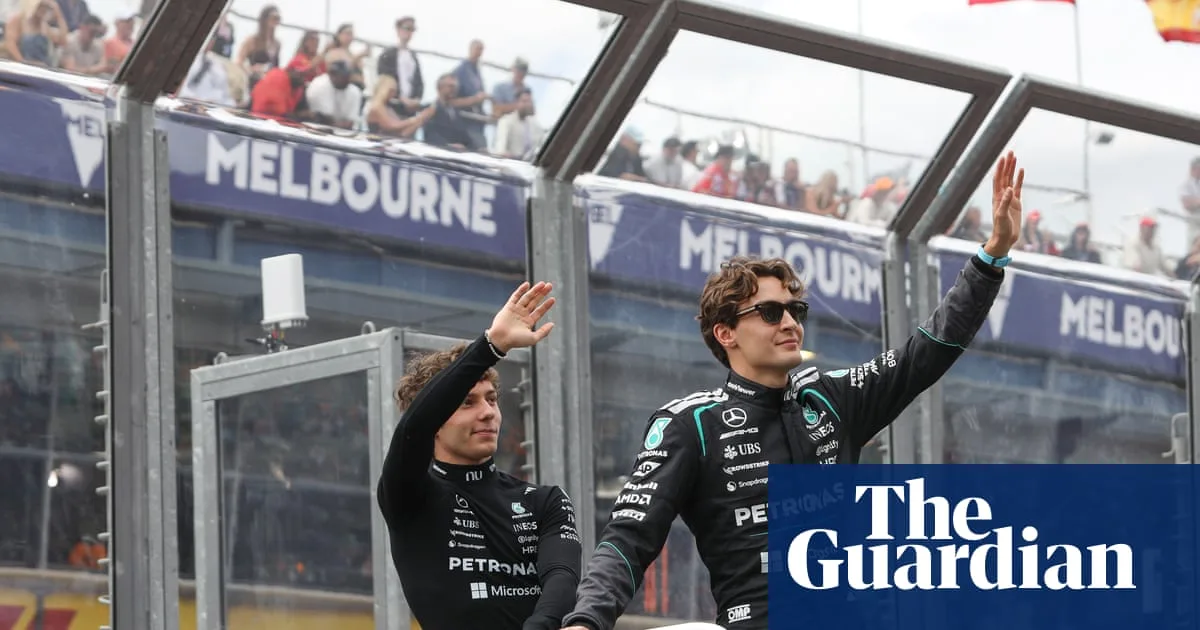
Mercedes made a dominant start to the 2026 Formula One season at the Australian Grand Prix in Melbourne, with George Russell and Kimi Antonelli securing a commanding one-two finish. The team had played down their expected advantage before the race, but a near one-second gap in qualifying and a similarly assured race performance left little doubt about their current superiority. Russell had to fend off Ferrari's Charles Leclerc early on, but once he settled into the optimal energy deployment strategy, he pulled away by up to 0.4 seconds per lap. In the final third, the Mercedes drivers eased off, holding a 15-second gap to Leclerc, suggesting they have even more pace in reserve.
Ferrari showed strong pace, with Leclerc and Lewis Hamilton making blistering starts, but a costly failure to react quickly to a virtual safety car cost them a chance to challenge Mercedes. Nevertheless, the Scuderia are clearly the second-fastest team, and with a fierce development battle expected as teams learn to optimise the new regulations, they are optimistic about closing the gap. Hamilton and Leclerc finished third and fourth respectively.
The new regulations, particularly the energy management requirements, drew scathing reviews from several drivers. Lando Norris described the cars as the worst he had driven and warned of a major accident risk. Max Verstappen criticised the need for lift-and-coast procedures, while Charles Leclerc compared the overtaking to a Mario Kart mushroom boost, where drivers use push-to-pass only to be repassed immediately due to depleted energy. Despite F1 trumpeting 120 overtakes compared to 45 last year, many felt the moves were meaningless. Mercedes team principal Toto Wolff noted that the key metric is whether fans enjoy the racing.
Rookie Arvid Lindblad impressed on his debut for Racing Bulls, qualifying ninth and finishing eighth after a superb start that briefly put him as high as third, even making four-time champion Max Verstappen fight for position. Oliver Bearman also shone for Haas, finishing seventh and confirming the team's midfield potential.
Aston Martin endured a disastrous start to the season, with their struggles evident from pre-season testing. The team's public difficulties were a talking point in the paddock, though no one took pleasure in their plight.