If you're constantly battling split ends, scientists may have finally found a solution. Experts have revealed that after using straighteners, you should let your hair 'recover' before brushing it. Heat makes hair temporarily much weaker and more brittle, they explained, which in turn makes it more likely to break under pressure. However, this effect is reversible and requires only a little patience.
Study Findings on Hair Recovery
In their study, researchers from the University of Dublin found that hair fully recovered when allowed to 'rest' for two hours after being straightened. For those with less time, waiting half an hour is also likely beneficial. 'Application of heat causes a dramatic reduction in performance…which is completely restored by a period of resting,' they wrote in the Journal of the Mechanical Behavior of Biomedical Materials. 'This well-known effect, presumably due to dehydration and rehydration, is clearly and quantifiably demonstrated.'
How the Experiment Worked
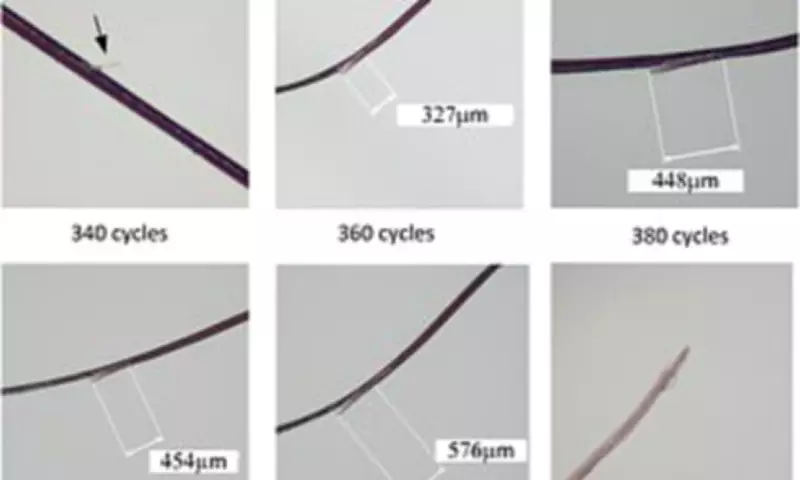
The team built a machine to reproduce what happens when you brush tangled hair. 'The individual hair strands are very thin and flexible, so they can literally tie themselves in knots – that's a tangle,' Professor David Taylor told the Daily Mail. 'When you brush your hair you force the tangle to move along the hair, down to the end. This puts huge stresses on the hairs, which can cause them to break or split.' Instead of pulling hair straight until it snaps, they used a 'moving loop fatigue test' to bend hair repeatedly through a tight loop, simulating the stress of brushing tangles.

Heat's Impact on Hair Strength
Analysis revealed that heat makes hair temporarily much weaker. When hair was heated with straighteners at 150°C, the number of cycles it could withstand before breaking dropped dramatically – for example, from 234 cycles to just 38 for straight hair, and from 185 to 40 for curly hair. Some samples even broke on the first brush cycle after heating. The team attributed this breakage mainly to dehydration caused by heating.
Recovery and Rehydration
However, when heated wet hair was allowed to rest for two hours, its performance recovered almost completely. 'There's enough water in the air to rehydrate dry hair, though it varies a lot depending on the humidity,' Professor Taylor said. 'We need to do more tests to find out how long it takes for the hair to come back to full strength, but I suspect that even a few minutes will make a difference.' The team also found that 'strong' hair resisted splitting the longest, while split-prone hair formed internal cracks early. Both curly and wet hair were affected by heat but recovered almost completely within two hours.
Expert Advice on Preventing Split Ends
Professor Taylor advised: 'Some people have hair which is just naturally prone to splitting, so there's not much they can do about that. For the rest of us, be aware that any kind of treatment – colouring, straightening, etc – could be detrimental. But the good news is that it's not for ever, so if a certain treatment causes problems, don't do it again.' He added that long hair is more likely to split than short hair because the ends are naturally more brittle. Keeping these regularly trimmed could help prevent cracks from running up the length of the hair.
Brushing Technique Matters
Scientists have previously revealed that the key to freeing tangles is starting brushing at the ends and moving upwards. Harvard researchers created a model simulating two entwined filaments and found that short brush strokes starting at the 'free' end and moving towards the 'clamped' end are most effective, as published in the journal Soft Matter.