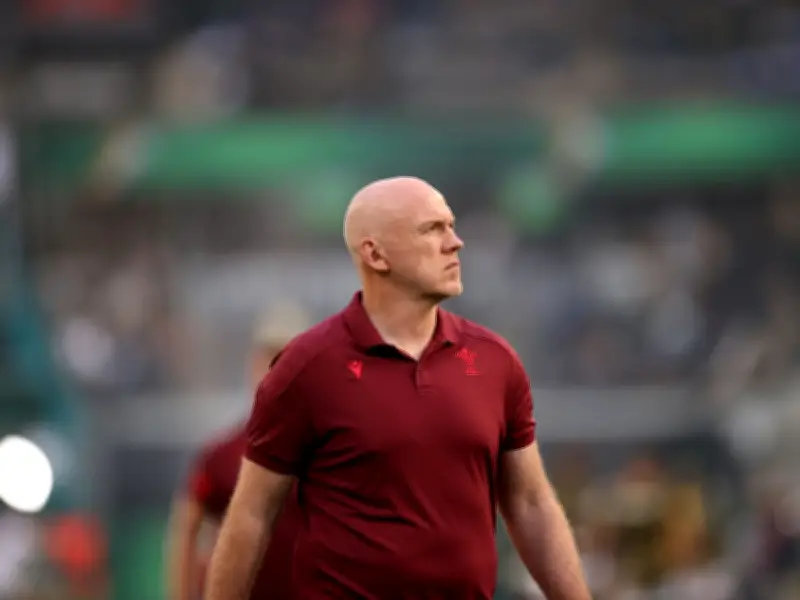
Wales' current group of players are brimming with heart, effort and bravery. As Steve Tandy might say, the attitude they consistently show is “absolutely outstanding”. The group is wonderfully “connected” off the field and the “alignment” in camp is something to behold.
Yet, one year into the Wales coach’s reign, his obsessive desire to parrot the same messaging before and after matches to the Welsh public risks undermining the progress and goodwill that were garnered just months ago.
The Six Nations Turning Point
The Six Nations felt like a turning point for Wales. Following the catastrophe at Twickenham after the darkest of autumns, a distinct change followed, ignited by performances against Scotland and then Ireland in Dublin that genuinely restored pride in a team that had floundered in hopelessness for far too long.
In the squad’s own words, a line in the sand had been drawn. This was now the minimum standard, effort was a given, and accelerated progression was the order of the day from here on in.
Victory over Italy to end a barren Six Nations run genuinely brought the crowd back onside after an alarming attendance at the France game earlier in the tournament. A new Wales story seemed to be emerging. Cult heroes like Rhys Carre were being born and the modern-day head coach, with a very different approach to Warren Gatland, was seemingly delivering. The desire for an expansive identity was finally being combined with a realisation that the physical and defensive basics had to come first.
Summer Stalling on and off the Pitch
Sadly, this summer has seen that stall on the pitch and, just as worryingly, off it. Victory over Fiji is not being dismissed in all this. Getting over the line was something this team would not have done two years ago, but it doesn’t negate some of the alarming defensive statistics that emerged from a match against a side that has since been annihilated by England and comfortably beaten by Scotland’s second XV. Wales’ defence is porous, their line-breaking ability a million miles away from that of a Tier One outfit, while the backline selection and strategy get more muddled by the week.
Tandy is well respected and clearly trying to build a united atmosphere within the Welsh camp. But there comes a point when what a coach says to the public is so far removed from what they feel that it simply doesn’t wash.
If they are as united as they certainly seem, what harm is there in admitting that the failure to produce any attacking impetus of note against a severely weakened South Africa just isn’t good enough for the talent they actually have? What harm is there in speaking with total honesty at a press conference rather than seemingly reading from a pre-arranged script designed to extinguish any semblance of narrative or storytelling the public might just be able to latch on to?
The Need for Honest Communication
Why not challenge the players publicly to win a match? Why not publicly admit players have been dropped because they need to offer more? We know this is a good bunch of boys. We know the way they throw their bodies into the path of danger every weekend is something 99% of us could never even imagine. It’s why they are lauded as heroes when nights like Dublin arise, even in defeat. It’s why the people genuinely stand behind them, even when individual criticism can, rightly or wrongly, be delivered loudly in a world of social media mayhem.
This is elite sport. Drama and debate are important, not something to fear. Rugby matters to so many, and this team has had strong backing and understanding thrown its way from fans and media over the last year or so, given the boardroom catastrophes that have left the players firefighting amid a sporting disaster for the ages.
But how much better would it have been to hear Dewi Lake, a superb player and leader, telling the public they were thoroughly disappointed not to have impacted the game in any significant way in Durban, rather than yet another tale of effort and pride that goes without saying?
Alarming Defensive Statistics and Lack of Attack
Anyone who watched this game knows the Springboks could quite easily have troubled the 73-0 scoreline they amassed in Cardiff during the November nadir had they not been so profligate, no matter how much Wales commendably dug in. Let’s not forget, that was Wales’ second team that day. This weekend, it was largely the Springboks’ seconds at best against Tandy’s first-choice selection, albeit after a long season and with Dafydd Jenkins and Tomas Francis missing.
Tiredness and travel logistics are, of course, mitigating circumstances in this slightly strange new Nations Championship era, but the summer ends with more questions than answers. It ends with a weariness among fans and a waning interest in the national team that will only be turned around if narratives and performances go beyond a group of men trying their best while on a “journey” where results don’t really matter.
Targeting Home Wins in November
Perhaps the messaging behind closed doors is different. Maybe it’s not. When November comes, Wales have to be targeting home wins against Japan and, more importantly, Australia. They need to talk that up as a genuine aim and possibility.
The performance-over-results mantra has run its course and is arguably hindering their ability to achieve the very thing that can spark some life back into Welsh rugby. Most importantly, it’s not really bringing the performances it’s designed to deliver, save for an impressive driving maul in two of the three July matches.
The public are desperate to get behind this team, but they need help. They need genuine hope, belief, excitement and expectation. The players do too, as Rassie Erasmus suggested after the match. Listen to the likes of Sam Warburton, Jonathan Davies and Dan Biggar when they explain how the demands, pressure and personal responsibility placed upon them in their international infancy drove them to become the players and team they eventually were. That has to come from the man steering the ship.