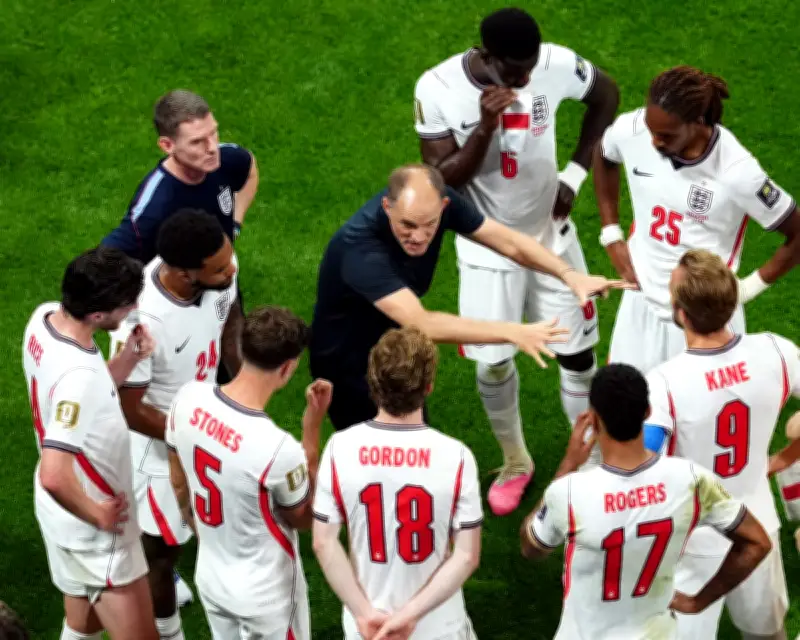
Thomas Tuchel's decision to adopt a defensive approach in the World Cup semi-final against Argentina has been heavily criticized, with many arguing that his lack of faith in the squad's ability to keep possession cost England a place in the final. The German coach, who took over the England job with high expectations, saw his team surrender a 1-0 lead to lose 2-1, with Argentina dominating the latter stages of the match.
Tuchel's Tactical Retreat
After Anthony Gordon's goal put England ahead, the team initially weathered Argentina's pressure well. However, at the second hydration break, Tuchel made a series of defensive substitutions that invited relentless pressure. Between the 75th minute and Argentina's winning goal, England had less than 8% possession and completed just five passes in 25 minutes. This allowed Lionel Messi, who had been largely quiet, to dictate play and create the winning goal.
The decision to keep an exhausted Harry Kane on the pitch while leaving attacking talents like Bukayo Saka, Ollie Watkins, and Kobbie Mainoo on the bench has been widely questioned. Saka, Watkins, Mainoo, Eberechi Eze, and Noni Madueke were all unused substitutes, while Cole Palmer, Phil Foden, and Trent Alexander-Arnold were left at home.
Lack of Faith in Players
After the match, Tuchel claimed that "ball possession is not in our DNA like it is in the Spanish DNA or the Argentinian or Brazilian DNA." This statement has been met with disbelief, given that England's squad includes players like Declan Rice, Bukayo Saka, and John Stones, who are known for their ball retention at club level. Reports from the England camp suggest that the players were unhappy with Tuchel's safety-first approach, which left them with no outlets or options.
This is not the first time Tuchel has been criticized for defensive tactics. In the group stage, his half-time message to "lose in our way" inspired thrilling football, but that ambition disappeared in the semi-final. The coach's decision to deploy six defenders in the closing stages and abandon any pretense of attack has been described as a betrayal of the squad's potential.
A Broader Pattern of Failure?
Some have argued that England's collapse is part of a wider pattern of defensive mindset in English football, but others counter that this generation of players is technically capable of dominating possession. The defeat has sparked debate about whether Tuchel is the right man to lead England forward, with some calling for his dismissal. The coach was hired to win crucial moments, but his actions in the semi-final have been labeled a red flag.
As England fans reflect on the tournament, the pain is compounded by the knowledge that the squad had the talent to win. The question remains whether Tuchel can see that talent or if his caution will continue to hold the team back.