World Cup Boycott Threats Intensify as Multiple Nations Face Political Pressure
The forthcoming World Cup tournament finds itself embroiled in unprecedented political controversy, with eleven competing nations facing mounting pressure to withdraw from the competition. This growing movement stems directly from the volatile behaviour and policy decisions of United States President Donald Trump, whose administration's actions have sparked international outrage.
Trump's Actions Spark International Backlash
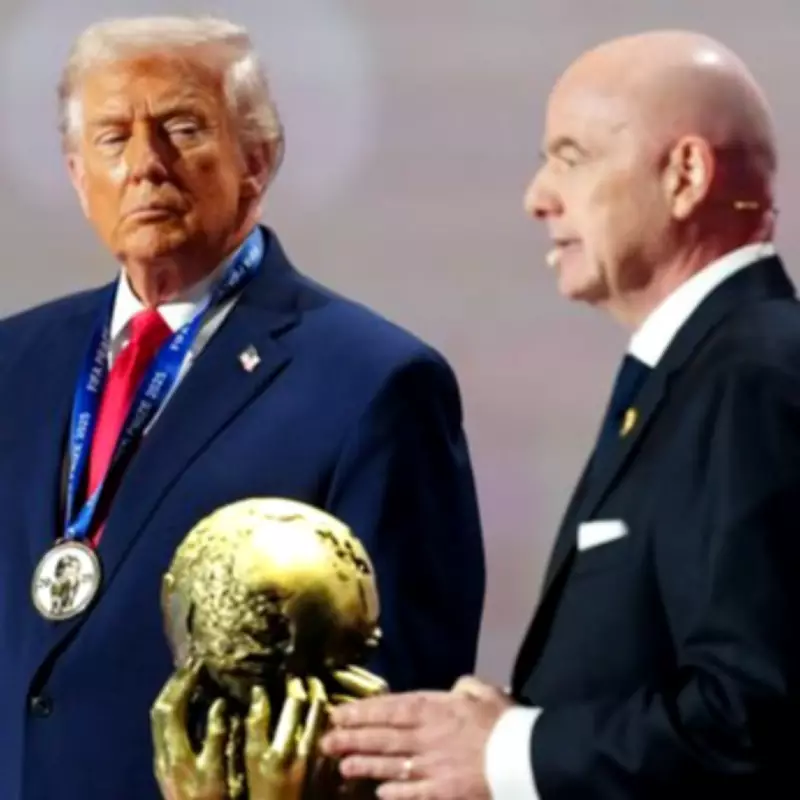
Since FIFA controversially awarded Trump its inaugural 'Peace Prize' during last month's tournament draw, a series of provocative moves by the American administration have escalated tensions globally. US forces executed a dramatic raid on Caracas, resulting in the seizure of Venezuelan leader Nicolas Maduro, while President Trump simultaneously threatened to annex mineral-rich Greenland. The President warned he would impose punitive tariffs on nations opposing this plan, including Britain, though these threats were later withdrawn following negotiations about access to the island.
Domestically, the situation has been equally turbulent, with two deadly shootings by federal immigration agents occurring in Minneapolis. Meanwhile, international relations have deteriorated significantly, particularly with Iran—one of the qualified World Cup nations—as civil unrest continues to plague the Middle Eastern country. Trump has demanded a new nuclear deal with Tehran and dispatched what he described as a 'massive armada' to the region as part of an ongoing US military build-up.

Growing Calls for Tournament Withdrawal
These developments have prompted serious discussions about whether qualified teams should participate in a tournament where 78 of the 104 matches will be played on American soil, with the remaining 26 scheduled across Canada and Mexico. While there is currently no indication that England, Scotland, Northern Ireland, or Wales (the latter two still navigating play-offs) will withdraw, political pressure is mounting within the United Kingdom.
Conservative former minister Simon Hoare and Liberal Democrat MP Luke Taylor have publicly advocated for the Home Nations to boycott the tournament as a protest against Trump's administration. Hoare argued the government should 'fight fire with fire' to deliberately embarrass the American President through sporting withdrawal.
European Nations Divided on Boycott Question
Across Europe, football associations and governments are grappling with the ethical dilemma of participation. In Germany, DFB vice-president Oke Göttlich has openly called for serious consideration of a boycott, telling the Hamburger Morgenpost that 'the time has definitely come' to discuss concrete action. The French government maintains it does not currently support withdrawal, though political figures within the country acknowledge the need for discussion.
Belgian authorities have ruled out a boycott 'at this stage', maintaining the traditional separation between sport and politics, while the Dutch football federation (KNVB) insists the Netherlands team will participate despite a public petition demanding boycott that has secured over 150,000 signatures. Denmark's football association has acknowledged the 'sensitive situation' as their team prepares for crucial play-offs in March.
Global Reactions and Historical Parallels
The boycott movement has gained traction beyond Europe, with South African opposition leader Julius Malema publicly urging his nation's football federation to consider withdrawal. Malema has drawn direct comparisons between current US policies and the international responses to apartheid-era South Africa, suggesting similar sporting isolation might be warranted.
Iran's participation has been particularly fraught with tension, following an earlier visa dispute that nearly caused the Asian nation to boycott the tournament draw. Iranian officials applied for nine visas but received only four, with football federation president Mehdi Taj among those rejected. A small delegation eventually attended the Washington DC ceremony, but relations remain strained.

As the tournament approaches, the fundamental question of whether international football can remain insulated from global politics grows increasingly urgent, with national associations worldwide facing difficult decisions about principles versus participation.