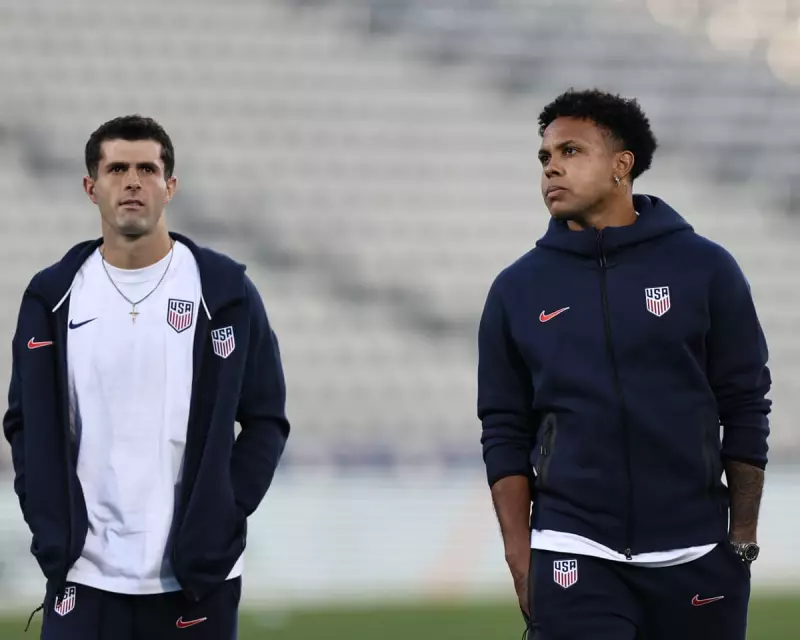
While the 2026 World Cup on home soil is the immediate focus for the United States Men's National Team (USMNT), manager Mauricio Pochettino is already constructing a squad with an eye on the 2030 tournament, aiming to create a lasting legacy for American soccer.
A Core Built for the Long Haul
Following a 2-1 victory over Australia in Colorado, Pochettino emphasised his responsibility to build beyond the next World Cup. "It's not only to think in 2026, it's to think after," he stated, highlighting a mission to establish a core group of players who embody the team's culture and values, potentially carrying through to the 2030 competition.
This perspective challenges the notion that 2026 represents the sole peak for this generation. USMNT icon Landon Donovan agrees, noting that key figures will still be in their prime. "There's no reason why the core group of guys, led by Christian [Pulisic], at 30, 31 – absolutely you can still play and compete in a World Cup," Donovan told the Guardian.
By the time the 2030 World Cup begins, pivotal players will bring a wealth of experience:
- Christian Pulisic and Weston McKennie will be 31.
- Tyler Adams will be 31.
- Chris Richards and Tim Weah will be 30.
- Gio Reyna will be 27.
This veteran core, blended with younger talents like Folarin Balogun, could mirror the successful trajectory of nations like Croatia, which relied on an older, experienced squad for their deep runs in 2018 and 2022.
The Crucial Blend of Experience and Emerging Talent
Defender Antonee Robinson reflected on the team's relative naivety at the 2022 World Cup in Qatar, identifying game management as a key area for growth. "Managing the game that comes with experience that four years on... is going to be huge," Robinson said, underscoring how tournament know-how could prove decisive in 2030.
This seasoned foundation may be complemented by today's most exciting prospects. Pochettino has acknowledged a shortage on the wing, but phenoms like Cavan Sullivan (bound for Manchester City) and Borussia Dortmund's Mathis Albert, who shone at the recent U-17 World Cup, could provide fresh attacking impetus. Furthermore, 19-year-old Bundesliga starter Noahkai Banks is already on the manager's radar.
The Challenges on the Path to 2030
Former USMNT manager Gregg Berhalter cautioned that continued progress is not automatic. "The two things that need to be happening at the same time are team development and individual development," Berhalter explained. He stressed that players must maintain a high rate of progression at their clubs to justify a third World Cup cycle together.
This individual ambition was framed as a critical factor by former striker Charlie Davies. He pointed to the relentless grind of European football and the potential lure of a lucrative, less stressful return to Major League Soccer (MLS) as players age and family priorities shift. "What's best for your wife and your kids?" Davies posed, highlighting the personal calculations involved.
Weston McKennie's situation exemplifies this dynamic. With his Juventus contract expiring and persistent transfer speculation, his career choices could signal the direction for other US stars. Despite previous interest from MLS clubs like FC Cincinnati, the desire to compete in a third World Cup may be the ultimate motivator. "I think if they want, they could have a big say in that one [in 2030]," Davies concluded.
Pochettino's vision, therefore, extends far beyond the home tournament in 2026. By fostering a strong, unified core and integrating the next wave of talent, the USMNT is plotting a course where its greatest World Cup success could realistically arrive in 2030, with a battle-hardened, experienced squad at its peak.